The new hair trend is all about healthy, glossy, and low-maintenance hair
As scalp care, bond repair, and low-maintenance colour take centre stage, healthy-looking hair is becoming the beauty statement everyone wants to make.
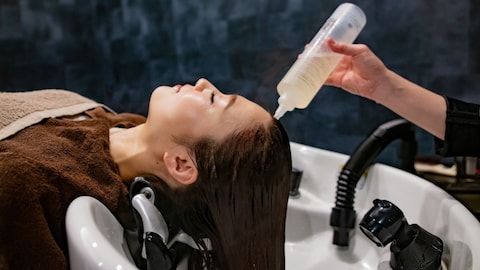
For years, a hair glow-up meant doing something dramatic: getting bangs on a whim, bleaching your lengths, or choosing a colour so unexpected that people couldn't help but stare, whether they loved it or hated it. The excitement lay in the transformation itself, in doing something that made people look twice. Now, another kind of hair aspiration is taking centre stage: glossy lengths, healthy-looking ends, a well-maintained scalp, and colour that grows out without demanding a standing appointment every few weeks.
The shift isn't necessarily about giving up experimentation. Colour and dramatic makeovers still have their place, but for a growing number of people, the question is no longer simply how different their hair can look by the time they leave the salon. It's how good it can continue to feel and look weeks or months later. From bond-building treatments and scalp care to nourishing oils and lower-maintenance colour techniques, hair health is increasingly being treated as an ongoing practice rather than a repair job after damage has already occurred.
At Jean-Claude Biguine, trainer and creative director Shawn Marwin Peppin has noticed a change in what people want from their hair transformations. "People still want colour and transformation, but they are much more aware of how that transformation affects their hair quality. They want beautiful colour, but they also want softness, shine, movement, and strength," he says. Social media, he adds, has contributed to the shift, bringing greater visibility to hair that looks healthy rather than excessively processed. "People are beginning to understand that a great transformation should not come at the expense of hair health."
Samir Srivastav, CEO of Looks Salon, has observed a similar change across his nearly two decades in the industry, both in India and overseas. "People still want colour and dimension, but the obsession with the 'big reveal' has faded," he says. In his experience, people are asking more questions about the process, prompting the salon to invest in colourist training and techniques through its brand partnerships.
Why shine has become the new beauty ideal
There is a reason glossy hair photographs so well. A relatively smooth hair cuticle can reflect light more uniformly, contributing to a shiny appearance, while damage and porosity can affect how light is reflected. Shine, however, is not a definitive measure of the biological health of the hair or scalp.
Dr Jamuna Pai, cosmetic physician, author and founder of SkinLab, believes the definition of great hair has evolved from styling alone to the condition and function of the hair. "Shiny, smooth and frizz-free hair is actually a direct visual indicator of a healthy hair shaft," she says, explaining how the condition of the cuticle affects the appearance of shine.
Peppin compares the appeal to glowing skin. "When your hair is in great shape, you don't need to overdo it. Shine really makes a statement."
The comparison reflects a broader shift in beauty towards maintenance and consistency. Hair that looks cared for is becoming an aesthetic goal in its own right, even as consumers continue to experiment with colour and styling.
Scalp care and the repair conversation
One of the most noticeable developments in hair care is the increased attention given to the scalp. Instead of focusing exclusively on the lengths, consumers are becoming more interested in the skin from which hair grows. "Scalp health is genuinely new behaviour," says Srivastav. "Clients now book scalp treatments as their own category, which never happened a decade ago."
Dr Pai similarly describes the scalp as an extension of facial skincare, pointing to its role in supporting the hair follicles. While scalp health is important, cosmetic treatments cannot address every cause of hair thinning, shedding, or poor growth, and persistent concerns may require medical assessment.
Bond-building treatments have also become a familiar part of the conversation, particularly for chemically treated hair. Srivastav describes the category as a mixture of genuine development and marketing. "Bond repair, in my experience, mostly gets used to justify continuing to colour." At Looks Salon, however, he says Plex-based bond-building has become part of the salon's colour service menu rather than an additional upsell. These treatments may help improve the feel and manageability of damaged hair, but they do not eliminate the potential effects of repeated chemical processing. For clients who continue to colour, the frequency of services, the technique used and the condition of the hair remain important considerations.
Peppin has noticed growing interest in glosses, toners, nourishing services and softer colour techniques. "The focus has moved from 'How light can we go today?' to 'How can we get there while keeping my hair looking beautiful and healthy?'" he says.
The appeal of low-maintenance colour
Low-maintenance hair brings together aesthetics and practicality. Clients are increasingly interested in colour that grows out naturally, cuts that retain their shape, and routines that do not require constant heat styling or salon appointments. "Growing-out time is often the first question at consultation now, not just the result," says Srivastav. He describes clients choosing colour that softens at the root, cuts that hold their shape longer and less intensive processing.
At Jean-Claude Biguine, Peppin has observed interest in softer balayage, blended highlights, face-framing colour, and cuts that complement natural texture. The objective, he says, is a look that lasts for weeks or months without constant touch-ups. This approach places greater emphasis on consultation. A stylist must consider the client's natural colour, hair history, texture, lifestyle, and willingness to maintain the result. A low-maintenance technique is not automatically damage-free, and the most suitable service will vary from person to person.
Is healthy hair the new beauty flex?
Srivastav describes the shift as a move away from spectacle and towards sustained care. "Beauty has moved from 'look what I did' to 'look how well I'm doing'. Hair has simply followed skin and fitness into that space."
The comparison captures the appeal of hair that looks consistently maintained. However, hair condition is influenced by genetics, age, health, styling practices, and environmental exposure. It cannot be reduced to discipline or personal investment, and coloured or styled hair should not be considered inherently unhealthy.
Peppin believes the change is ultimately about balance. "This doesn't mean people have stopped trying new things. They still crave colour, styling, and variety, but there's a greater focus on balance now."
That may be the most useful way to understand the current hair-health movement. It isn't a rejection of transformation, but a broader definition of what makes one successful. Glossy hair, healthy-looking lengths, and an effortless grow-out may be the aesthetic everyone wants, but achieving them is less about a single miracle product than about understanding the hair, choosing appropriate treatments, and maintaining a routine that works.
Lead image: Unsplash
Also read: Chocolate brown makeup essentials we're stocking up on for fall
Also read: Butter up with these lip balms that glide on like a dream