Is AI coming for fashion’s most creative job?
We might be relying on prompts over practical thinking, but the new hot debate includes AI’s ability to replace stylists and the art of styling the self.
The outfit I ordinarily reach for whenever I’m running late for work isn’t particularly groundbreaking. It’s a combination of black workout tights (never used for the purpose of working out) and whichever shirt I can grab first. For the sake of research, though, I asked ChatGPT to put together an outfit for me, and I have a hunch: AI might be a victim of the Dunning-Kruger effect, wherein people with limited knowledge grossly overestimate that very knowledge. The response AI gave was underwhelming, to say the least—something I could have come up with if I stared at my closet for five minutes.
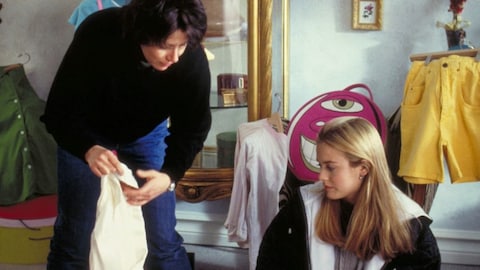
The idea of technology helping us get dressed, however, isn’t exactly new. Remember when Cher Horowitz’s—for the lack of a better word—outfit-browsing computer in Clueless had us all in a chokehold? In the 1995 romcom, actor Alicia Silverstone’s character had a software that catalogued her entire closet, letting her choose outfit combinations virtually before she actually tried them on. While it wasn’t really a virtual stylist, it is safe to say that the movie laid the groundwork for the moment fashion finds itself in currently. Computers, or rather, Artificial Intelligence, doing the job of stylists, haven’t carried this much cultural cachet since.
Saviour or dumb and dumber
For 23-year-old Khushi Mehra, who, self-admittedly, hasn’t formed a unique thought since being introduced to ChatGPT, turning to AI for styling advice has become something of a shortcut. When she finds herself standing in front of an overflowing wardrobe with nothing to wear, a quick prompt is enough to nudge her toward a decision. “An actual stylist doesn’t hold a candle to ChatGPT cooking up an outfit combination for you,” Mehra claims. “AI is accessible, and it costs nothing.” 34-year-old banker Siddhant says, “I am single and straight with no woman in my life to help me dress better. AI has come to my rescue.”
As more consumers turn to AI for styling advice, fashion brands are starting to pivot, too. Take American fashion and lifestyle brand Ralph Lauren, for instance. In September, they launched a styling assistant called Ask Ralph. It has been trained to suggest outfit options for different occasions, and can also answer questions based on the decades of Ralph Lauren archives and lookbooks that have been fed to it. In practice, though, the results feel less revolutionary. When journalist Julia Reinstein tried Ask Ralph for a piece in The Cut, asking it to assemble outfits for different occasions, she reported that the supposed deus ex machina “spat back a bunch of uninspired looks”. “I got the same outfits—including a plain grey dress with a black scarf, black purse, and black shoes—a couple times,” she writes. So much for the AI Renaissance!
A Potemkin village
AI is a derivative of a derivative. The more we continue to outsource our creativity (and ahem, thinking), the blurrier the line between convenience and surrender becomes. Even so, users continue to rely on it for fashion guidance (among other things); prompt-based styling videos regularly rack up tens of thousands of views online. The appeal is apparent—it is convenient, quick, and efficient (to use the term loosely). But unlike a human stylist, an AI one isn’t going to help you discover your personal style or develop better taste. At best, it will give you something largely acceptable and algorithmically approved.
In order to cash in on the boom, OpenAI has recently partnered with leading e-commerce platforms Shopify and Etsy, which will enable sellers to sell their products through ChatGPT conversations directly. Developments being made at this speed begs the question: Is AI really coming for our jobs?
Stylist Manpreet Kaur, for one, remains unfazed. She describes her relationship with AI as a love-hate one, admitting that she finds it to be useful at times. Nonetheless, Kaur believes that the visual identity a stylist creates for a brand comes from human interaction and lived experiences, something AI can’t truly replicate. That said, conversations surrounding the apprehension do come up quite often within the industry. “I think every creative industry has had moments where new tools feel disruptive at first, but they eventually just become part of the ecosystem or, at least let’s hope it does,” she says with a chuckle.
Celebrity fashion stylist Divyak D’Souza concurs. He believes that AI might be able to optimise fashion, but it can’t understand it. “Efficiency isn’t the same as understanding, and when style is about identity, presence, and self-expression, data can only go so far,” D’Souza says, adding: “AI is a powerful tool for convenience and scale, and it can support personal style; but it cannot replace the trust, instinct, and individuality that define it.”
This article originally appeared in Cosmopolitan India's May-June 2026 print issue.
Lead image: IMDb / Clueless 1995
Also read: Your guide to styling jerseys far beyond the stadium
Also read: I asked ChatGPT to be my stylist for a week and let's just say things got interesting