Did 'Obsession' just expose a disturbing pattern of male entitlement hidden behind the “nice guy” label?
From “nice guy” to nightmare, incel horror is decoding the realities of modern dating, and the results are uncomfortable.
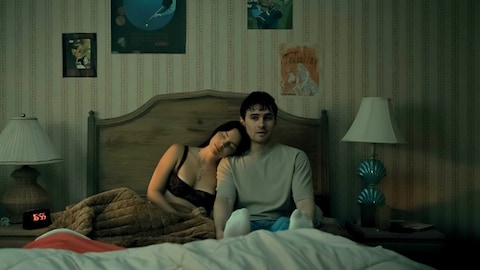
I'll be honest, a ghost jumping out from behind a door has never done anything for me, and I have spent years trying to explain this to people who think horror films are nothing but jump scares. The films that genuinely unsettle me are the ones where the man on screen is not a monster at all—he is just a guy who thinks being nice to a woman means she owes him something in return.
Incel horror, for lack of a better term, has been blowing up recently, reflecting increasing conversations around misogyny, online radicalisation, male entitlement, and the darker side of modern dating that most people face daily. With films like You Only Live Once, Fresh, Run Rabbit Run, and Promising Young Woman, gaining popularity, there is something about this genre that just refuses to let you look away, and Obsession is the most recent example of a film that does this really well.
That is the part that makes it such an interesting watch right now, because the horror is the wish itself: the absolute entitlement to decide that what you feel for someone matters so much that her actual personhood is just an obstacle to get around. Fresh does something similar, Promising Young Woman does it in a different manner entirely, and across all of them, the scariest thing is always the same - how little these men think they are asking for.
And Obsession could not have come out at a better time, honestly. The male loneliness discourse, the dating app resentment, the men who have decided that women owe them something and have found enough other men who agree to make it feel like a valid grievance, I mean, it has been a lot. And what the film understands, in a way that I think a lot of the online conversation completely misses, is that Bear's wish has nothing to do with Nikki. He does not wish for her to be happy; he does not wish for her to want him back on her own terms. He wishes for her to love him the way he has already decided she should, which is just a man wanting control over a woman and calling it love because that sounds better.
What are these men actually afraid of when a woman says no?
The fantasy at the heart of Obsession has everything to do with never being told no. Because being told no, for these men, always ends up going one of two ways — they either collapse into this whole sad guy spiral of why does this always happen to me, or they decide the woman is the problem, and both of those responses have absolutely nothing to do with her as a person.
Sharanya Agarwal, an illustrator and spiritual advisor, mentions, "I think it is largely a mix of ego and loneliness — a lot of people think, how could they possibly reject someone like me?" That is Bear, completely. That is Bear, completely. That is also every man in Fresh and Promising Young Woman, none of them are actually thinking about the woman at all, what she is feeling, what she wants, whether she is okay, they are only ever thinking about themselves and what they are owed. And dating apps have made all of this so much messier, because you can text someone every single day, build this whole thing in your head, and if they just disappear, suddenly that ego has a very personal reason to feel wronged.
And the thing is, Bear did not become Bear overnight. A lot of men are raised being told, after every rejection, that the other person was wrong and there is nothing wrong with them, which over time completely kills any ability to reflect. "I think some men in India are typically more coddled, especially by the female figures in their life, so when they seek comfort after rejection they are often told that the other person is in the wrong. I think this stunts men's ability for reflection," says Sharanya. He is just a guy who was never taught that no is a complete sentence, and the film is smart enough to know that is scarier than anything supernatural could ever be.
When did "I am a good person" become something women are supposed to owe you for?
Sumir Nagar, a behavioural expert who has lived and worked across four continents, has a name for what Bear does in Obsession: he calls it the Transactional Trap. "A lot of people grow up believing that if they insert enough Good Person tokens — buying dinner, opening doors, basic politeness — a relationship should automatically pop out of the vending machine," he says. Which, when you think about it, is the entire foundation of every incel argument you have ever read online. Sumir is also clear that loneliness is real, that rejection genuinely hurts, that feeling invisible is a painful and legitimate human experience, "When a person is profoundly isolated, attraction ceases to be an invitation and becomes an emergency," he says, "they aren't looking for a partner, they are looking for an emotional life jacket."
The problem is the leap from that pain to deciding it is someone else's fault, someone else's responsibility to fix, someone else's job to say yes when they have already said no. And what makes it so exhausting, from the woman's side of things, is that the whole thing requires so much management. Sharanya told me that most women go out of their way to be as polite as possible when rejecting someone, and not entirely out of empathy. "Unfortunately, out of fear that the man's reaction could be aggressive," she says. Which Sumir backs up completely, "When women cushion a rejection, it's rarely about politeness; it's a tactical risk assessment. We've globalised a culture where a bruised male ego can instantly turn volatile, so women have learned to treat a breakup like they're dismantling an explosive." And that is the thing that films like Obsession understand that a lot of the online conversation around male loneliness completely glosses over, the loneliness might be real, the pain might be real, but somewhere between feeling rejected and deciding to make it her problem, something has gone very wrong.
Why is the scariest man on screen right now just a regular guy?
Horror has always worked by taking the thing lurking at the back of your mind and making it impossible to ignore. What this particular wave of films has figured out, faster than any think piece, podcast, or Reddit thread, is that entitlement becomes genuinely terrifying when you follow it to its logical conclusion. In real life, this behaviour is often explained away. He is just persistent. He really likes you. He doesn't mean any harm. These films strip away those excuses and treat the dynamic for what it can be: a threat.
That is why this genre feels so effective right now. It takes an experience many women have been describing for years and places it at the centre of the story. And for a lot of women watching, none of it needs much explaining. They already know this guy.
Lead Image: IMDb
Also Read: Are you in a humiliationship?