How the internet raised a generation of queer Indians
For an entire generation of queer Indians, seeking identity wasn’t a process that started at home—it began in front of the screen.
Jun 9, 2026
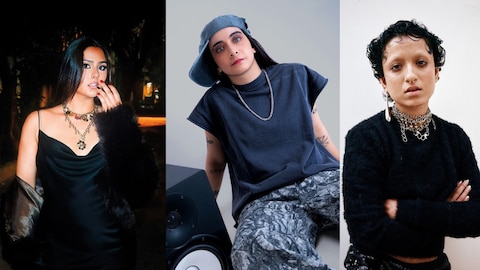
There’s a very specific kind of epiphany that hits in the glow of a laptop at 2 am. It’s not loud or cinematic, nor is it the kind that looks like a perfectly scored coming-out scene from Love, Simon (2018). It doesn’t even echo the aching tenderness of Call Me by Your Name (2017)—it’s quieter than that. Like a Tumblr GIF set that lingers a little too long. An overcompensating clip that feels all too familiar. Or, Troye Sivan’s YouTube coming-out video, watched with the volume turned low, almost like a secret. For many millennial and Gen Z Indians, queerness didn’t arrive as a declaration—but as a breadcrumb trail on the internet.
Here, we speak to six queer voices across ages and experiences, individuals who didn’t just “find” themselves online, but, in many ways, were raised there.
Tryps, 25
Music artist
Queer lives and how they unfolded online didn’t feel real at first, just something happening elsewhere—on someone else’s screen. “It felt far from my reality at the time...but it gave me a sense of hope,” says Tryps. Instagram became a quiet entry point, featuring a steady stream of queer lives she hadn’t seen growing up, and it helped her realise that there wasn’t just one way to be queer. What followed wasn’t experimentation so much as finding an identity. “I found myself leaning into what other girls my age were doing, even when it didn’t feel natural,” she says, admitting that over time she found comfort in her most authentic self. There was no real split between online and offline, only a gradual alignment, and even the content she gravitated towards (memes, couple Reels) made queerness feel “casual and familiar.” Love, however, stayed rooted offline. “My understanding has always come from real life,” she says, adding that the internet felt more like a mirror than a guide.
Chaitanya, 27
Creative brand strategist
“Between Skam (Norway) and RuPaul’s Drag Race, queerness looked multifaceted,” says Chaitanya, recalling how unfamiliar it felt at first, before becoming addictive. “Once that discomfort left me, I couldn’t stop consuming more and more of it,” he adds. If pop culture opened the door, Twitter (now X) shaped what came after. “That’s what really formed my opinions,” he says, even if it took time to see how polarising it could be. Online, he felt free and more like himself: “I’ve always enjoyed my online persona more...I felt more like myself.” That extended to love, too, which was initially shaped by “romances meant to be earned and yearned for,” often far removed from his own reality. Unlearning that took time, but the impact remains: “I owe the internet my everything for helping me get comfortable with my identity.”
Ella D’verma, 22
Content creator
“ I was me for as long as I can remember,” Ella says, explaining that her journey was not about becoming someone, but about no longer hiding. The internet became both escape and evidence. “I remember watching coming-out videos and feeling happy for them,” she says, “but also this dread, that that would never be my reality.” Online, she existed in parts before she could exist fully, forming connections with people who knew her as Ella while she was still Dev in chat rooms. Those dual lives weren’t contradictions; it was survival—and what she consumed most were stories. “Story times were integral...it was important to see queer people as humans with stories.” But, with visibility came pressure. “It’s like you could only be a victim or an activist, no in between.” Now, as a creator, she holds both sides of that experience. “I have to use my voice. Is it tiring? Yes. But also the biggest blessing.” Her advice is simple: “Don’t compare your journey. You are valid, always.”
Toshada, 27,
Social entrepreneur and model
The search was deliberate—a question typed into a browser bar. “I remember looking up a really confused ‘girl like girl?’” says Toshada. Growing up, when queerness felt invisible (and often shut down), the internet felt like proof and permission. Tumblr was where it clicked, not through education but through fandom. “The ‘shipping’ culture (when fans manifest two individuals, real or fictional, to be together) normalised a lot of queerness,” she says, adding, “I’ve never believed in performing identities. I am who I am at all points.” Still, the shift showed up elsewhere. Online, she felt lighter and more social, while offline, she was still navigating anxiety. The content she consumed (memes, educational threads) offered both language and possibility, and it even shaped how she approached dating. “It gave me exposure to actually practice dating in a way I saw fit.”
Raghav Tibrewal, 28,
Fashion stylist and creative director
The first time it clicked was subtle. “Quiet and electric,” Raghav says, recalling how a YouTube video was enough to make him feel seen. “Watching The Devil Wears Prada, I realised I had a feminine side,” he says, describing how aesthetic came before understanding. YouTube became a guide. “It taught me it’s okay to be okay,” he adds, which felt significant at a time when queerness still felt taboo. What followed wasn’t a split between online and offline selves, but a steady unfolding expressed through experimentation. “I was experimenting, colouring my hair, wearing heels.” But expectations didn’t always translate offline. “It made me believe in an unrealistic sense of love,” he admits. “The offline queer world is a lot more brutal.” With visibility came a sense of responsibility. “I feel like I owe it to my community to speak up.” And yet, the possibility remains. “It was this magical world of queerness...where I saw androgynous people and thought that it’s okay for me to be this way.”
Prayag Menon, 38
Stylist
Long before algorithms, aesthetics, or even language around queerness, the internet, for Prayag, was simply a place to write. “There was no queer content I didn’t know anything,” he says. As a teenager in the early 2000s, he started blogging about his daily life—uncurated, unfiltered, just a running account of who he was. Somewhere along the way, someone began reading. That someone would go on to become his husband. “Porus (Vimadalal) found my blog through a friend...and became a regular,” Prayag recalls. What started as comments turned into conversations, and eventually, into a relationship that has now lasted over 20 years. “If it wasn’t for the internet, I would not have met him.” Offline, those years felt isolating, marked by bullying and a lack of representation. Online, things opened up. “My online life was very happening...I could be fully me.” There were no labels, no pressure to define himself. “I never felt the need to come out. I was just being me.” Even now, as the internet has evolved into something louder and more performative, his relationship with it remains deeply personal. “For me,” he says, “it was honestly a boon.”
This article originally appeared in Cosmopolition May-June 2026 print issue.
Also read: A love letter to florals and the beauty of growing beyond the lines
Also read: Why queer love on screen feels powerful for a generation raised in silence
Read more!