Why going offline is suddenly Gen Z’s favourite flex
The youth is swapping screen time for pottery wheels, art cafes, book clubs, and slow hobbies; proof that doing things IRL is the new status symbol.
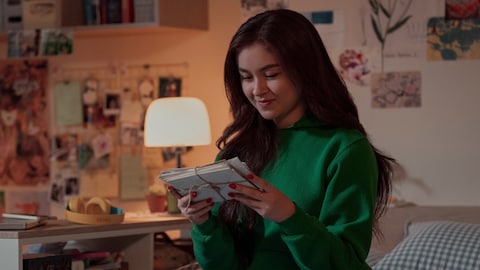
It’s a Saturday afternoon, and a group of 20-somethings are sitting around a large wooden table, hands coated in clay, phones nowhere in sight. Someone’s playlist hums softly in the background. There is laughter, a few oddly-shaped bowls, and zero pressure to document the moment. No Instagram Stories. No reels. No “wait, let me get this on camera.” For a generation raised online, Gen Z is quietly, and deliberately, choosing to log off.
This isn’t a dramatic digital detox announcement or a public breakup with Instagram. It’s subtler than that. Young people today are questioning why they need to be visible all the time and what they actually gain from constant online presence. And increasingly, the answer seems to be: not much.
The rise of mindful screen time
Gen Z does not hate the internet; they just refuse to let it run their lives. Having grown up watching older generations burn out from hustle culture, they are far more conscious of how screens affect their mental health. Endless comparisons, algorithm fatigue, and the pressure to be “on” all the time have made logging off feel less like rebellion and more like self-preservation.
Unlike millennials, who once equated online visibility with opportunity, Gen Z is far less interested in being seen. Private accounts, finstas, and disappearing from platforms altogether are common. Social media is no longer aspirational; it’s optional.
Offline is the new luxury
As screen time goes down, real-life experiences are having a moment. Art cafes, pottery studios, book clubs, film screenings, dance workshops, and even slow hobbies like embroidery, crocheting, and journaling are drawing younger crowds. These spaces offer something social media can’t: presence without performance.
There is no pressure to be productive, no metrics to chase, no need to prove you are having fun. You show up, you make something with your hands, and you leave feeling calmer and more accomplished than when you arrived. In a world that constantly demands output, doing something purely for pleasure, without being scored, feels radical and deeply appealing.
Choosing connection over clout
What’s interesting is that Gen Z is not isolating themselves by logging off. If anything, they are craving a deeper, more meaningful connection. They are choosing small groups over mass audiences, conversations over comments, and shared activities over shared posts.
Friendships are built around routines—weekly pottery classes, morning walks, cafe hopping, and pickleball sessions, rather than constant online check-ins. The focus is on how something feels, not how it looks. And that shift is slowly redefining what social life even means.
Redefining success without visibility
Perhaps the most surprising part of this movement is how comfortable Gen Z is with being “unseen.” Success no longer has to be loud or public. There is power in doing things quietly, for yourself, without an audience.
Maybe that’s the real flex. Not being constantly available. Not being perpetually visible. Just being present, hands in clay, phone left behind, living a life that doesn’t need to be posted to be real.
Lead image: Netflix
Also read: Forget New Year's resolutions, this is Team Cosmo’s official f**k it list
Also read: Eight slightly unhinged New Year rituals that the internet swears will fix your life