
The subtle queer style codes that changed fashion forever
Objects, accessories, mementoes, and material memories—all that screams and whispers pride.

A young man walks into a café in Delhi. He is dressed in a crisp white shirt, slightly undone—a barely-there thin gold chain rests on his collarbone. Suvir Saran recalls the incident from memory. A brief, gentle meeting of the eyes of two men and the faintest hint of a smile lays it all bare. As the 53-year-old chef and author brands it—the interaction was distinctly queer: “Not invitation. Not an assumption. Just recognition.”
While the dalliance of lovers and secret flirtations have always been part of literature, pop culture, and real life, queerness adds another dimension to the dance. In a world where queerness is criminalised, an “I see you—if you see me” is enough, Saran says. Subtly communicating one’s queerness to fellow members then becomes a calculated choreography, often termed as queer flagging. When it comes to the symbolism of colour, perhaps the most recognised of them all has been the rainbow flag—created in 1978 by artist and activist Gilbert Baker, that continues to be a flying motif of the community at Pride Parades across the world. Here, we talk about the hefty lineage of queer accessories and subtle codes—those that traverse periods and history, and are bound by community and subcultural worlds.
Wilde carnations
In London of 1892, Irish author-playwright Oscar Wilde famously asked his followers during the opening night of his play Lady Windermere’s Fan to wear a green carnation, while adorning one himself. While the author’s queer legacy is one for the books—he was also convicted for “gross indecency” under British law—he ensured that the painted flower bloomed as a quiet symbol of resistance. Though Wilde said that it meant “nothing”, the media of that time used the carnation as proof of Wilde’s ‘sexual immorality. The green carnation continues to make a case for standing out. The artificial colour was supposed to signify the defiance of it all—an ironic nod to the ‘unnatural’ love that Wilde espoused.
Hanky code
Handkerchief code used by gay and homosexual men in the 1970s up to the 1990s has been well documented. While the origins of the code are hazy, the idea is that a handkerchief worn in the rear jeans pocket can indicate one’s sexual preference and fetishes depending on its positioning (left or right) and the colour. For lesbian women, the positioning of a carabiner in a belt loop did the same.
Ace ring
A recent queer accessory is an ace ring, originating in 2005: A black ring worn on the middle finger of the right hand to signal one’s asexuality. Ace is of course, a term used to signify the asexual community that constitutes individuals who don’t feel sexual attraction or feel very little of it. It does not signify that they lack desire for intimacy or emotional companionship.
The gay ear
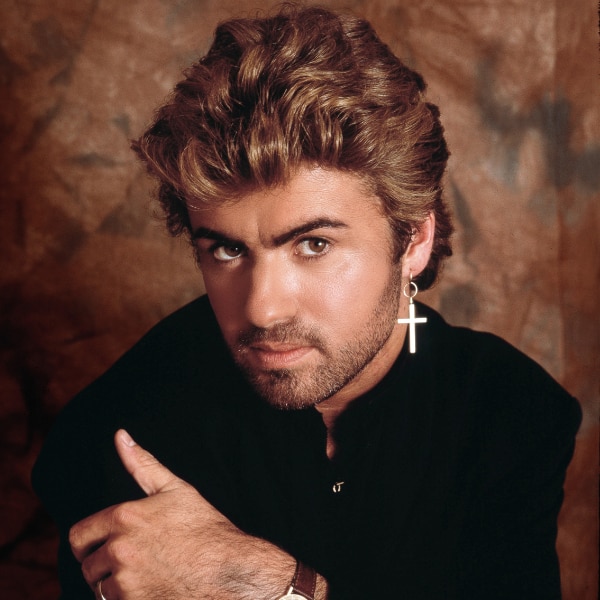
As far as accessories go, the earring has retained a persistent spot—sometimes as a quiet marker to fellow members and at other times a proud accessory of rebellion. Across the West, popular parlance of the twentieth century saw a singular piercing or a “mono” earring mostly on the right ear, as literally a ‘gay ear’—a trend which would soon travel to South Asia.
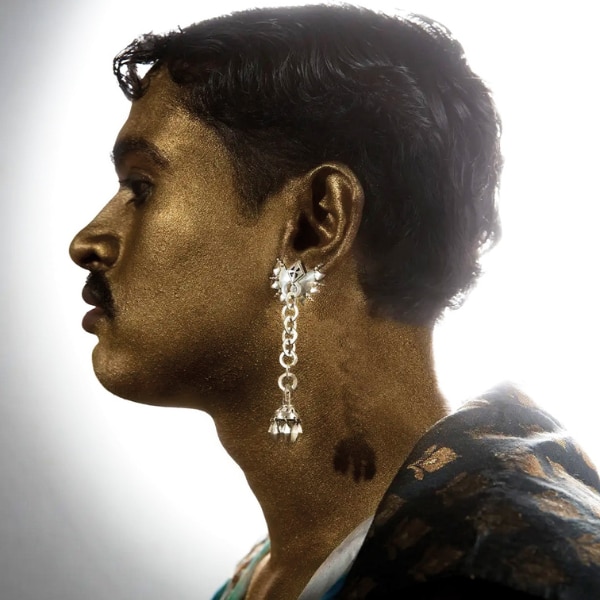
Documented evidence of queer codes in the Indian subcontinent is almost null. In this respect, oral history helps. Mumbai-based Daman Choudhary, co-founder of model and creative management agency Runway Lifestyle, recalls the rage of the single earring among the Indian queer community in the ’90s. Inspired by English singer, the 49-year-old Choudhary mentions it being a staple along with a “sexy shirt and skinny jeans.”
For the young queer Indians today, the earring remains an object of fascination. Vivek Chakravorty, 25, a non-binary individual, also mentions the “dangly earring, particularly on the left ear (as) very, very queer”. Even when growing up in Shillong, or in their friend groups, the Delhi songwriter, George Michael, who wore a silver cross as a solo earring, a graphic designer mentions, “I’ve just seen this like to be the thing”. Saran too emphasises on the single ear piercing, “worn knowingly, especially in cities like Mumbai and Delhi today, (emblematic of) a return to subtlety—but this time, it’s chosen, not enforced.” His own favourite piece of jewellery is a pair of solitaire diamond studs, a gift from his sister when he finally pierced his ears in his early 50s.
Anatomy of gaze
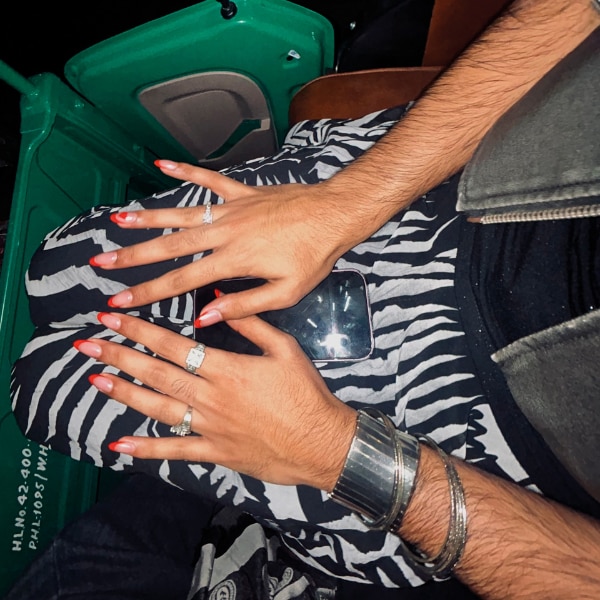
“India never had a codified system like the West,” Saran says. Instead, he explains that the Indian queer code was far more subtle—manifesting itself in an “eye contact held a second longer than necessary, a walk that looped back instead of moving on or even stillness, when others passed through.” This was the silent choreography of cruising: The practice of moving through public spaces to find queer connection in the shadows. The anthropologist Phyllida Jay agrees. “The concept of ‘kinetic queerness,” she explains, “is not just in how clothes look but how someone chooses to make them move through gesture and posture... (It is) probably more conducive to subtler coded expressions.” And thereby, more potent in the Indian context. These shared codes appear in the physical spaces of the city. Choudhary recalls Cafe Mondegar in Colaba, Mumbai, where they “used to sit at opposite tables” and pass around chits with their respective phone numbers. Designated cinema halls and public parks, too, were hot cruising spots for “looking at boys and exchanging pleasantries.” A thin chain, a dainty bracelet, stacked rings—were all quiet signifiers that enabled the dalliance.
The new queer bling
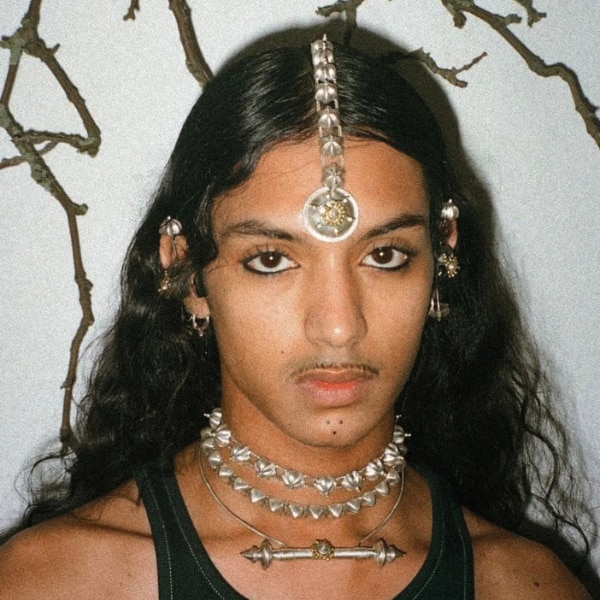
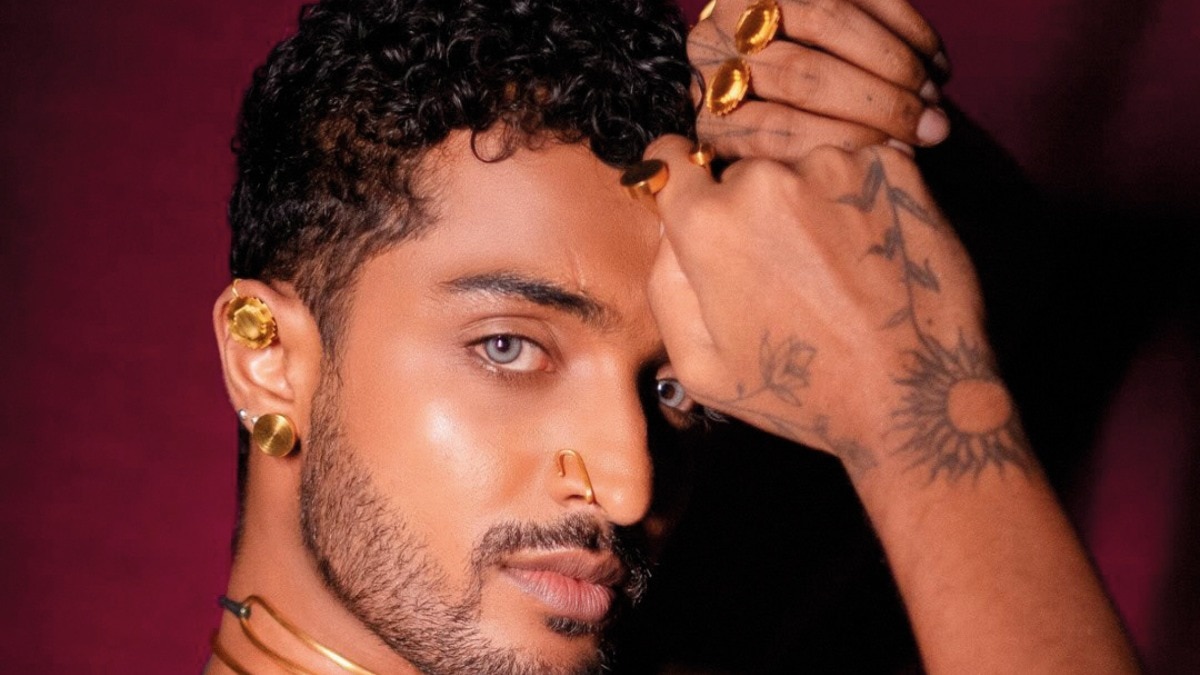
But for many queer Indians today, queerness doesn’t have to be hidden in thin, delicate, dainty jewellery. Designer Nitya Arora, founder of the retro-futuristic jewellery label, Valliyan, doesn’t think about gender when designing as she is creating art. Known for “gender agnostic” pieces, Arora admits that her designs are “bright, bold, sculptural and definitely camp coded,” however, it’s not intentional. The self-taught designer label Bhavya Ramesh echoes the maximalism while consciously aiming to create a ‘fluid community’ through their pieces. Often shot on androgynous models, the Mumbai-based designer’s nail rings and webbed fingers are pop, loud, and unapologetically queer. As to why these labels are community staples, Jay remarks, “Excess, camp, and kitsch are universal queer strategies of self-expression.
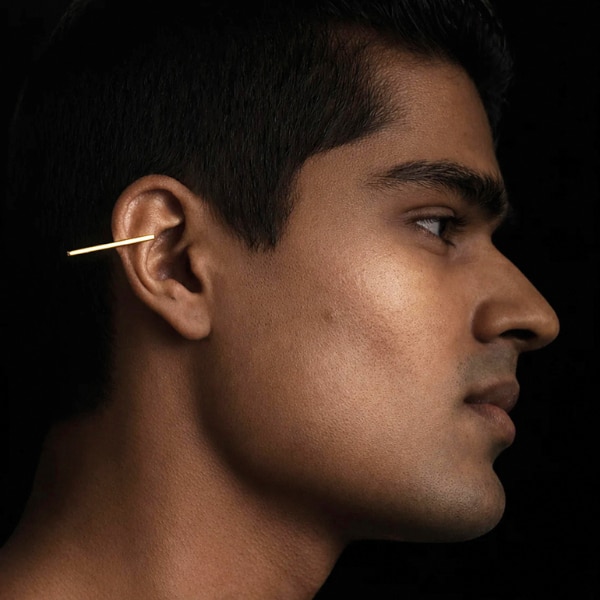
Tirunelveli-based designer Smruti Matisekaran’s gender-neutral label No Na Mè lies on the other end—not conventionally maximalist, the forms are more sleek and modern—an example being the stylistic variations of the queer-coded ‘mono’ earring. Another young label, which has been loved by the community since it debuted, is Begum Sitaara, inspired by Bihar’s traditional jewellery designs and founded by Anjali Gupta
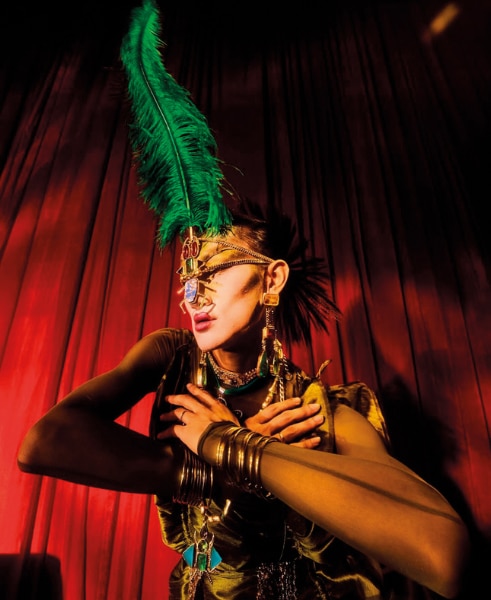
Interestingly, the first message on the Valliyan website is a warning: “While using our product, you may find people staring at your ears, neck or hands.”. The very politics of the seen and the unseen, the safe queer flag and the scandalous public gaze collide here: There is, after all some hope that the subtle hints may not need to be that subtle after all.
This article originally appeared in Cosmopolitan India's May-June 2026 print issue.
Lead image: Cha-Ching! ear and nose clip by No Na Mé
Also read: How the internet raised a generation of queer Indians
Also read: Why queer love on screen feels powerful for a generation raised in silence
Comment
more from Fashion

How to make the lingerie-as-outerwear trend work for your wardrobe

Beyond the metros: Smaller cities drive over half of Amazon’s festive fashion and beauty orders

Signature lip combos for every makeup mood

The 'October Theory' has entered its plot twist era

Could the ‘bless and release’ philosophy be the antidote to ghosting?

Me, myself and I: How to tell if you’re the group’s conversation hog

Not every shower thought needs to become a side hustle, and Morgan from ‘Nobody Wants This’ proves it

“Why choosing a man-repellent haircut was the most liberating thing I did”

'Our obsession with true crime isn’t just morbid curiosity—it's all part of our desire to regain control'

Are you and your partner having mercy sex? This is how sex expectations can damage relationships