
The Robin Scherbatsky effect: Why her character flaw became our entire personality
The sitcom gave her commitment issues as a plotline; we made it a lifestyle.

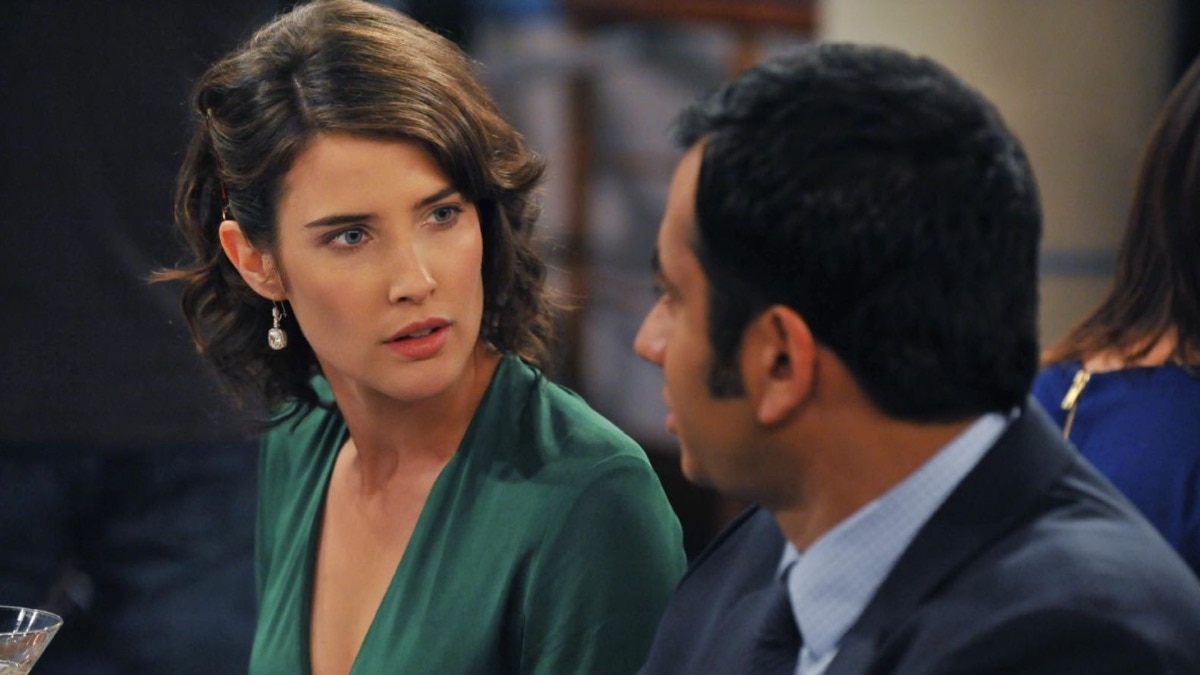
We've all been part of this Gen Z dating world and the exhaustion that comes with it. Now, it is not the exhaustion of heartbreak, though that’s definitely on the table. But we are talking about the exhaustion of having the most extensive vocabulary in human romantic history and still being unaware of what's happening with that one person you have been ‘talking to’ for three months.
We have tags for everything: situationship, breadcrumbing, nanoship, soft launching. We move from talking stages and roster dating to ‘we are not putting a label on it’ phases with such conviction and confidence that it drains every bit of emotional sanity you have carefully built. And thus, the ending never changes, and we get stuck with the cliches of ‘It’s not you, it’s me’, ‘Right person, wrong time’, ‘I just need to focus on my career’.
But here’s the thing. Before the talking stages, the exit line, the whole casual-dating scenarios, and labels ever existed, Robin Scherbatsky had done it all. In 2005, the sitcom How I Met Your Mother introduced us to a career-obsessed, commitment-phobic, emotionally guarded character who loved deeply but chickened out before it got too serious. The sitcom treated it as a quirk, a character flaw, a plot device. But twenty years later, she isn’t a quirk, she is an entire generation.
The "No, No, No, No, No" Phenomenon
We have all heard it. Robin screaming no, no, no, no—five times—when she found a ring in her champagne glass. The ring was an accident, but the meltdown was real, the secondhand panic was real. That audio is now one of the most trending sounds on TikTok for a reason. The audience blamed her then. But she is completely relatable now.
Everybody wants to travel, make spectacularly bad decisions, laugh about them at brunch three years later, and live in that glorious, unscheduled, answerable-to-nobody era for as long as possible. And when someone walks in wanting to anchor you to a life you had not planned for yourself yet, a life that looks like settling down before you have even fully settled into yourself. That is not romance. That is a plot twist nobody asked for.
So the panic makes sense. The sudden feeling that your carefully constructed independent life is about to be reorganised without your consent is real. And it shows up specifically at the worst possible moment. Not when the fling is still in its initial stage. But when it starts becoming something. When the situationship starts looking like a relationship. When the person who was supposed to be casual starts feeling anything like it.
“I don't want a partner, I want a career.”
This is probably the line living rent-free on every vision board right now: career first, everything else later. And Robin Scherbatsky said it before it was an aesthetic.
The girlboss era, the corporate-coded era, the IT girl who has her salary sorted and her heart in aeroplane mode; Gen Z did not invent this. It was passed down through generations. Robin chose her dream anchor job in Chicago over Don, a man she genuinely, deeply loved. We called her selfish then. But, in 2026, we would have made her a LinkedIn success story.
Because here is the thing: loving someone is not a waste of time. And Robin never stopped loving. But when ambition and love stopped fitting in the same room, she always knew which one had to go. And somewhere down the line, the entire generation knew that it was the right choice because, as Robin rightfully taught us, if you are going to cry over a broken heart, you might as well do it in a house you own.
The three magical words that do not exist in our vocabulary
We are the generation that books therapy but struggles to feel anything inside it. We share healing reels without healing. We forward breakup advice while actively avoiding our own situations. We have the vocabulary, the awareness, the resources and when it comes to actually sitting with a feeling, we would rather do literally anything else.
There is a whole generation that can trauma dump to a stranger on a Reddit thread at 2 am, overshare on a spam account, forward every "this is so us" meme to the person they are technically not dating, and still cannot say three words out loud to someone standing right in front of them. The words exist. Everyone knows them. Everyone has felt them at some point, in some parking lot, during some unremarkable Tuesday that suddenly felt like everything.
And yet, the moment something turns real, the vocabulary disappears. The feeling sits there fully formed, completely obvious, and impossible to ignore, and the choice is still to look the other way and hope it does not follow you home. Because saying it out loud makes it real. Real means vulnerable; vulnerable means there is now something to lose.
Robin fell in love as well, with Ted and refused to say it for years. The feeling was always there, fully formed, obvious to everyone in the room. She just covered it with time spent at a shooting range, a glass of scotch, and sarcasm sharp enough to function as armour.
That is this entire generation minus the shooting range.
We have memes instead. We have "It's giving unhinged" when we mean "I am falling apart." We have "I am literally just a girl" when we mean "I cannot handle this." We have spam accounts dedicated entirely to posting what we feel at 2 am in language honest enough to be real and vague enough to be deniable. The spam account is our shooting range. The ironic emoji is our scotch—same avoidance, better content.
Though Robin eventually ran out of scotch, the feeling never left the chat. And ours probably won’t, either.
Robin Scherbatsky was not a character flaw. She was an entire forecast. The running away, the career pivot, the unnamed feelings, the scotch. Genz took notes of every single thing, repackaged it and called it modern dating. But here is what the show always knew and what we are still figuring out: Robin did not stop running because she fixed herself. She stopped because someone made staying feel less terrifying than leaving. And somewhere between the spam accounts and the situationships and the ten-thousand-step verification process we put people through, that is all any of us are actually waiting for.
So, maybe The Robin Scherbatsky Effect ends when someone shows up with a stolen horn again, and you just forget to run.
Lead image: IMDb
Also read : The 'bad pancake theory' might explain every rebound you’ve ever had
more from Relationships

Your relationship needs these 3 things to last—does yours have them?
What it really means when someone leaves you on read

Want your relationship to last? Eliminate this habit first

How to slide into someone’s DMs without making it weird

Festive shopping on your mind? Amazon Great Indian Festival 2026 brings Pooja essentials and Diwali gifting at up to 60 per cent off

#SaneGirlEra: How to use AI for mental health without losing yourself

Barbie doll stilettos are bringing the drama back to our shoe wardrobes

Driving from Mumbai to Lonavala? Add this scenic café to your itinerary

Your fashion feed needs to know about these labels right now

Dear Hollywood, take notes from 'Harry Potter' and 'Crazy Rich Asians'—our books need series