Anita Dongre’s Gen Z brides and fashion for positive change
The senior designer chats with Cosmopolitan on how the young bride fashions a contemporary wedding, the challenge of ‘mindless’ consumption and why there is nothing more refreshing than authenticity.
Apr 17, 2026
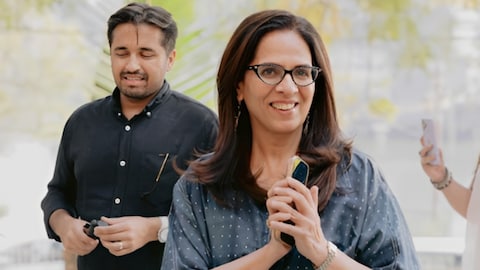
For three decades, couturier Anita Dongre has had a vision that blends not only good business with value, but focuses on contemporising craft for changing generations, and with that—consumer demands. While the word ‘sustainability’ has been relegated to being a buzzword (and for many, a sales pitch), Dongre has committedly vouched for the relevance of it. Be it through sourcing, messaging and working with artisan communities to her long-standing Rewild project. Here, we speak to the designer on new-age brides and the infrastructure of conscious consumption in 2026.
Cosmopolitan India: Evolution is always part of a creative journey—how have your brides and other consumers evolved, especially when it comes to Gen Z? Is there a stand-out detail or feature which is inspiring when it comes to this generation?
Anita Dongre: Evolution is an essential part of any creative journey, and I’ve seen a shift in how brides and consumers, especially Gen Z, approach fashion today. This new generation is far more conscious and curious. They ask questions about origin, craftsmanship, and what a product/brand stands for, and that awareness is gratifying, as I have been the same since I was their age.
What stands out most to me is their desire for authenticity and individuality. Gen Z isn’t interested in following a formula or belonging to a school of thought. Instead, they want pieces that reflect their values, their personal style, and their sense of purpose. They’re drawn to lighter silhouettes, details, and craftsmanship. Comfort, versatility, and emotional connection matter just as much as aesthetics.
I also see a strong inclination towards longevity. Many Gen Z brides are choosing pieces they can rewear, restyle, or pass down, which aligns with the idea of conscious luxury. For me, this evolution reaffirms that fashion rooted in craft, responsibility, and intention will always remain relevant, no matter the generation.
CI: What, in your view, is the biggest issue or challenge facing the fashion industry today—one that the industry must urgently answer for?
AD: To me, the biggest challenge facing the fashion industry today is the disconnect between scale and responsibility. Fashion is growing incredibly fast, but accountability seldom keeps pace. We’ve reached a point where we need to pause and ask ourselves not just how much we create, but why, and at what cost—to people, to animals, and to the planet.
Overproduction and mindless consumption have stripped fashion of its meaning. When clothes become disposable, the crafts, communities, and ecosystems behind them are often overlooked. The industry must urgently move towards slowing down, valuing quality over quantity, longevity over trends, and impact over immediacy.
For me, the answer lies in conscious creation. It’s about designing with intention, respecting craft, supporting livelihoods, and embracing conscious systems. Fashion has immense power to influence culture, and with that power comes responsibility.
CI: After so many years of creating and shaping design, what continues to inspire you and keep you motivated?
AD: What continues to inspire me is the constant reminder that design has meaning. I’m deeply motivated by the people doing the work—the artisans who carry generations of knowledge, the communities whose livelihoods depend on these crafts, and the possibility that fashion can be a force for positive change.
Nature is another endless source of inspiration, as it constantly grounds me and shapes how I think about design, responsibility, and longevity. It reminds me to slow down, to create with intention, and to respect what already exists.
I think, as a creative person, there is an inner child that sees every phase of their life and work with innocence and joy. So while my creativity evolves with that energy, it also stays rooted in values. Every collection is an opportunity to honour our craft heritage, support meaningful causes, and contribute thoughtfully to the future.
CI: What inspired the choice of Baroda and its royal heritage as the backdrop for Rewild this year?
AD: Baroda felt like a very natural choice for Rewild this year. The city has a deep cultural and artistic legacy, and its royal heritage carries a strong tradition of patronage and responsibility—values that are very close to my heart and central to Rewild.
When I visited the Lukshmi Vilas Palace, I was immediately drawn to its energy. It carries stories of craft, culture, and conservation that have been nurtured over generations. Being in that space made it clear that Rewild belonged there—it allowed the initiative to be anchored in history while looking firmly towards the future.
What made the experience even more meaningful was the alignment with Maharani Radhikaraje Gaekwad and the legacy of her family. The Gaekwads’ longstanding commitment to conservation, particularly through her father’s work in wildlife protection, resonated deeply with Rewild’s purpose.
CI: Do you think 'Rewild' has taken on a new meaning in 2026? If so, how would you define this shift?
AD: Yes, I do think Rewild has taken on a deeper and more expansive meaning in 2026. When it began, it was rooted in the idea of giving back and using fashion as a platform to support wildlife conservation and human–animal coexistence.
In 2026, Rewild is no longer just an initiative: it’s a mindset. It represents a shift from awareness to action, from individual intent to shared responsibility. It brings together artisans, conservationists, patrons, and communities to reimagine how fashion can contribute meaningfully to the world around us.
Rewild today is about regeneration—of ecosystems, of craft traditions, and of values. It’s about slowing down. For me, Rewild in 2026 stands for collaboration, continuity, and compassion—a belief that the future we’re working towards is one we all share.
All images: The brand
Also read: Gen Z is bringing made-to-measure fashion back and making it cooler than ever
Also read: So long, demure! 2026 is all about sexy dressing—five ways to easily try the trend
Read more!