“If a certain standard is being imposed on you, flip it”: Parvathy Thiruvothu is making her own rules
Best known for her work in Malayalam cinema, this actor is as sharp, witty, and articulate as they come. She scoffs at so called beauty standards, argues for gender equality, and is unafraid to stand up for what’s right.
Aug 11, 2026
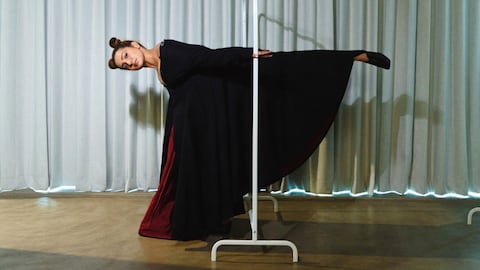
Some actors entertain. Some shift conversations. Parvathy Thiruvothu belongs to the latter camp. Whether it’s the emotionally loaded character of Anju in Ullozhukku (Undercurrent, 2024)—the most demanding role of her 20-year career, she says—the resilient Sameera in Take Off (2017), or the fearless acid attack survivor in Uyare (2019), Parvathy has come to be known for her layered performances in movies that matter. “In the initial days of my career, I’d think a lot more about the character and subject of the movie,” shares the Kozhikode-born 38-year-old. “Today, it’s a lot more about what projects I want to be a part of as a whole and their collaborative nature.” In the Hindi film universe, she has starred opposite the late Irrfan Khan in Qarib Qarib Singlle (2017), and in Kadak Singh (2023) alongside Pankaj Tripathi.
Also an advocate for women’s rights, particularly in South Indian film industries, Thiruvothu is a founding member of the Women in Cinema Collective (WCC) and actively campaigns for equal pay, gender equality, and safer working environments. Evidently, this versatile actor is all about substance over spectacle. As we peel back the layers during our conversation, the cadence of her voice reflects the clarity of her thoughts—steady, unfaltering, and unmistakably honest. Here are excerpts from our chat.
Cosmopolitan India: You’re known for choosing layered, disruptive roles. What’s your gut-check before saying yes to a script?
Parvathy Thiruvothu: More often than not, my gut screams “yes” the moment I meet the director. It’s an energy thing. We connect on the intent behind why the film is being made, and whether I can be a part of their vision. Their excitement, their motive matters to me, because my efforts are guided by their direction.
CI: What’s been your most emotionally demanding role so far? And how did you unwind once it wrapped up?
PT: Anju from Ullozhukku (2024) has been the most emotionally demanding role of my career, so far. Before I finally agreed to do it, I turned down the movie for four years because I was scared. I was certain I’d fail to understand her and catch her nuances. But luckily, the director (Christo Tomy) came back to me all those years later because he thought I was ready for that kind of depth. I still wasn’t sure! But I said yes, nevertheless. It was one of the best decisions of my life. To decompress later, I travelled abroad extensively. That usually does the trick.
CI: You’ve been a part of a generation that’s actively challenging how women are written. Is the industry moving beyond “strong female characters,” and are audiences ready for flawed, complex female protagonists?
PT: Representation has definitely evolved over the past decade, especially since the pandemic and the massive OTT revolution came about. Though we’re still playing it quite safe. The aspect of “unlikable” women is still an extremely uncharted space, which I’m hoping will flourish a lot more. These characters should not be reserved for just men, because all humans are flawed. This step could add a well-rounded approach to a show. The audience is as ready as we make them with exposure to different kinds of storytelling. So, the onus is not on them; it’s on the creatives who need to double down on ensuring that newer experiences are created for them.
CI: Can you tell us the most romantic thing someone has done for you that had nothing to do with grand gestures?
PT: There was a time when I had terrible issues with being able to sleep peacefully. Days went by without any restful sleep. Sometimes, you just need the presence of a loved one, even if it’s them just doing their thing around the house, but near you. For me, that was one of the most romantic gestures ever—a space so safe that I could rest and rejuvenate.
CI: Your take on beauty is surprisingly grounded. Are there any habits you swear by?
PT: I’m a skincare strategist. Considering I’m in my late 30s, I have many layers of skincare going on! I swear by deep moisturising masks at night and some lovely masks you can use on flights. Plus, a good sunscreen that doesn’t cause breakouts is a non-negotiable.
CI: What can Bollywood learn from cinema made across South India?
PT: For one, that the market can be shaped beautifully by real stories. I wish Bollywood, in its own way, would be more attuned to storytelling rather than just the making, marketing, and glamourising aspect of filmmaking. One of the main reasons I believe Malayalam cinema is celebrated across the world is because it always starts with the spine of the film—the storytelling, the script—and everything else is there to complement it. If the story and screenplay is weak, no amount of marketing or hype can save a film.
CI: Is there a genre you haven’t explored but are curious about?
PT: Tell us about the projects you have in the pipeline. I’ve been extremely lucky to have had a strong career of 20 years. I’ve mostly taken on roles in the dramatic zone, so there are so many genres I haven’t explored! Sci-fi, extreme thrillers, horror, comedy...I do have a cool mix in the pipeline. Two Malayalam films are rooted in reality—one more of a drama, but the other one is an out-and-out commercial thriller. In Hindi, too, I’m set to lead the crime thriller series Storm (2026) (Hrithik Roshan’s debut as a producer with HRX Films).
CI: What does a healthy relationship look like to you today?
PT: A healthy relationship needs space to be so transparent and honest that one doesn’t have to shrink themselves for any reason, especially when you’re uncertain about having uncomfortable conversations. To be able to enjoy such freedom with another person takes a lot of work. It also takes courage to put your faith in someone to catch you when you fall.
CI: How do you protect your own emotional well-being?
PT: It is a matter of carefully picking your tribe. It’s easy to be in an echo chamber. In fact, for the longest time, I assumed I had to stay safe with people who help me through any challenges. But now, I’ve started speaking with those who outright disagree with me or the things I fight for, through exposure therapy (a cognitive behavioural technique that helps people safely confront the thoughts, situations, or objects they fear).
CI: How do you navigate beauty standards in an industry that can be so exacting?
PT: Trying to understand how the so-called beauty standards came into the picture has been an anthropological adventure of sorts for me. The weight of these heavy expectations makes so many of us women shrink. There was once a time when people believed beauty and brains didn’t go together. Similarly, if you were considered a feminist or from the intelligentsia, you’d be judged for wearing makeup. When did they become mutually exclusive? Who decided this? Why is every step towards self-expression turned into something we’re punished with? So, here’s my take: If a certain standard is being imposed on you, flip it and set your own rules. I’m having fun with it in my own way.
CI: You come across as deeply introspective. What does your self-reflection practice look like?
PT: At the risk of sounding too bookish or spiritual, every single waking minute of my life is a practice in self-reflection. I just am a deeply introspective person. I try to be in the present as much as possible. And I’m hyper-aware of my own patterns. I use it to my benefit and also to improve my work.
CI: What does a perfect day off look like for you?
PT: Tell us what helps keep you grounded. A perfect day would be spent with my parents and my dog. One where I could take a leisurely afternoon siesta, spend quality time with them, read a book, make coffee, sit in silence with my dog, and also get to go to bed early. I practice different kinds of meditation, based on where I might be. And these days, I journal a lot more than before; it really helps me. I don’t lean into routine too much. Spontaneity is where I usually find myself.
CI: Finally, has your idea of success evolved over the years?
PT: From box office successes to, perhaps, something else... Oh, it’s evolved massively! While I’m no longer in a hurry to get anywhere, the goalpost certainly has moved beyond just being an actor. I wish to dive into the many aspects of filmmaking. To do that, one has to be brave enough to start, as it’d take me to the beginning of yet another stage of my career. I’d then consider myself successful, because it takes courage to start afresh.
Parvathy, unfiltered
Your dream role?
That of a dancer.
How’d your closest friends describe you?
Impatient.
A red flag you never ignore?
Lack of effort.
A green flag you wish people valued more?
Showing up.
A role that changed you?
Anju from Ullozhukku.
A song that feels like home?
To Build a Home by The Cinematic Orchestra.
Morning person or night owl?
Both in equal parts.
One thing you wish people asked you more often?
No such thing. Though I wish somebody would ask me to dance with them!
Your favourite binge?
Idli-sambar.
Your go-to self-care ritual?
Sleep.
A place you escape to?
My family.
If not an actor, you’d be?
A writer.
One thing you’re currently obsessed with?
Workouts.
This article originally appeared in Cosmopolitan India's July-August 2026 print issue.
Image credits:
Also read: Don’t you dare write off PV Sindhu...
Also read: Alaya F is tuning out the noise
Read more!