The ‘Wicked: For Good' press tour has a thinness discourse issue
The main talking point around the blockbuster has been the cast’s size—but the line between actual concern and malicious gossip is getting blurry.
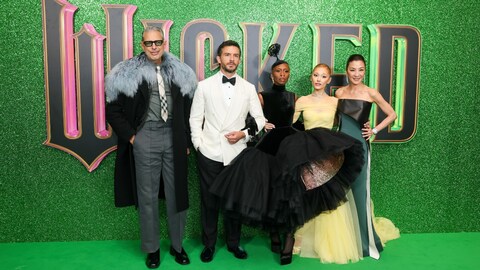
Growing up, you may have been taught not to comment on someone’s appearance if whatever problem you planned to call out couldn’t be fixed in five minutes. It's malicious to point out someone else's flaw if they can’t do something right then and there to address it (like fix food stuck in their teeth or a fly left unzipped). But lately, social media seems to have decided there’s an unwritten exemption to that long-standing rule: the Wicked: For Good press tour. Many a video has popped up in response to recent red carpet photos and interviews with the blockbuster’s headlining cast, and they focus on extreme thinness, alleged eating disorders, and adjacent conspiracies about what happened behind the scenes on the Wicked set.
The main way proponents of the “Wicked Effect” present their evidence online is via side-by-side photos and videos. They’ll show an image of Ariana Grande, Cynthia Erivo, or Michelle Yeoh from the mid-to-late 2010s, full-faced and smiling ear to ear, next to a recent photo from Wicked: For Good, where they appear noticeably thinner. The creators of these posts often preface their videos by acknowledging we’re not supposed to dissect people’s bodies. Even so, the visuals confront you with hollowed cheeks and protruding bones that weren’t visible before, and they’re supported by the common understanding that fatphobia is tightly woven into our society’s DNA. Approximately 15 percent of women resort to extreme and dangerous methods to avoid it.
The many, many, many people online calling attention to the cast's physical changes may not have the power to initiate any wellness checks, but their videos are framed as attempts to counteract any negative impact these actors’ images could have on vulnerable and/or developing psyches.
After Chadwick Boseman’s sudden and widely commented-upon weight loss was later understood to be a result of the cancer that caused his death, fans publicly learned a lesson: You never know what a celebrity is going through, so mocking or speculating about their appearance can be uninformed and cruel. A lot of the Wicked weight loss discourse seems to understand that lesson, yet uses it to just frame the speculation more carefully, now with an added morsel of gossip for extra justification.
The Wicked Effect body breakdowns have gradually entered the half-myth territory, where the focus is no longer on the stars’ well-being, or any potential damage they could inflict on young minds and society at large, but on feeding the broader cycle of tea that’s been following the Wicked press tour(s). A cycle where popular topics include Ariana and Cynthia’s seemingly codependent dynamic or the Ariana/Ethan Slater showmance scandal.
The side-by-side images that prevail in Wicked Effect videos are paired with crude, elaborate theories (like on-set Ozempic swaps, eating disorder competitions among castmates, or blind items alleging the actors tried to mimic Judy Garland’s harmful weight-loss methods from The Wizard of Oz) that seem to have no evidence behind them. In the race to throw two cents into the conversation, fans are positioning eating disorders—or the unconfirmed hints of one—as a juicy, cancelable offence. They’re cause for concern, and they aren’t something to flaunt, but they also don’t belong in conversation with cheating scandals or awkward cast dynamics. Experts agree.
“I think the best thing one can do is ask themselves what they are trying to accomplish,” says Kelsey Latimer, PhD, RN, a certified eating disorder specialist. “If the goal is to address a culture of concern for the messages the media is sending regarding body size and ideals, then there is probably a more effective way to do this than discussing a specific celebrity’s body. I think many people, including myself, are not interested in body shaming an individual human but rather in bringing awareness to the pervasiveness of thin culture.”
“It’s absolutely appropriate to have concerns about anyone in the spotlight and how they might be influencing others around them, intentional or not,” Latimer emphasizes. “But how we discuss the matter is a determining factor between showing our concern and becoming part of something that is also damaging.”
A disease is no moral failing. To discuss the Wicked Effect (existent or not) as though it is is to paint the millions of people who’ve dealt with similar issues as dangerous assailants rather than victims of a culture that plagues us all. And no one benefits from that besides engagement metrics.
If you or someone you know is struggling with an eating disorder, visit nationaleatingdisorders.org for resources and support.
Credit: Cosmopolitan