Is Gen Z styling traditional fits like streetwear?
Cultural dressing might have its coolest remix yet, and it's instinctive, expressive, and fully on repeat.
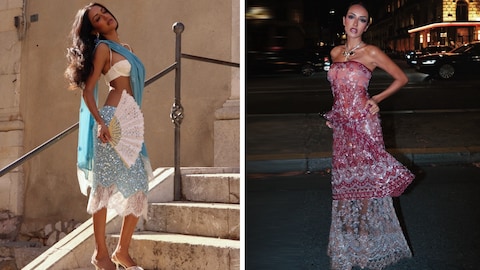
It’s giving corset kurtas. It’s giving gota-patti cargos. It’s giving temple silver stacks. Forget fashion rules, Gen Z is flipping the entire format. They are the generation turning traditional keepsakes into the freshest streetwear drop, layered with bangles, borders, prints, and a whole lot of identity. Tradition isn't reserved for playing dress-up anymore, it’s just being worn.
For a generation moving seamlessly between cultures, cities, and screens, style no longer sits in categories. If streetwear taught a generation to wear what they love with ease, on repeat, woven into their everyday life, Gen Z is
It’s giving corset kurtas. It’s giving gota-patti cargos. It’s giving temple silver stacks. Forget fashion rules, Gen Z is flipping the entire format. This is the generation turning traditional keepsakes into the freshest streetwear drop, layered with bangles, borders, prints, and a whole lot of identity. Tradition is no longer reserved for dress-up. It is simply being worn.
For a generation moving seamlessly between cultures, cities, and screens, style no longer fits neatly into categories. If streetwear taught us to wear what we love with ease, on repeat, and as part of everyday life, Gen Z is applying that same instinct here. Tradition is being reworked into something lived-in, styled intuitively, and worn without waiting for an occasion.
The remix has been here all along
Traditional jewellery did not just step out of its occasion-only role. It barged into the everyday wardrobe. And this is not first-wave fusion. Jhumkas met jeans a long time ago. What has changed now is the confidence. The ease. The way it all feels instinctive.
What once felt like separate style languages is now collapsing into one fluid wardrobe.
For fashion influencer Seerat Saini, heritage is not framed as nostalgia or occasion. It shows up as part of everyday dressing, even across geographies. “I think a typical first-generation experience is having two different closets—one for Indian formal wear for occasions and one for western wear for everything else,” she says. “As I’ve gotten older, the dissonance between the two closets has closed.”
The divide is no longer blurring. It is disappearing. “We’re entering a space where the idea of ‘western’ and ‘eastern’ fashion doesn’t feel as defined anymore,” she adds. “People are drawn to pieces that feel unique and well-made, and so much of that is coming out of India right now.”
Sari over a white tee, belted in silver, boots on. Gold temple chains stacked over a blazer. Bindi and nath, always on. Subiksha Shivakumar has become the blueprint for this particular energy. For her, cultural elements slip into everyday outfits with the kind of familiarity that makes styling feel instinctive.
“Growing up, pieces like maang tikkas were reserved for occasions, almost put on a pedestal,” Shivakumar says. “Styling them casually takes away that rigidity and makes them part of my everyday identity. It's about making these pieces feel like your own, and wearing them in a way that feels effortless” she adds.
The designers rewriting the rulebook
Behind this generation throwing a dupatta over a blazer on a random Wednesday is a new wave of Indian designers refusing to let traditional elements remain ceremonial. They are not just creating cultural fashion. They are dismantling the idea that you need a reason to wear it.
At Nishorama, that shift is playing out in real time. Block-printed and handcrafted pieces, rooted in regional artisan techniques, are being worn in ways that feel entirely new. Co-founder Ria Mehta points to the sheer range of styling as proof.
“We’re seeing people style our pieces in ways we didn’t even imagine—kurtis with shorts, scarves, even leather jackets and bandanas. From a residency intern in a lab coat to a hip-hop dancer, everyone brings their own perspective to it. That diversity is what makes it exciting.”
“There’s been a real shift towards embracing colour, pattern, and Indian elements again,” she adds. “It’s no longer something you hold back—it’s something people are choosing, confidently.”
And at its core, the intention is simple: “We’re just a bunch of kids trying to make men wear a kurta without an occasion—while women are out here styling kalamkari corset kurtis, jhumkas bouncing as they move through the world.”
That is exactly what makes tradition work like streetwear now. It is not about preserving it behind glass. It is about wearing it out, making it personal, and letting it move with you.
Lead image credit: Seerat Saini
Also read: The party top is back on the guest list and these brands are dressing it up
Also read: Anita Dongre’s Gen Z brides and fashion for positive change