Move over bars: Are wellness studios the new social hotspots?
Wellness spaces are evolving into places to connect, linger and meet new people. Here’s why the latest way to socialise involves less small talk and more shared experiences.
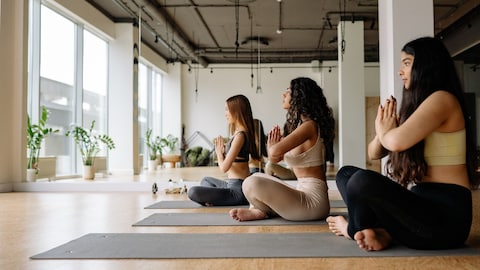
There was a time when making plans meant choosing between a café, a bar or someone’s living room. Now, the group chat is just as likely to end with, “Should we try that new Pilates studio?” or “There’s a breathwork session this Sunday, do you want to come?”
Across cities, community and wellness studios are becoming the new meet-up spots. People no longer visit them only to work out or switch off. They go to linger, connect, and sometimes meet people outside their usual social circles.
The appeal is easy to understand. A wellness class gives people something to do together without the pressure of making constant conversation. You could be moving through a yoga flow, trying a new dance workout or sitting in silence during a meditation session - but you are still sharing an experience. Once the class ends, conversation often comes naturally.
More than just a workout
Wellness studios have evolved far beyond traditional gyms. Many now bring together movement, mindfulness, food and community under one roof. A weekend could include a mat Pilates class, a nutrition workshop, a skincare pop-up or a sound healing session, followed by coffee with the people you met there.
This makes them particularly appealing to those who want to socialise without the usual expectations attached to a night out. Not everyone wants loud music, late nights or small talk over a crowded table. Sometimes, the ideal plan is a low-pressure class followed by a smoothie, a walk home and the feeling that you have done something good for yourself.
There is also something comforting about meeting people in a space built around a shared interest. Whether it is running, yoga, strength training, pottery, breathwork or dance, the activity creates an instant point of connection. You may arrive alone, but you are unlikely to feel entirely alone once the session begins.
The co-founder of Padel 360, Anu Bansal, says, “People are increasingly drawn to spaces that offer a more considered experience where movement, leisure and social connection come together. A wellness studio can become part of someone’s lifestyle: a place to play a sport, spend time with friends, decompress after a long day, and connect with like-minded people.”
The rise of intentional socialising
For many young adults, socialising has become more intentional. There is greater awareness of how people spend their time, energy and money, and wellness-led meet-ups can feel like a more meaningful alternative to routine plans.
Ishita Mohatta, co-founder of Padel 360, also says, “There is a growing appetite for experiences that feel more engaging and intentional than simply meeting over a meal or a drink. There is also a certain appeal in spaces that bring together sport, wellness and hospitality in one setting.”
This does not mean every meet-up needs to be productive. The point is not to turn friendship into another item on a self-improvement checklist. Instead, wellness studios offer a softer kind of social space - one where people can connect while doing something that helps them feel grounded.
For some, the attraction is structure. It is easier to commit to a 7 pm class than an open-ended plan that may or may not happen. For others, it is the possibility of finding a community in a city that can otherwise feel isolating, especially when work, relocation or changing friendships leave little room for spontaneous connection.
A space to belong
The most successful studios understand that community cannot be created simply by adding a few events to a timetable. It comes from the small details: instructors who remember your name, members who stay back after class, welcoming staff and spaces that encourage people not to rush out.
Some studios are also building communities through book clubs, creative workshops, support circles, run clubs and casual gatherings. These events give regulars a chance to interact beyond the class format and help newcomers feel included.
Abhishree Goyal, the founder of Wave, adds, “At Wave Colaba, we noticed people were lingering after class, chatting over water, exchanging numbers. That wasn’t an accident - it’s what happens when you design a space around energy and openness rather than equipment and reps.”
In a country like India, where urban life can be busy, and socialising often revolves around food, family or nightlife, these spaces offer another kind of gathering point. They are social without being overwhelming, communal without being intrusive and structured without feeling formal.
“Community isn’t just marketing language - it shows in the regulars who know each other’s names, the group chats that form organically, the people who show up even on their off days just to be around others. Real community is built through repetition and familiarity, not a single trendy photo op,” Abhishree says.
Maybe that is why they feel so relevant right now. People are looking for connection, but they are also looking for calm. They want plans that feel enjoyable, not exhausting; social, but not performative; and healthy, without being overly serious.
The next time someone suggests meeting at a wellness studio, it may be worth saying yes. You might leave with stronger muscles, a clearer mind and, if you’re lucky, a new friend to add to the group chat.
Lead image: Pexels
Also read: Burnt out, woke up: How corporate stress is driving India’s wellness boom
Also read: From Botox cupcakes to collagen wontons, food is getting a wellness makeover