Why 'Off Campus' is the grown-up romance adaptation we needed in 2026
The adaptation of Elle Kennedy’s beloved hockey romance understands that modern audiences want emotional intelligence, softer masculinity, and chemistry that goes beyond the fantasy.
May 15, 2026
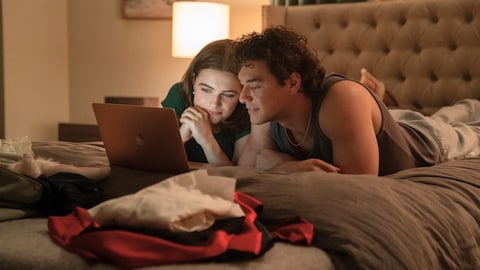
Back in 2015, long before BookTok turned hockey romances into an internet personality trait, Off-Campus by Elle Kennedy defined a certain kind of new adult romance. Garrett Graham and Hannah Wells belonged to an era of emotionally unavailable men, high-stakes chemistry, and college romances that felt messy enough to be interesting, but still safe enough to obsess over.
Watching Off Campus as a show now feels both nostalgic and surprisingly current. It understands that audiences in 2026 are less interested in alpha male behaviour disguised as charm, leaning instead towards emotional vulnerability, consent, and softer masculinity, without losing the fantasy that made readers attached to these characters in the first place.
As someone who read the books years before they became TikTok staples, what stands out most is how aware the adaptation feels of the cultural gap between 2015 and now.
Updating the fantasy
One of the smartest things the adaptation does is modernise Garrett without turning him into a sanitised internet boyfriend. Book Garrett existed in that distinctly 2010s romance space where emotional unavailability was treated like a personality trait. The adaptation keeps him messy and charming, but removes the casual arrogance that would feel exhausting to watch now. He still feels like a fantasy, just one designed for audiences with better standards.
That shift says a lot about how romance itself has changed. Audiences still want tension and escapism, but not at the expense of emotional intelligence. The rise of softer male leads across romance publishing and television reflects a wider exhaustion with hyper-aggressive masculinity. Off Campus taps into that naturally instead of loudly announcing that it has updated itself for modern audiences.
The fantasy still exists, obviously. Garrett Graham walking around in compression tees remains an extremely effective creative decision. But the show understands that attraction alone cannot carry an entire romance anymore. The chemistry works because emotional intimacy is treated with the same importance as physical attraction, which makes the relationships feel more convincing than many recent streaming romances.
Beyond BookTok
A lot of recent romance adaptations feel engineered for TikTok edits before they feel like actual television. This series works differently because it approaches the material like an ensemble drama instead of a collection of viral moments. Side plots start earlier, timelines overlap, and supporting characters feel integrated into the story rather than positioned for future spin-offs.
As a reader, I expected some of those changes to annoy me. Instead, they make the series feel bigger and more dynamic. The books relied heavily on internal monologue and isolated romance arcs, while the show creates a larger emotional ecosystem around the characters. It understands that television needs movement and momentum in ways books often do not.
That is also what separates the show from many recent adaptations. The series is less interested in recreating scenes exactly as readers imagined them and more interested in preserving the emotional experience of reading the books. Ironically, that makes it feel more faithful than adaptations that obsess over visual accuracy while completely missing the emotional tone of the source material.
Romance with emotional stakes
The adaptation also benefits from taking romance seriously instead of treating it like disposable entertainment. Hannah’s boundaries are respected, awkwardness is allowed to exist, and emotional tension carries as much weight as physical intimacy.
Much of what readers loved about these books existed inside the characters’ heads, and the show translates that into pauses, reactions, and conversations instead of clunky exposition. It feels emotionally grounded without trying too hard to appear serious.
There is, admittedly, an overwhelming amount of nudity at times. But even then, the performances keep things anchored. The actors understand that longing and vulnerability are usually more compelling than spectacle, which is why the emotional moments land as well as they do.
What makes the series work is not that it perfectly recreates a romance series from 2015. It works because it understands that romance audiences have changed.
All images: Prime Video
Also read: 'Off Campus' creator Louisa Levy on bringing BookTok’s favourite hockey romance to life
Read more!