Do we all need a fantasy boyfriend now?
Whether it’s the ‘walking green flag’ male protagonists of A Court of Thorns and Roses, or a husband made from wicker, women are turning to idealised versions of men. Is this the solution to the dating crisis?
In 2026, dating can feel like a uniquely dispiriting and demoralising experience; hours spent swiping on apps, Chat GPT-drafted “sorry, I’m not into you like that” messages, and flopped attempts at pulling IRL (what can we say, our flirting skills are rusty). And, ofc, the return of singles mixers and speed dating, which have opened up yet another avenue for rejection.
With more options for finding romance, dating has become a Sisyphean task rather than a legitimate route towards love and connection. For women who date men, the picture is even bleaker. The dating crisis isn’t just about a proliferation of dating methods, but a growing schism between the sexes.
Data from 2025 suggests that 56% of millennial and Gen Z men in the UK (and 29 other countries) think we’ve gone ‘too far’ in promoting women’s rights and are actively discriminating against men. Add to that a number of cultural factors — including the influence that manosphere content is having on men’s swing towards regressive views of heterosexual relationships and an ideology gap that sees women skew more left-wing than men, and you’ll see why straight and bi women are particularly going through it.
Now, it seems that women are so fed up they are turning away from the IRL misery of dating and embracing the limitless, expansive world of fantasy: a space where men are handsome, chivalrous, and would never be caught listening to Joe Rogan. As relationship contracts between men and women degrade — ie, common decency and clear communication become scarce — the idealised visions of men in the realm of imagination have become increasingly alluring.
Nowhere is this clearer than in the world of fiction. Over on Reddit, women gush about their favourite fantasy boyfriends from romantasy novels like the wildly popular ACOTAR franchise, which just dropped its latest, much anticipated instalment, and War of Lost Hearts series. While, traditionally, the genre is associated with ‘bad boy’ tropes, female readers seem to be invested in a new breed of healthy masculine archetypes: characters like Maxantarius, from War of Lost Hearts, a “male lead who is actually nuanced and human” or Istvahn from The Saint of the Steel series, a character who “only has green flags”.
These fictional men often offer a vision of masculinity that women are craving but are unable to find IRL. “Fantasies of masculinity often offer a ‘domesticated’ or ‘idealised’ version of men by taking potentially volatile, aggressive, or unyielding male traits and repackaging them into forms that are safe, emotionally supportive, and socially constructive,” explains Dr Katherine Twamley, a sociology professor at UCL focussing on love, intimacy and gender.
“Rather than erasing a man's strength or traditional masculinity, these fantasies channel that energy so it serves the needs of a partner, family, or community,” she adds. “They allow readers to admire male power without having to deal with the messy realities; like emotional withdrawal, aggression, or a refusal to compromise that would accompany such forms of masculinity.”
What women seem to be lacking in their dating lives isn’t just an idealised version of a man anymore, it’s a healthy connection, with someone who respects them: amidst this backdrop, female-written fantasy is plugging a gap for nuanced portrayals of respectful hetero relationships. So many of us grew up on media which filled us with hope for a fulfilling partnership and, after the real world has abused our expectations, we’re escaping back into the fantasy.
We can see this trend reflected also in audio porn, a medium which has long been dedicated to women’s erotic dreams. What’s striking though, particularly on female-focussed platforms, is an altogether more pedestrian kind of imaginary scenario: erotic, audible sequences where men ask for consent, show an interest in a woman’s basic needs (like cooking her a meal or tucking her into bed), or even just remember basic facts or information about their female love interest. When entry-level care and courtesy is presented as an erotic fantasy, it’s a sad indictment of what many women are missing from actual interactions with men: respect and reciprocity.
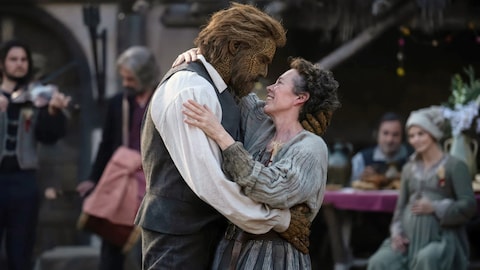
Perhaps the most interesting — and tbh depressing — representation of the fantasy boyfriend comes in the new film Wicker in the form of Olivia Coleman’s husband, made from a literal basket. A quirky inversion on the Pygmalion myth, the film sees a lonely fisherwoman commission a local craftsman to build her a husband out of wicker: inciting confusion, but also envy, from the local townspeople (in case you’re wondering where the envy comes in, Alexander Skarsgard plays the titular wicker husband). Unbelievably, when the trailer launched back in August, the internet was overtaken by women’s thirsty, unfettered reactions.
Admittedly, this basket husband is a smart feminist take on a ‘trophy wife’, emphasising the ways that men have valued women for little more than their looks for millennia — and the social capital this bestows upon anyone who is married to them. But it also speaks to the widespread disillusionment of our heteropessimist moment: when women are so burnt out from dating that they would fantasise about a man who is literally empty and serves as nothing but a blank canvas on which to project their own personal fantasies.
As with all folklore and fantasy, sometimes it doesn’t require too much reading into, so much as just embracing for its harmless absurdity, but it does bear considering that the dating scene has reached a point of being so bleak, that women are willing to elope with any man — monster, fairy, wicker or otherwise — just as long as he isn’t human.
Credit: Cosmopolitan