
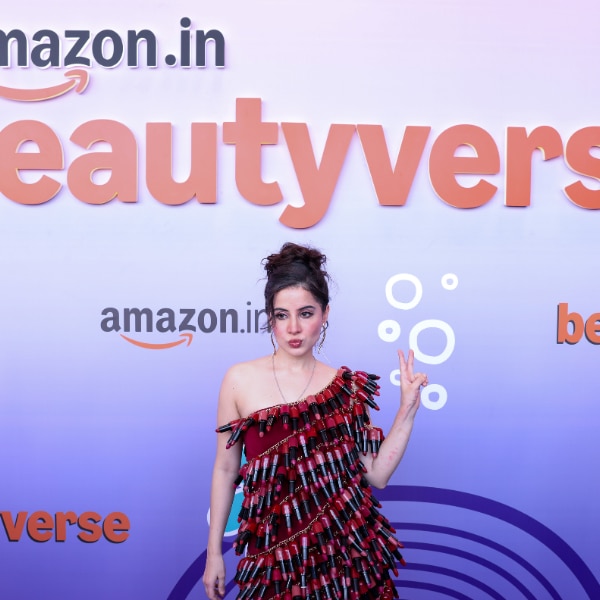
Questioning the status quo: Uorfi Javed, Maheep Kapoor, and Rani Ko-He-Nur on beauty, glamour, and self-expression at Amazon Beautyverse
From whether glamour ever really went out of fashion to why "natural beauty" is also a performance, the panellists of ‘Questioning the Status Quo’ at Amazon Beautyverse made one thing clear: beauty was never meant to be a rulebook.

Beauty loves rules. Contour your face this way. Don't overdo the blush. Embrace ageing, but gracefully. Be natural, but polished. Stand out, but not too much.
So, if the ‘Questioning the Status Quo’ panel at Amazon Beautyverse proved anything, it's that perhaps the most exciting thing happening in beauty right now is that people are finally getting tired of these contradictions.
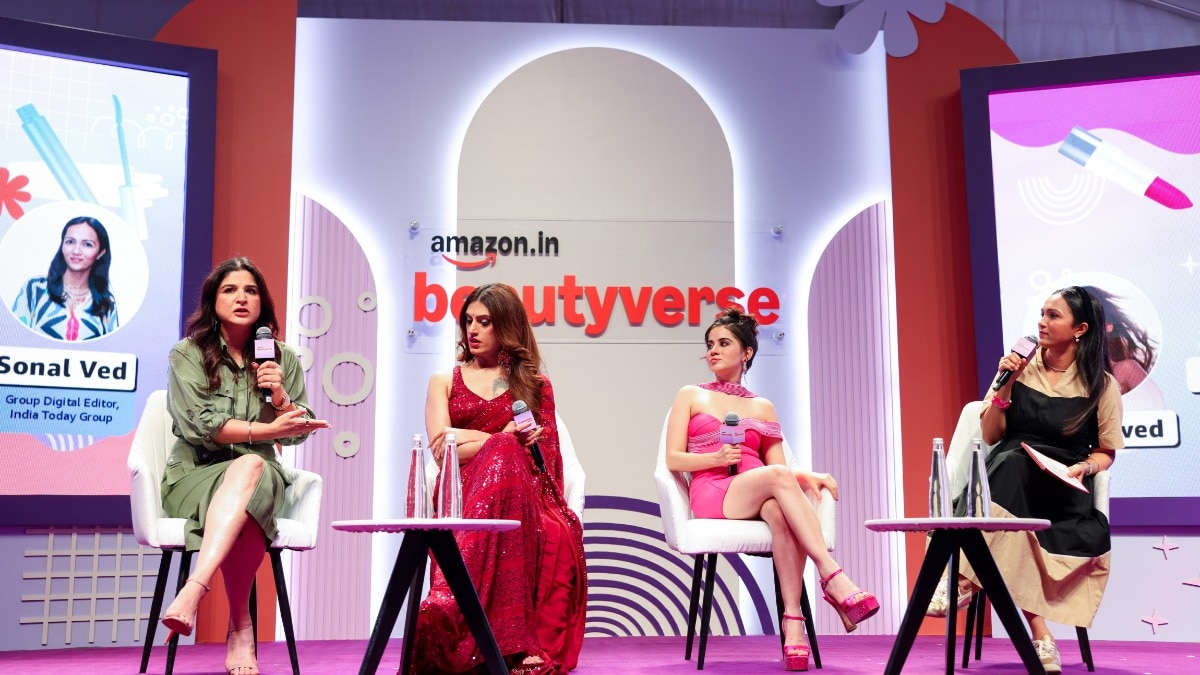
Moderated by Digital Editor of Cosmopolitan India, Sonal Ved, the conversation brought together three personalities who have each challenged conventional ideas of beauty in very different ways: Uorfi Javed, who has built a career out of unapologetic self-expression; Maheep Kapoor, who continues to champion glamour in an era obsessed with minimalism; and singer, performer, and drag artist Sushant Divgikar, whose alter ego Rani Ko-He-Nur has long blurred the boundaries between beauty, performance, and identity.
The result was a conversation that was funny, provocative, and refreshingly free of the usual beauty-industry platitudes.
The first question, naturally, went to Uorfi Javed: For someone whose every outfit sparks a national conversation, did she ever imagine she would become a symbol of beauty rebellion?
The answer was straightforward.
She never set out to shift anything. She simply wore what she wanted. The debate around it, she explained, belonged to everyone else. While industry acceptance is welcome, it was never the goal. Nor is it something she feels she needs to continue expressing herself freely.
What has genuinely changed, according to Javed, is the confidence she sees in younger women. More girls are experimenting. More girls are taking up space. More girls are owning their choices without waiting for permission. But she also pointed out an uncomfortable truth: society still tends to celebrate boldness only when it is packaged in ways it finds acceptable. Real acceptance, she suggested, means embracing difference even when it feels unfamiliar or inconvenient.
If Javed challenged beauty norms through experimentation, Maheep Kapoor challenged another modern obsession: the idea that beauty must now be understated to be taken seriously.
A question about whether glamour was making a comeback drew one of the panel's most memorable responses. "Glamour never left," Kapoor said. "It just got bullied into thinking it needed to justify itself."
And honestly, she has a point.
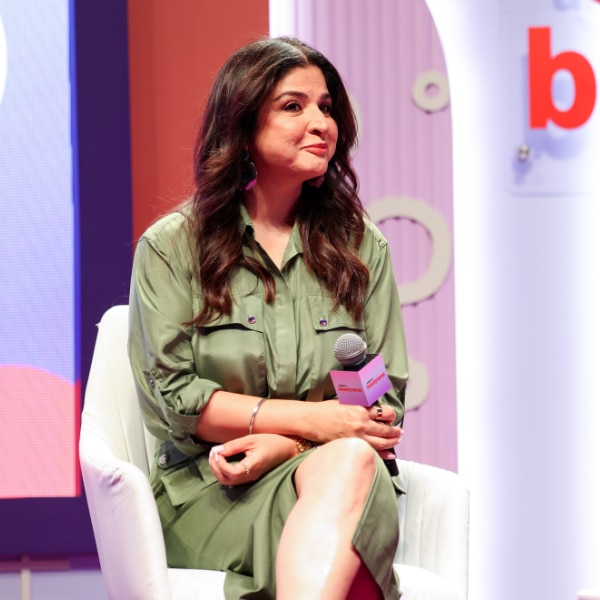
Somewhere along the rise of skinimalism, "effortless" became aspirational and "glamorous" started feeling like something women had to defend. Kapoor rejected that binary entirely.
Why should women have to choose between healthy skin and a full face of makeup? Why has "less is more" evolved into a moral argument? Beauty, Kapoor argued, isn't a virtue test. It doesn't become more authentic because it uses fewer products.
The growing return of glamour isn't about trends cycling back. It's about women no longer apologising for wanting to look dressed up, polished, or extra if that's what makes them feel like themselves.
Then came perhaps the most fascinating part of the discussion.
When Sonal Ved asked Rani Ko-HE-Nur what she thought of the idea of "natural beauty", the answer dismantled the phrase almost instantly.
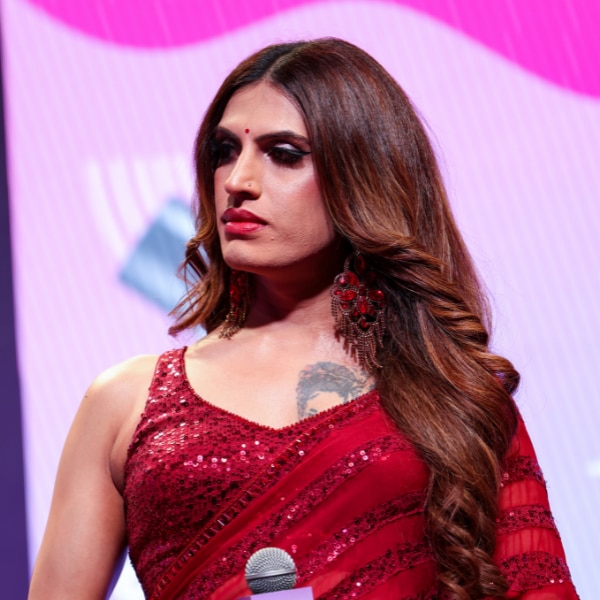
"Natural beauty is also constructed," Ko-HE-Nur explained.
Even the most minimalist look involves products, decisions, effort, and intention. The so-called no-makeup makeup look is rarely effortless. It is simply another form of beauty performance. And for someone who has spent years transforming themselves through drag, the idea of "too much" simply no longer exists.
Drag, Ko-HE-Nur said, taught her that beauty has no ceiling.
Minimalism is beautiful. Maximalism is beautiful too. The problem begins when one aesthetic is positioned as more evolved, intelligent, or respectable than another. That, they argued, is simply beauty elitism in a different form. The most radical thing anyone can do with their face isn't to look younger, prettier, or trendier. It's to make themselves happy.
Perhaps that sentiment became the thesis of the entire conversation. Because beneath the jokes and the playful disagreements was a larger observation: India is finally moving away from beauty as compliance. Beauty no longer has to mean fitting in. It can mean standing out. It can mean rhinestones under your eyes, a bold red lip, bare skin, dramatic contour, or absolutely none of the above.
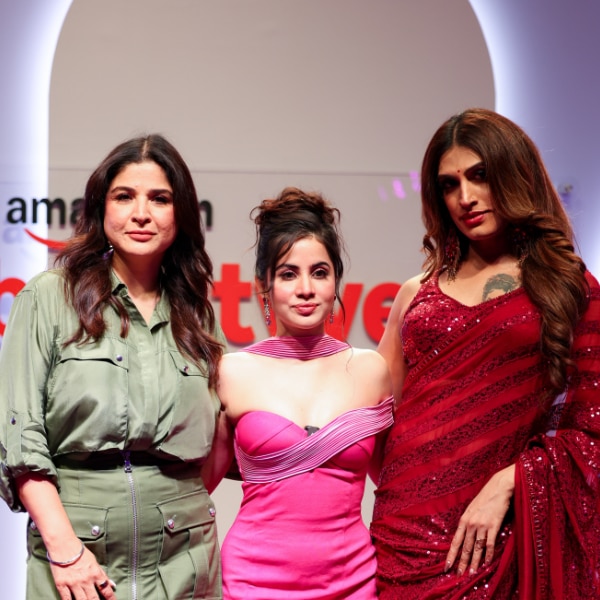
The panel's rapid-fire game, ‘Accept or Defend’, only reinforced this point.
Was contouring a scam?
Should red lips always be the answer?
Do body care products deserve the same budget as skincare?
There were spirited arguments, laughter, and a few delightfully controversial takes. But no unanimous verdicts. And that was precisely the point.
The session on ‘Questioning the Status Quo’ at Amazon Beautyverse revealed that the most refreshing beauty trend wasn't a new product or a viral technique. It was permission. Permission to wear more. Permission to wear less. Permission to change your mind. And permission to approach in whatever way you feel right.
Also read: Why dry brushing and body oils make the perfect skincare duo
Also read: The cutest snackable lip products for hydrated summer lips
Comment
more from Beauty
Meet anti-blush, stained glass lips, and 4 other trending makeup looks for fall

I deleted Instagram for two months and forgot what was wrong with my face
Dear universe, when am I going to get a boyfriend?

Inside the sexual fantasy forums where women share their deepest desires

Are you too independent to be loved?

We know what a healthy relationship looks like, so why do we keep making excuses for the unhealthy ones?

Beyond the metros: Smaller cities drive over half of Amazon’s festive fashion and beauty orders

Is the fear of falling first ruining modern dating?

Everyone wants a “low-maintenance relationship” until they’re actually in one
Unique gifts for every personality: Meet them where they are