
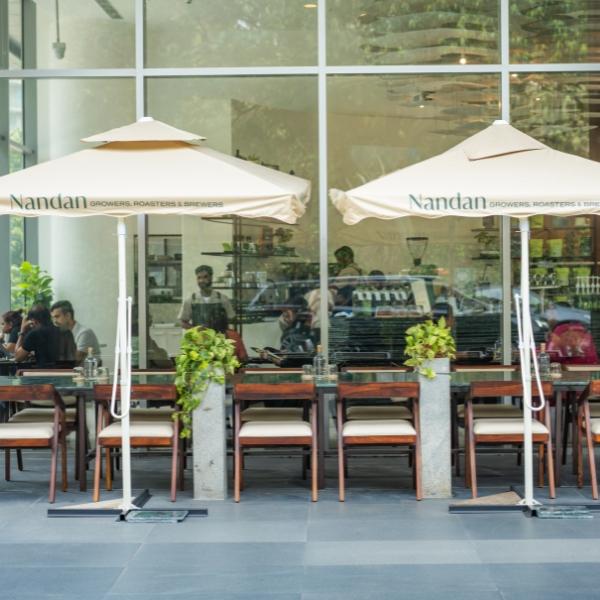
Carrying it forward: Heritage methods meet the café culture, part one
A seat at Yahvi Mariwala's table, discussing how a new generation of legacy heirs is reshaping India's hospitality landscape, one experience-led venture at a time.

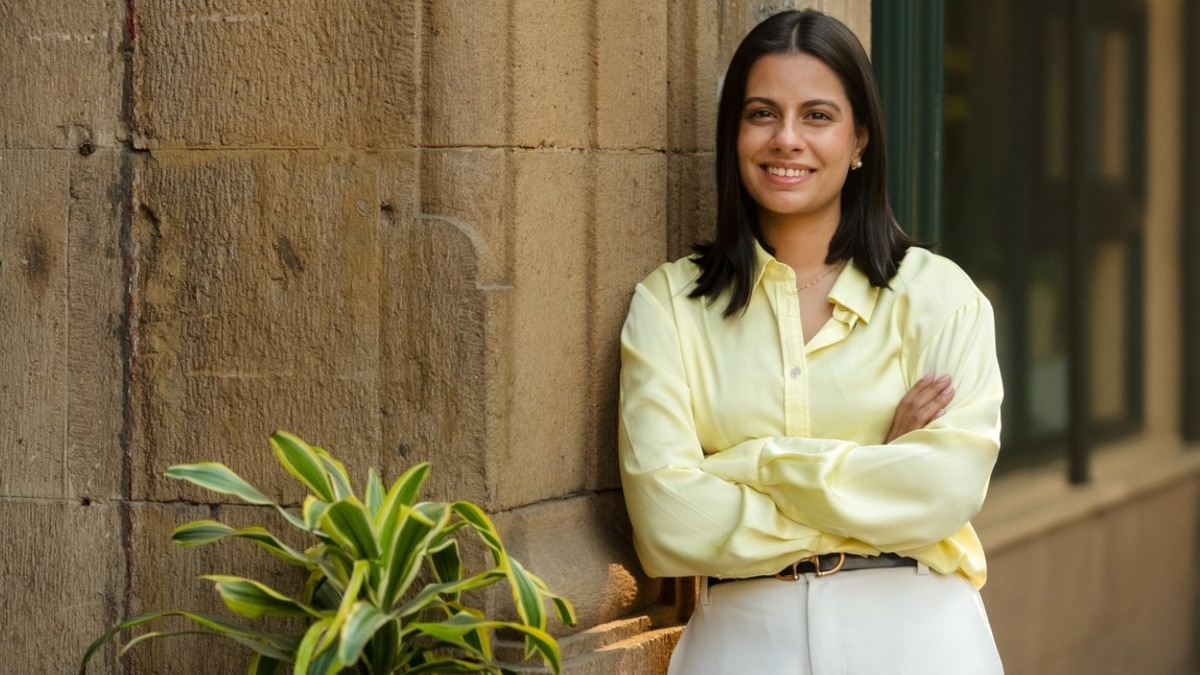
Coffee continues to have a main-character moment, and Yahvi Mariwala, co-founder of Nandan Coffee, is helping write the script. After studying in the US, she returned to India to join the family business, but instead of simply carrying on a legacy, she's reimagining it for a new generation.
She’s bringing the story of her family's three-generation, certified-organic coffee estate in Kodaikanal to the city, transforming decades of coffee-growing expertise into a café experience that feels equal parts rooted and refreshingly current.
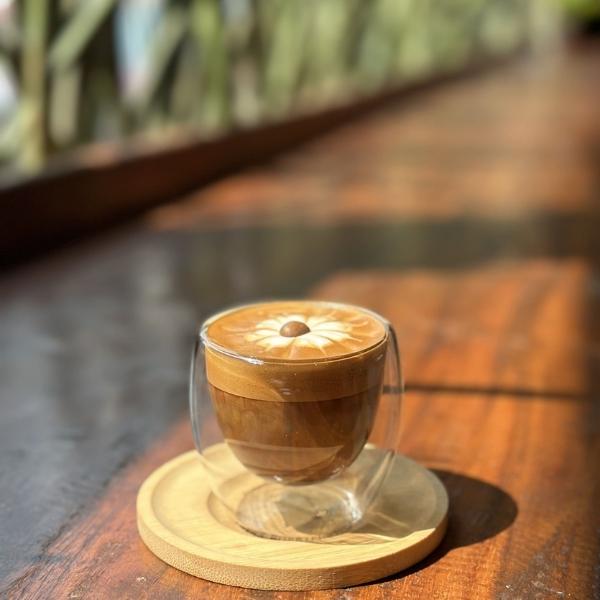
Growing up amid the cool wilderness of the award-winning Nandanvan Estate, she was surrounded by the aroma of roasting beans, endless cups of French-press coffee, and the rhythms of life on a working plantation. Today, that heritage finds a contemporary expression at Nandan Coffee, where estate-grown brews share menu space with an Iced Brown Butter Cookie Mocha, fragrant Jasmine Pearls tea, and a zingy Spiced Kokum Spritzer.
The food is just as much a draw, from the vibrant Grapefruit & Raw Mango Salad and comforting Harvest Ribbon Pasta to the decadent Nandan Tiramisu French Toast. The result is a space that feels perfectly in tune with contemporary café culture whilst staying deeply connected to the hills where it all began.
Ahead, a conversation with Yahvi about how a great cup of coffee begins with connection.
Cosmopolitan India: You come from a storied family legacy. What drew you to hospitality, and why did food feel like the right way to build something of your own?
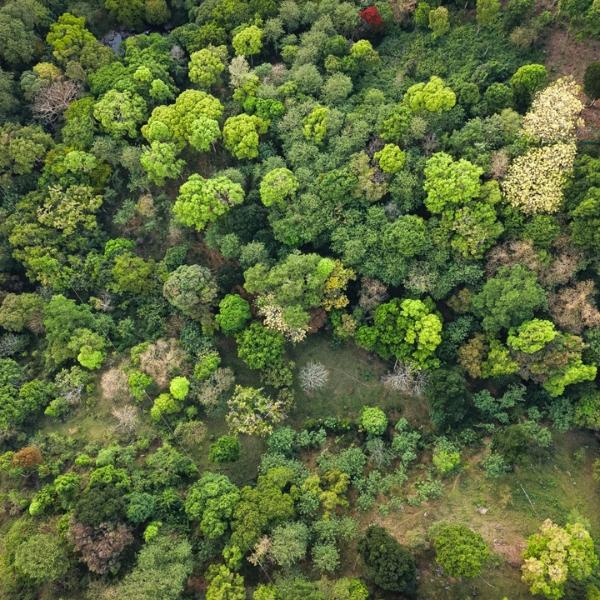
Yahvi Mariwala: I grew up on Nandanvan Estate, nestled in the Palani Hills of Kodaikanal, Tamil Nadu. For much of my childhood, the estate was the backdrop to our family life. But even at a young age, I found myself fascinated by coffee and everything that went into producing it.
Over time, I came to appreciate that while our family had spent decades perfecting what we grew and produced, very few people ever got to experience the story, care and craftsmanship behind it first-hand. There was so much more to tell-from our pioneering organic farming practices to innovations like one-way valves that helped deliver fresher coffee to customers and the values that had guided the estate for generations.
Hospitality felt like the most natural way to bridge that gap. A cup of coffee can tell a story, but a space allows people to engage with it more deeply, to ask questions, to understand where it comes from, and to create memories around it. For me, building Nandan Coffee's café experience was about creating a more meaningful connection between our customers and everything Nandan Coffee has stood for through generations.
CI: As dining becomes increasingly experience-led, what feeling did you want guests to leave with after visiting your space?
YM: We wanted to create a space that our guests felt drawn back to through different moments and stages of their day. Whether it's grabbing a quick takeaway coffee, hosting a morning meeting, enjoying a first date, or then gathering for a leisurely Sunday brunch with family with kids, grandparents, and even pets included. We wanted Nandan Coffee to feel like a natural and intrinsic part of our guests' lives.
Nandan Coffee is honestly more than a cafe. We wanted to create a sense of comfort, familiarity and belonging. Every aspect of the space was designed with that in mind, so that guests leave feeling connected and looking forward to their next visit.

CI: How important is storytelling and provenance, from sourcing and ingredients, to design and atmosphere, to your vision?
YM: To me, provenance is everything. Nandan Coffee exists because of Nandanvan Estate, so it naturally sits at the heart of every decision we make. The estate is not just where our coffee is grown; it has shaped how we think about quality, hospitality, sustainability and the overall experience we create. Whether it's the coffee we serve, the stories we share with guests, or the design and atmosphere of our spaces, there is always a conscious effort to stay connected to that origin.
I think people today are increasingly curious about what they consume and where it comes from. For us, sharing that journey isn't a marketing exercise; it's simply being honest about who we are. The estate has been part of our family's life for generations, and bringing elements of that story into the café feels like the most natural thing to do.
CI: What has surprised you the most about building a hospitality business?
YM: What has surprised me most about hospitality is just how emotional it is. You can spend months thinking about menus, coffee, design, and operations, but what people often remember are the smallest moments and, more importantly, how the experience made them feel.
There is a responsibility that comes with creating those moments; one I don't think I fully appreciated until we started building our cafés. You're not merely serving coffee or offering food; you're becoming part of someone's routine, celebration or memory.
At the same time, that's what makes hospitality so rewarding. It gives you a front-row seat to people's lives in a way very few businesses do, and being able to create spaces that become meaningful to them is incredibly fulfilling.
CI: What has been the most challenging part of turning an idea into a space that people engage with every day?
YM: The most challenging part is accepting that once you open a space to guests, it really takes on a life of its own. You can spend countless hours obsessing over every detail, from the design and layout to the smallest operational decisions, believing certain elements will resonate with people.
What I've learned is that you can never fully predict what guests will connect with. Some details we've invested enormous amounts of time and energy into may go largely unnoticed, while other, seemingly smaller touches that feel instinctive and authentic to Nandan Coffee end up becoming the things people remember and appreciate.
Every new opening is a humbling experience in that sense. Ultimately, the space belongs as much to the people who use it as it does to those who created it and watching guests shape their own relationship with it is both the challenge and the reward.
CI: Your ventures each have a distinct identity. How do you protect that while also thinking about growth and scale?
YM: The foundation of every Nandan Coffee space is a shared set of standards that define what quality, service, and hospitality mean to us. Those principles remain constant, regardless of where we grow.
What evolves is how each space responds to its surroundings. We spend a great deal of time understanding the neighbourhood we're entering and thinking about how the café can best serve the community around it. The needs of a busy business district are very different from those of a residential neighbourhood, and we feel that each of our spaces should reflect the rhythm of its location.
For us, growth does not mean replicating the same café over and over again. It's about carrying forward the values and experience that define Nandan Coffee, while allowing each space to develop its own personality and sense of place.
CI: In an age of convenience and immediate delivery, what role do cafés and hospitality spaces play in people's lives?
YM: Cafés have always been what many people call a "third space"- somewhere between home and work where life unfolds more naturally. In many ways, they become a home away from home, especially because coffee is such an integral part of people's daily routines.
In an age defined by convenience, speed, and constant connectivity, I think cafés and hospitality spaces play an even more crucial role. They offer something that can't be delivered to your doorstep, and that’s a genuine human connection. They're places where conversations happen, relationships are built, ideas are exchanged, and people simply spend time together.
While technology has made many aspects of life more efficient, the need for community and belonging hasn't changed. If anything, it's become more valuable. To me, the role of a café is to create a welcoming space where people can slow down, connect and feel part of something more than just themselves.
CI: What's one business lesson you've inherited from your family, and one that you've chosen to challenge?
YM: A business lesson I've inherited from my family is to never compromise on product quality or values. From the very beginning, we wanted Nandan Coffee to be a brand that served every coffee drinker while also being a responsible steward of the land. That mindset has shaped everything we do. There is immense value in perfecting the work that happens behind the scenes-whether on the estate, in production, or in our cafés because those choices ultimately shape the customer's experience. We've never settled for "good enough." There is always a desire to improve, innovate, and keep looking ahead rather than resting on past achievements.
One idea I've chosen to challenge is the belief that a great product alone is enough. For a long time, coffee businesses focused on growing exceptional coffee, roasting it well and letting the product speak for itself. While that foundation remains essential, I've come to realise that people connect with experiences, communities, and spaces just as much as they connect with the product itself.
That's why we've invested so heavily in our cafés, events, food programme, and the overall experience we create. The coffee remains at the heart of everything we do, but I've challenged myself to think beyond the cup and build a brand that people genuinely want to spend time with and feel a part of.
CI: Bengaluru has one of India's most dynamic café cultures. How would you say Nandan stands apart?
YM: Nandan Coffee entered Bengaluru with a great deal of respect for the city's vibrant and evolved coffee culture. What makes Bengaluru unique is that it's not only home to some of India's most exciting cafés, but also to generations of coffee knowledge and appreciation. Conversations around growing, sourcing, roasting and brewing coffee have long been part of the city's identity.
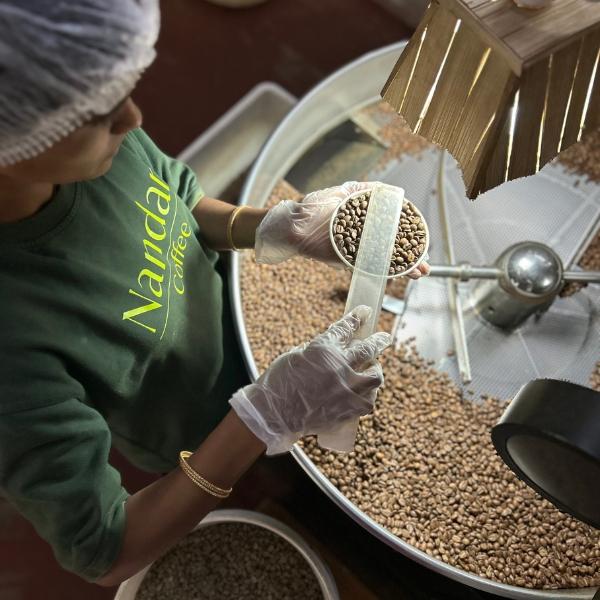
As a brand that grows, roasts and serves its own coffee, we bring a perspective that is closely connected to origin. Our roots at Nandanvan Estate allow us to share the journey of coffee in its entirety- from the land and farming practices to the final cup served in our cafés.
That said, our goal has never been to stand apart for the sake of being different. Instead, we see ourselves as contributors to Bengaluru's evolving coffee culture. We hope to bring people a little closer to the source of their coffee while creating spaces that celebrate the people, places, and craftsmanship behind every cup.
CI: What role does design play in shaping the way people experience your space?
YM: Design plays an incredibly important role in shaping how people experience our spaces. At Nandan Coffee, we see design as more than aesthetics; it's about creating an environment that feels intuitive and welcoming, in the way people live their lives.
Each Nandan Coffee café is designed to invite guests into the brewing experience, fit seamlessly into different moments of their day, and reflect the story of our origins. Whether someone is stopping by for a quick coffee, settling in for a meeting, or spending a leisurely afternoon with friends and family, the space should feel comfortable and natural to be in.
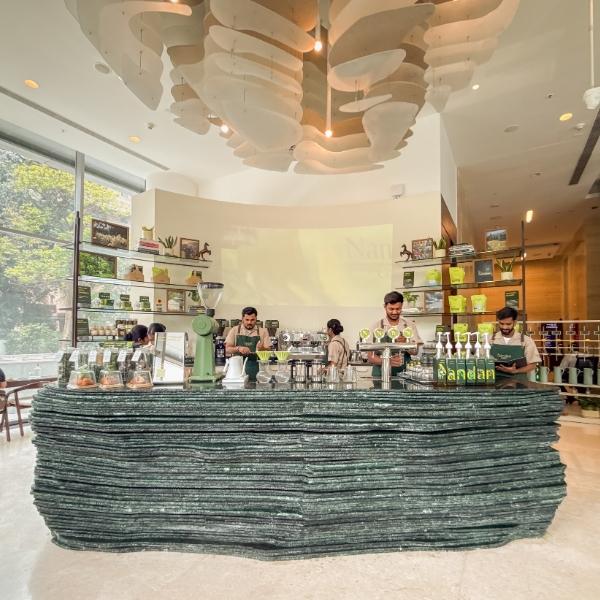
At the same time, design allows us to bring elements of Nandanvan Estate into the café experience. It helps us create a tangible connection between where our coffee is grown and where it is enjoyed, making the story behind every cup feel a little more accessible. For instance, in Bengaluru, an expansive central coffee bar places the brewing process at the heart of the space. Crafted from layers of Baroda Green Marble inspired by the contours of Nandanvan Estate, the bar creates a staggered stone effect that subtly references the landscape where our coffee is grown. Above it, a custom lighting installation draws inspiration from the terrain of Kodaikanal, bringing another element of the estate into the café experience.
CI: If your venture reflects your personality, what do you think it reveals about you that people may not know?
YM: I think most people assume Nandan Coffee reflects my love of coffee, and while that's certainly true, it's actually something far more personal. Nandanvan Estate, where our coffee is grown and where I spent a significant part of my growing-up years, is one of my favourite places in the world. It has brought me immense joy over the years and carries a sense of calm and connection that is difficult to describe in words. It's a truly special place and much of what we do at Nandan Coffee is inspired by that feeling.
In many ways, every decision we make is an attempt to recreate a small part of Nandanvan Estate. Whether it's a coffee that resonates with someone, a meaningful conversation shared across a table, or a team member feeling proud of their work, we're ultimately trying to create moments of joy and connection.
If Nandan Coffee reflects my personality, then perhaps what it reveals is that beyond coffee, I'm driven to create experiences that bring people together and leave them feeling just a little happier than when they arrived.
Photos courtesy: Yahvi Mariwala
Also read: From chasing a dream job to pursuing multiple side-hustles: The career arc is changing
Also read: Seven easy ways to hit reset without reinventing your life
Comment
more from Celebrity

Why your screen-free hobby is probably someone else’s Instagram content

The great pillow talk recession is here

Move over, leopard Bambi nails are the sweetest animal-print trend of fall

The gradual death of the Instagram hard launch

The wildest looks from the 2026 Emmys red carpet

Wait, is the side part cool again? Gen Z celebs say yes

Matte meets dewy in a fun move where your makeup doesn’t need to pick sides

Why the planet Mercury is so important to Virgos

What your boyfriend’s algorithm is doing to your relationship

Think sex toys are bad for your sex life? Think again