
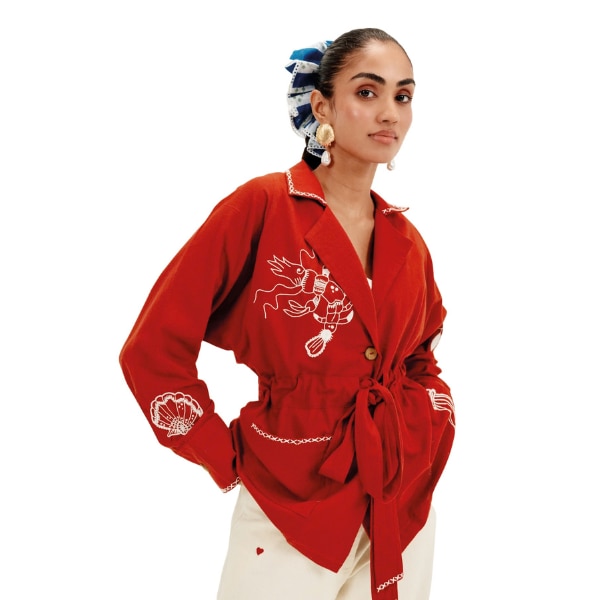
Why we can’t stop collecting scrunchies, even when we already have too many
From deadstock and handloom fabric to repeat purchases and wedding keepsakes, the scrunchie has become a surprisingly big fashion business.

A 30-year-old business professional once made a detour while in Pune for work, specifically to visit JODI’s store in Kala Ghoda, Mumbai, and meet the makers behind the label’s scrunchies. She could have ordered one online, but she wanted to see the fabrics and prints up close. She now owns five of the label’s Mandana scrunchies and picks up a few more as gifts whenever a new collection drops.
If that sounds like a disproportionate amount of devotion for a loop of elastic and fabric—consider what the scrunchie has become. It is a small, stretchy case study in everything fashion currently loves: nostalgia, collectability, and the particular (and not always smart) thrill of a purchase that feels too small to be a decision. My own introduction to the scrunchie was rather ordinary. I first came across this slightly silly, oddly cute-looking accessory through my mother, whose scrunchie was cut from leftover sari fabric. It was a deep maroon then, though years of use has faded it into something closer to rust. It has outlasted school functions, weddings, and every hair tie I’ve ever lost to the domestic void. It was never meant to be cute or collectable. It was a practical fix that stayed.
This practicality is exactly what led to the scrunchie’s birth. In the 1980s, New York singer and pianist Rommy Hunt Revson grew frustrated with elastic bands snagging and damaging her hair. Inspired by the soft waistband of her pyjamas, she taught herself to sew a fabric-covered hair tie that was gentler on the hair. She patented the design, originally calling it the Scunci, after her pet poodle, and created one of fashion’s longest-lasting accessories. It was a very good idea at exactly the right time. The scrunchie became a fixture of the ’80s and ’90s, appearing everywhere from Friends (1994-2004) and Clueless (1995) to the wrists and ponytails of celebrities. Then came the backlash. In Sex and the City (1998-2004), Carrie Bradshaw delivered the verdict that would haunt the accessory for years: “No woman who works at W Magazine and lives on Perry Street would be caught dead at a hip downtown restaurant wearing a scrunchie!” For years, the scrunchie became the accessory fashion loved to hate. Now, the industry is having second thoughts.
The scrunchie's sweet spot
Reinvention is key to longevity, and the scrunchie understood the assignment.
Exhibit A—the numbers. At JODI, the Pune label founded by Gauri Verma and Karuna Laungani, scrunchie sales have climbed from 20-25 pieces a month at the time of launch to up to 230 today, now accounting for about five per cent of the business. At Delhi-based Mellow Monkey, a handmade accessories label, the category has grown 42 per cent year-on-year, contributes 35 per cent of overall sales and has a 30 per cent repeat purchase rate. The repeat purchase rate is the interesting part.
Nobody needs another JODI scrunchie because the first one has stopped working. You buy another because this one has a better print, a prettier fabric, or a little more volume.
For Verma and Laungani, the appeal is almost romantic: they describe their scrunchie as “a small, everyday flower that doesn’t wilt,” a modern take on the flower tucked into a woman’s hair.
That is also how a 23-year-old student from Bhubaneswar ended up with 30 of them. Tanisha Anand started collecting scrunchies at 18, initially drawn to the prints. What has kept her buying them is partly practical. Unlike a regular elastic hair tie, she says, a scrunchie does not break her hair, which matters when you have long hair to look after. Three years and roughly 30 scrunchies later, at around ₹500 to ₹1,000 a piece, the collection has become a perfectly defensible one.
Anoushka Madan, 23, a Mumbai-based designer and journalist, has a similar collector-like relationship with scrunchies, drawn to their novelty and the joy of matching them with her clothes. “I love something unique; I have multiple prints,” she says. In college, she would pick up scrunchies made from leftover clothing fabrics, often choosing ones that matched a top or outfit. Her collection has ranged from oversized satin and lace-trimmed styles to a giant Christmas-themed scrunchie, priced anywhere between ₹50 and ₹1,200. She now has about 15, having downsized from 30, but the impulse remains the same: if it’s fun enough, it earns a place.
Beauty has already taught us this trick: make it in enough colours and somehow you need all of them.
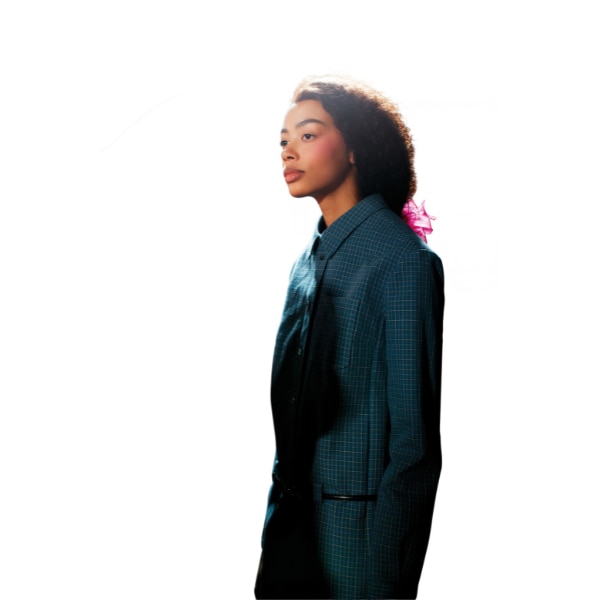
Apparently, the same rule applies to good accessories. The scrunchie’s runway reimagination is having its own little fashion moment. At Sandy Liang’s Spring 2023 show, the flower-power scrunchie fit neatly into the downtown coquette world the designer has made her own, where bows, florals, and a little girlhood nostalgia take centre stage. At Marc Jacobs’ Fall 2026 show, scrunchies were everywhere backstage, stacked alongside the bags and other accessories, while models wore them with low ponytails and buns.
Fabric stories
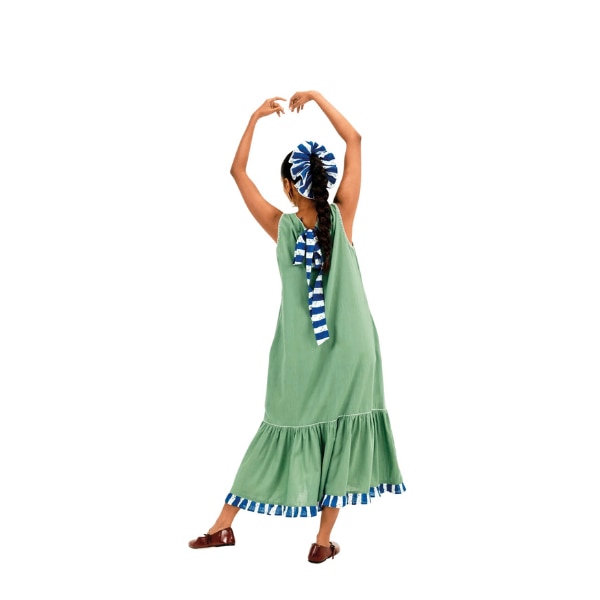
Then, there’s the surface talk, which goes deeper. At its essence, the scrunchie revolves around the idea of not only quality fabric, but one that can start a conversation. At JODI, the material often dictates what the finished accessory becomes. “We start with the fabric, usually a leftover length of block print or a Chanderi remnant, and the fabric decides the shape,” says Verma. “Stiffer cotton holds volume, so it becomes an oversized scrunchie. Softer fabric like Chanderi or silk gathers more, so it becomes smaller.”
At Norblack Norwhite, the label founded by Amrit and Mriga Kapadiya, the idea came from a similar place. “We developed the scrunchie, one because we love a good scrunch— and two because it was a great way to give our scrap fabrics a purpose,” says Kapadiya.
For Made by Nelly, a handmade accessories label founded by artist and art teacher Nelly in Brighton, the fabric often sets the direction. She works with vintage and deadstock textiles, and says around 80 per cent of the fabrics she uses are sourced from India. “A lot of top-quality fabric shops in London stock fabrics from India,” she says. “Plus, the vintage market is amazing. I actually sourced some polka-dot silks over the summer.”
Her sourcing is part of what makes each collection feel personal. She might come across deadstock designer fabric in London or find an unusual vintage textile at an antique fair and build a scrunchie around it. “I love the idea that the fabric itself can dictate the design. It makes the collections feel much more spontaneous and individual,” she says.
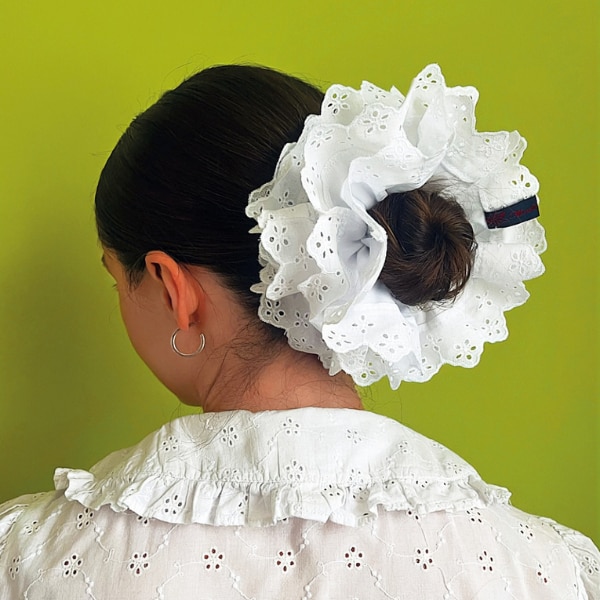
It is a neat little business model. A piece of fabric too small to make a garment can become a limited-run of accessories. What might once have been called an offcut can now become a limited-edition piece, and scarcity becomes part of the appeal. The scrunchie is unusually good at making a small piece of fabric feel important. It is also an easy way into a brand. For Norblack Norwhite, Kapadiya describes the accessory as “an entry-level gateway” for customers who want to participate in the label. You can buy the scrunchie before the bandana, the crochet piece or the dress. The price helps. A `50 scrunchie barely registers as a decision. A `1,200 one can still feel like a treat rather than an event. Somewhere between “I don’t need this” and “it’s only a scrunchie”, a habit forms.
Memories and ties
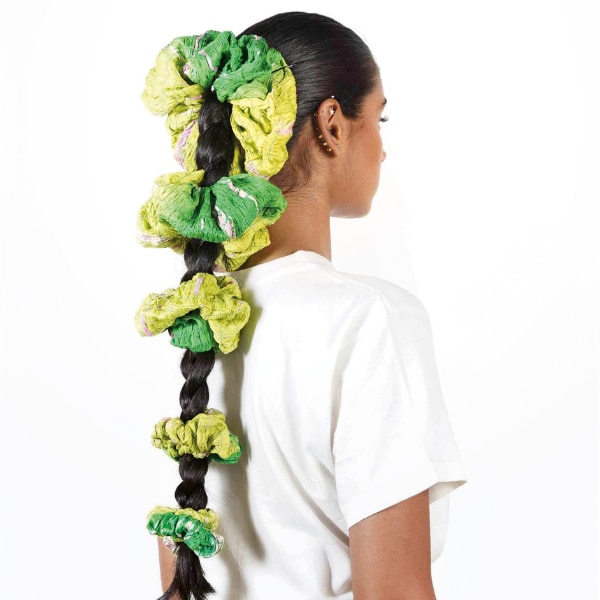
Indian bridal dressing has always given the hair its own moment. The gajra around a bun, flowers woven through a braid, a passa tucked to one side or a jewelled pin securing a juda can completely change the mood of a look. The scrunchie taps into that same instinct, but in a more playful way.
At JODI, hand-block-printed scrunchies, some finished with beading, bring the label’s textile language into hair accessories. Elsewhere, others are looking to the familiar romance of flowers wrapped around a bridal bun, creating gajra-inspired versions of their own. The result is something that can feel festive without being overly formal. For Nelly, the wedding connection is more personal. Brides often send her leftover fabric from their wedding dresses to be turned into scrunchies. “I love the idea of taking a small piece of such a meaningful garment and turning it into something that can be worn and enjoyed again, rather than having the fabric simply sit in a box,” she says. She also creates extra-large, ruffled styles for weddings and is currently making bridesmaids’ scrunchies in Liberty fabric to match the groomsmen’s ties.
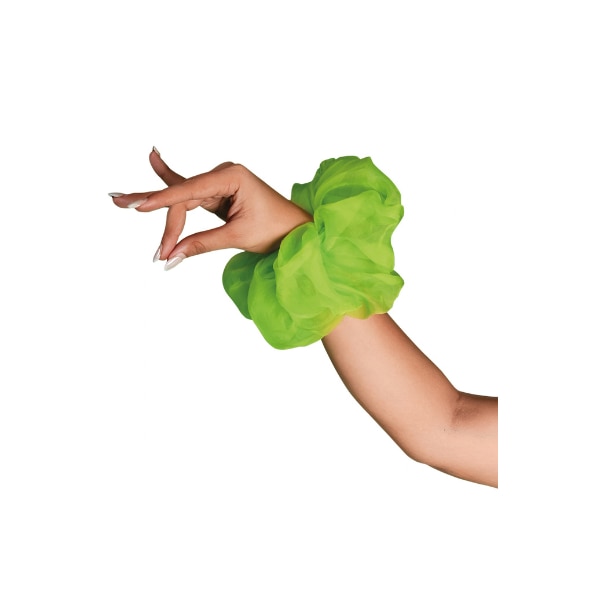
And sometimes, the attachment runs deeper. Nelly says she regularly hears from customers who have lost their favourite scrunchies and want another one made. “It’s also really lovely because it shows that people genuinely form an attachment to these little pieces,” she says. That may be the real reason the scrunchie economy keeps getting bigger. It is small enough to be an impulse purchase, useful enough to earn its place and personal enough to become a keepsake. It lets shoppers collect colour and craft without buying an entire new outfit, while giving independent labels a way to turn leftover fabric into something people actively want. My own collection is its own kind of chaos: one in every handbag, a small stash in my office drawers, and several whose origins I’ve completely forgotten. Turns out, one ponytail can have quite the wardrobe.
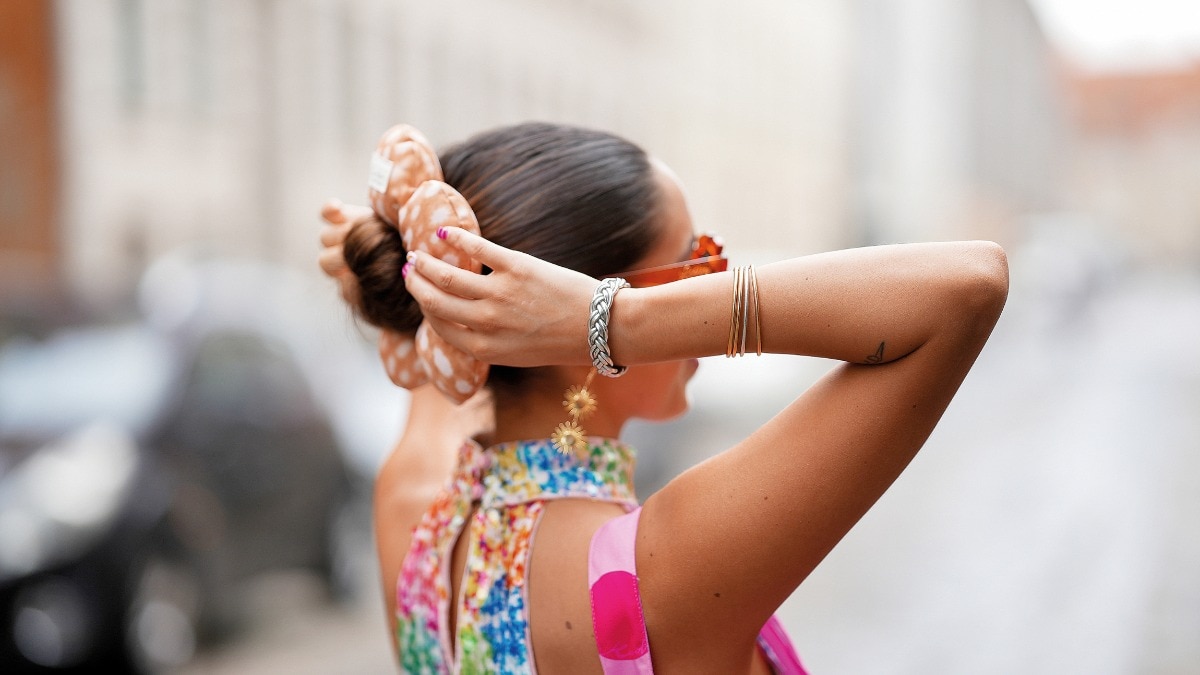
Lead image: Street style at Copenhagen Fashion Week Spring/Summer 2027.
This article originally appeared in Cosmopolitan India's September-October 2026 print issue.
Also read: Is your style seeking you?
Also read: Is the “just in case” fashion hack making us dress for plans that don’t exist?
Comment
more from Fashion
Is your style seeking you?

Is the “just in case” fashion hack making us dress for plans that don’t exist?
From Chanel to Louboutin, bring runway glamour to your nails with these couture-inspired manicure ideas

Has Gen Z stopped raging at nightclubs?
Is the internet making reading cool again?
Mona Kattan on why fragrance is the ultimate form of self-expression

Cosmo Quiz with Moses Koul: The singer-actor opens up about his icks, controversial opinions, and more
Cosmo Quiz with Prish: The 'Traitors' star on hot takes, makeup icks, and dilly-dallying through life

Are you afraid of your 30s?

Nine movies and shows to add to your watchlist right now