
The internet has officially ruined the word "chic"
Consider this our intervention for the word chic.

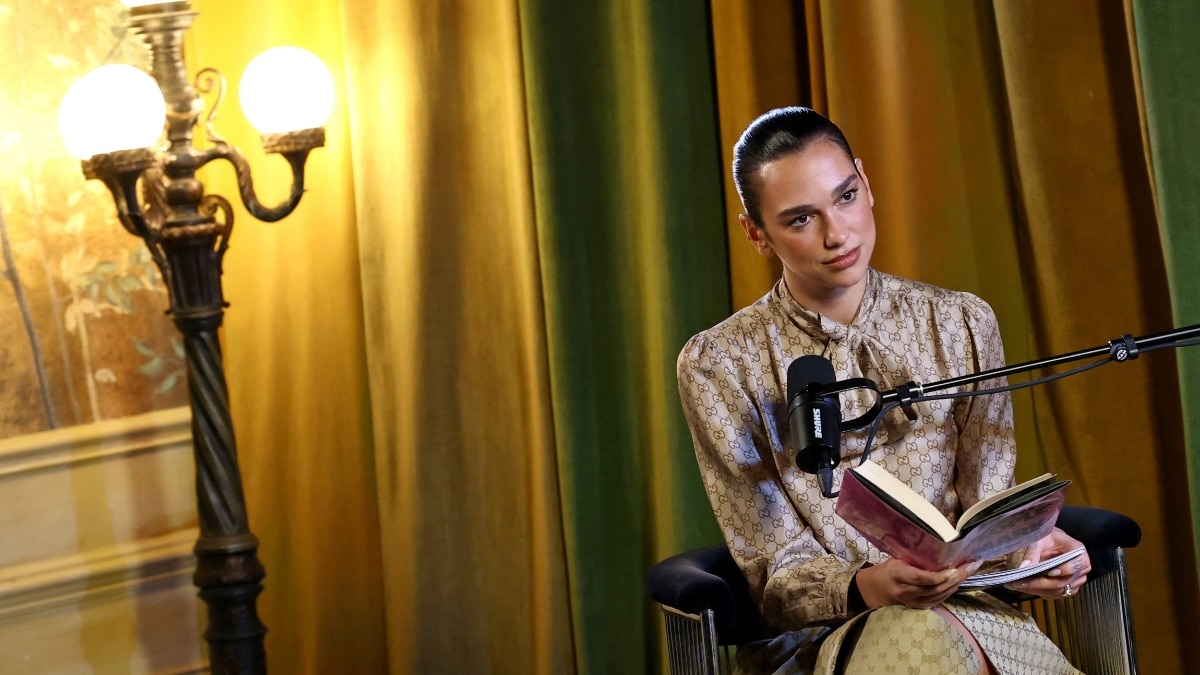
For as long as I can remember, "chic" was a word I associated with my mother and grandmother. I'd hear them use it to describe someone particularly well-dressed—an elegant woman in a great coat, perhaps a beautiful, understated piece of jewellery. It felt like a word that belonged to their generation: a little old-fashioned, a little French, reserved for things that genuinely possessed a certain je ne sais quoi. I don't remember ever scrolling past an influencer in a nice top and thinking, "chic." And I definitely wasn't asking my friends if my outfit was chic.
Now, apparently, everything is.
Breakfast is chic. Doing the dishes is chic. Staying in is chic. Going out is chic. Seafood is chic. Gardening is chic. Not replying to someone's text? Somehow, also chic. Give any mildly aesthetically pleasing activity a nice photograph, a linen napkin and the right font, and the internet will find a way to declare it chic. And that's the problem—not that chic has evolved (language is supposed to evolve), but that we've squeezed one perfectly good word until it barely has anything left to say.
The internet, after all, is an endless stream of language. Words are repeated, remixed, memed and fed back to us at a speed that makes yesterday's vocabulary feel ancient by lunchtime. We watched "iconic" go from a meaningful descriptor to something we say about a good sandwich. "Brat" had its cultural moment and was promptly stretched beyond recognition. Now chic appears to be entering its overexposure era.
The irony is that chic was never really about a specific item in the first place—it was a feeling. A great pair of heels, a little black dress, sunglasses in a European city, a cigarette on a balcony: these things might evoke chic, but none of them automatically are chic. There was always a degree of subjectivity involved, and, most importantly, restraint.
Social media, however, thrives on certainty. Fashion content has become a constant referendum on what's in and what's out, what's timeless, what's old money, what's quiet luxury, and now, what's chic. When microtrends appear and disappear within hours, a word like chic becomes an incredibly efficient way of telling us what we should like. It's less a description now than a stamp of approval.
The recent "kinda chic" wave only accelerated things. What started as a playful way of finding unexpected beauty or elegance in everyday moments quickly became another internet template, with influencers, brands and celebrities getting in on the joke. Soon enough, even toast was being deemed "kinda chic", which, admittedly, is hard to argue with when it's photographed beautifully enough.
But there's something interesting underneath the joke. We're increasingly reaching for the same small vocabulary to describe an enormous range of experiences. And perhaps that says less about the word chic itself than it does about how the algorithm has flattened our language. If everything has to be instantly recognisable, searchable and shareable, why bother finding a more precise word?
So RIP chic. Or perhaps not quite. I'm not suggesting we retire the word forever. I just want it back in circulation with a little more thought. Because if everything is chic, nothing is. And honestly, I think my grandmother would agree.
Image credit: Getty Images
Also read: Why taste is the only sacred truth in a world of endless trends
Also read: What my wardrobe taught me about identity, belonging, and style
more from Life

Did life really feel better before 2020, or are we just nostalgic?
#SaneGirlEra: Six research-backed apps to help you cope with anxiety

Festive shopping on your mind? Amazon Great Indian Festival 2026 brings Pooja essentials and Diwali gifting at up to 60 per cent off
#SaneGirlEra: How to use AI for mental health without losing yourself

I deleted Instagram for two months and forgot what was wrong with my face
These 7 tips will have you making out like a really, really good kisser

Are mismatched wellness habits the new relationship fault line?

The first-date outfit crisis is real, and men need to do better
Is pessimism around dating changing our brain chemistry?

The hero beauty and wellness essentials that Team Cosmo just can’t do without