
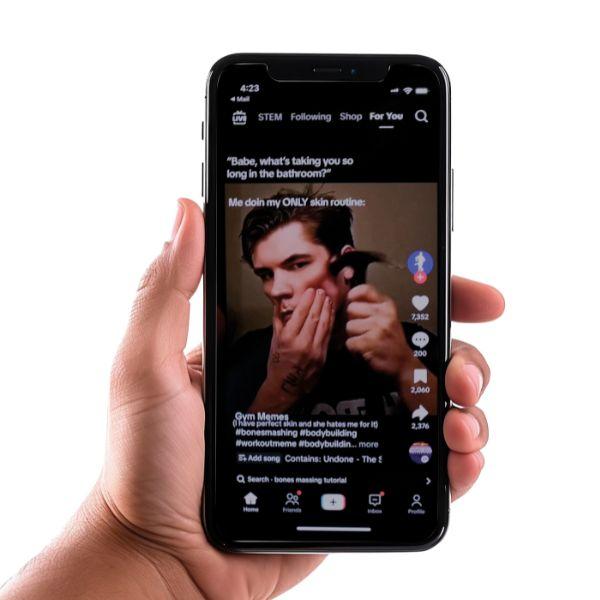
The new male beauty obsession has a dark side
Are young man truly "ascending" their genetic limits or has a self-improvement trend morphed into something much more sinister? Inside the extremes of looksmaxxing.

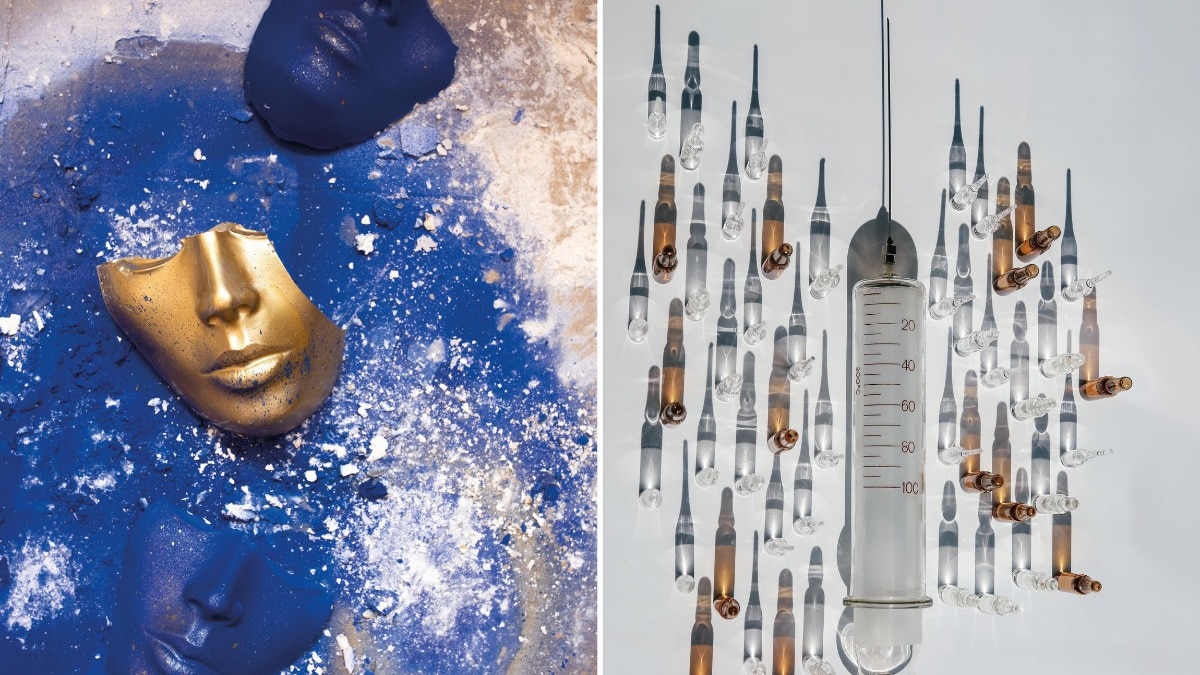
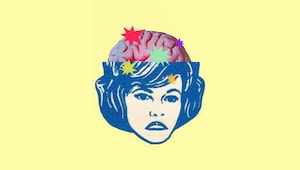
What if your face wasn’t something to live in but something to constantly work on? The internet has always found new ways to judge our appearance. Millennials had ‘Hot or Not’ (Gen Z, Google it). Now, a feed full of strangers explains why your jawline or facial ratios could use work. There’s a fix for every flaw, a tutorial for every feature, until nothing on your face is left alone. The latest name for this endless quest is looksmaxxing.
The cultural reference point of male attractiveness that once belonged exclusively to Hollywood and Bollywood stars, sports icons, or high-fashion runway models has now been claimed by a different class of microcelebrity: Lean, hypercurated young men live-streaming technical breakdowns of their own skulls.
To dive deep into this specific corner of the feed is to witness obsession masquerading as strict discipline. The ’gram is flooded with teenage boys chewing on dense rubber blocks to bulk up their masseter muscles and chasing a body fat percentage low enough to hollow out their faces.
They split their efforts into two distinct camps: ‘Softmaxxers’ sticking to skincare, gym routines, diet adjustments, and hair protocols, and ‘hardmaxxers’ opting for invasive plastic surgery, cosmetic injectables, and riskier hacks. They grade each other on PSL—a rigid one-to-10 system running from the ‘Subhuman’, those written off as genetically unlucky, up to the ‘Giga Chad’, an internet-built ideal of hypermasculinity with a razor-sharp jawline, perfect symmetry, and carved-out cheekbones. Their ultimate goal is ‘mogging’—completely outshining someone else in looks or presence. They chase ascending, the elusive climb up a genetic ladder.
Meet the giga chad
The movement has existed for years but recently gained momentum on social media. Among its poster boys is Braden Eric Peters, a 20-year-old American influencer who goes by Clavicular and openly hardmaxxes—he walked New York Fashion Week in February 2026 and (FYI) has casually admitted to using crystal meth to suppress his appetite.
Hardmaxxing covers conventional procedures like jaw implants and nose jobs, but the community has also mainstreamed DIY hacks—mewing (pressing the tongue to the roof of the mouth to reshape the jaw), hunter eyes (an angular, upward-tilted eye look achieved through exercises or surgery) and, most disturbingly, bone smashing (deliberately breaking your own facial bones to force denser regrowth). “I don't think mewing alone dramatically changes your face as an adult,” says Sanchit Kalra, a men’s grooming and lifestyle influencer known online as BeYourBest, who tried the practice himself after seeing dramatic transformation claims online. “But it did make me more aware of posture, breathing, and tongue position. It became popular because it’s free, easy to try, and promises a visible change without surgery—which naturally attracts young men looking for self-improvement.”
Breaking point
However, Kalra’s mild lifestyle tweak is a far cry from the movement’s dangerous extremes, where influencers like Clavicular have popularised heavy biological concepts for a teenage audience—most notably, Wolff’s Law.
Named after a 19th-century German surgeon, Julius Wolff, it claims that bones adapt and remodel themselves based on the physical stress placed upon them. In a clinical setting, it explains why a tennis player’s dominant arm has significantly higher bone density. In the looksmaxxing universe, however, it has been wildly misinterpreted to justify bone smashing. Teenagers are hitting their own cheekbones or jaws with blunt objects under the flawed assumption that the microfractures will heal back thicker, sharper, and more angular.
Jaashna Muthreja, 17, only talks about his routine with a few close friends. His family knows nothing—except when they catch him in the act and try to make him stop. Inspired by Clavicular, he started bone smashing a few months ago, using household objects before switching to a hammer for what he calls “better results and less damage to the skin.”
“I learnt Wolff’s Law from that guy (Clavicular), but there was no evidence if this bone smashing works or not—so I decided to give it a shot,” he says. By day 40, the 17-year-old, who had been documenting his daily ritual on Instagram, was certain something had changed. “I think this method does work,” he says, “because it made my bones more prominent.” He points to shifts in his zygomatic bones, orbital rims, and jawline—changes he credits partly to meticulously scheduling calcium supplements to speed up his skeletal recovery. “All I want to do is mog,” he says. “I do see looksmaxxing as my main goal, and I am chasing perfection. It's a personal pursuit rather than something I’m forcing on anyone else.”
Medical professionals are blunt about what’s actually happening under the skin. “When someone repeatedly strikes the facial bones, the body does not understand it as ‘jawline improvement’,” says Dr Om Agrawal, a plastic and reconstructive surgeon. “It understands it as trauma.”
The list of what can go wrong reads like an emergency room intake form: Swelling, bruising, complex fractures, bleeding under the skin, dental injury, nerve injury, chronic asymmetry, infection, or long-term pain. What worries him most is how casually the practice gets discussed online. “Some people use words like ‘microfracture’ very casually. A fracture on the face is still a serious injury. If a bone heals in an irregular way, it may not give definition. It may give deformity.”
Long before TikTok and Instagram filters got their hands on it, this hierarchy already existed. On incel (involuntary celibacy) forums and sites like PUAHate, SlutHate, and Lookism.net—the very platforms that birthed the “PSL” acronym—users developed a vocabulary that treated attractiveness as something you could measure with precision.
Many of these spaces were also steeped in what researcher Jamilla Rosdahl, writing for The Conversation, an independent research journal, describes as the ‘blackpill’ ideology—a fatalistic world view that argues genetics dictate your future and that some people are destined to lose regardless of effort.
Looksmaxxing emerged as a response to that bleak belief. If genetics determined your rank, then every millimetre of improvement mattered. On social media, these dark ideas get a shiny, trendy rebrand. The creepy language of underground forums is replaced by slick video edits, glow- up challenges, and scientific facial ratings, tricking teenage boys into believing that a perfect face is the secret shortcut to confidence, money, and a successful dating life.
Business of beauty
Two decades after anonymous users began ranking strangers’ faces, the same philosophy has become a viable business. That is the world Vikram Aditya, 21, operates in. His Instagram bio reads, “Make India Chad Again.” Beneath it sits a link offering a “Scientific Face Analysis & Glow-Up Plan”—a paid consultation that promises to turn insecurity into a personalised roadmap for self-improvement.
“I give my clients a road map,” he says. “Their flaws, their strengths, and their current facial rating out of ten.” For the 21-year-old looksmaxxer, surgery comes up fast, and he doesn’t hedge on it. “Surgery has the highest return on investment. If your lower jaw is recessed, implants or double jaw surgery is the most effective way to jump from a four to seven.” He has tried most of it on himself first, from minoxidil to bimatoprost for eyelashes, retinoid cycles for skin, and more. “Looksmaxxing changes your life. People treat you better—because the general public is biased towards good-looking people.”
Dr Agrawal has observed this shift. “Social media, filters, and looksmaxxing content has made men hyper-conscious about jawline, chin projection, and cheek hollowing,” he warns. “People come in wanting major jaw implants or bone shaving when the actual issue is just poor posture, slight weight fluctuation, or literally just the distorting angle of a selfie lens.”
Pop culture validation
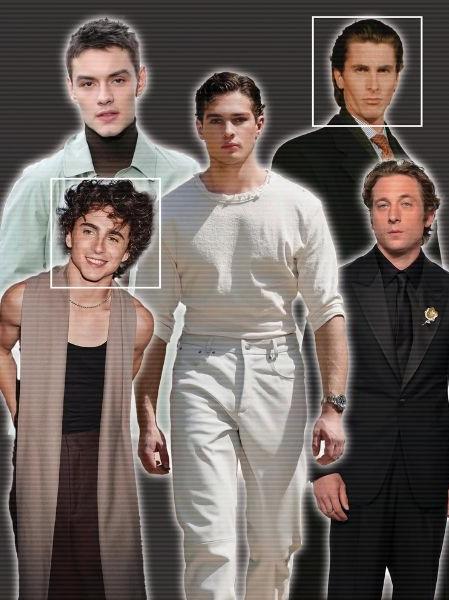
What else is fuelling the obsession? Look no further than the global runway. Patrick Bateman from American Psycho—with his minute-by-minute exercise regimen and elaborate skincare routine—reads like an early template for looksmaxxing. Gen Z has completely revived him, and luxury fashion is capitalising on it.
Demna Gvasalia’s Fall/Winter 2026 debut at Gucci earlier this year leaned hard into this same body-first, hypergroomed sensibility—critics widely noted its direct homage to Tom Ford’s 1990s Gucci era, with muscle tees and skintight tailoring replacing the house’s recent maximalism.
But, the crossover goes deeper than a shared mood board. Consider how Clavicular went from preaching dangerous hacks like “bone smashing” on his live streams to actually walking the runway—closing the Elena Velez show at New York Fashion Week and then opening for the streetwear label 424 in Paris. Actors Timothée Chalamet and Jeremy Allen White have slipped into this role almost by accident, their faces adopted online as shorthand for the exact lean, angular ideal the subculture measures.
Who's really winning?
So, why are men chasing this in the first place? The shift isn’t just aesthetic—it’s psychological. “Body image conversations have mostly been centred on women, and almost always on weight or skin—things that felt within a person’s control,” says Dr Chandni Tugnait, psychotherapist and director of Gateway of Healing, a holistic wellness and psychotherapy centre. “But hardmaxxing focuses on the skeleton you were born with. When the perceived flaw is structural, a sense of permanent inadequacy sets in faster and digs deeper. That is what makes it so hard to walk back from.”
At the centre of the looksmaxxing phenomenon sit concerns that are far less aesthetic than they appear—body dysmorphia, disordered eating, and a fixation on appearance that starts to crowd out everything else. That obsession with bone structure, Dr Tugnait says, might stem from a deeper anxiety about a lack of control in other areas of life. “Careers feel shaky, dating feels confusing, and the economy is something nobody can control. The face feels different. It feels like something you can actually measure and fix.”
So who’s actually benefiting from all this? The answer is uncomfortably simple: Everyone selling the fix is also selling the insecurity. Supplement brands, cosmetic clinics, and influencers who monetise the exact despair their content stirs up.
As Kalra notes, “People think looksmaxxing is just extreme hacks. In reality, 90 per cent of the results come from boring basics like sleep, diet, exercise, skincare, and grooming. Social media overhypes the other 10 per cent.”
In Barbie, Ken spends the entire movie trying to figure out what he’s even for, beyond just standing on a beach and looking good. Looksmaxxing is the internet’s answer to a question Ken never gets. The question these men are really asking isn’t how to look better. It’s when a face stops being something you live in and becomes a problem you’re still trying to solve.
Disclaimer: The article contains references to self-harm, emotional distress, and procedures that are not medically sanctioned. Some readers may find the content distressing. Reader discretion is advised.
This article originally appeared in Cosmopolitan India's July-August 2026 print issue.
Image credits: Getty Images and Instagram
Also read: 'Wicker' has us asking what if your dream man was literally made to order
Also read: ‘I’m a therapist—here’s what I would tell clients if it wasn’t against the rules’
Comment
more from Life

Did life really feel better before 2020, or are we just nostalgic?

#SaneGirlEra: Six research-backed apps to help you cope with anxiety

Festive shopping on your mind? Amazon Great Indian Festival 2026 brings Pooja essentials and Diwali gifting at up to 60 per cent off

#SaneGirlEra: How to use AI for mental health without losing yourself

I deleted Instagram for two months and forgot what was wrong with my face

These 7 tips will have you making out like a really, really good kisser

Are mismatched wellness habits the new relationship fault line?

The first-date outfit crisis is real, and men need to do better
Is pessimism around dating changing our brain chemistry?

The hero beauty and wellness essentials that Team Cosmo just can’t do without