
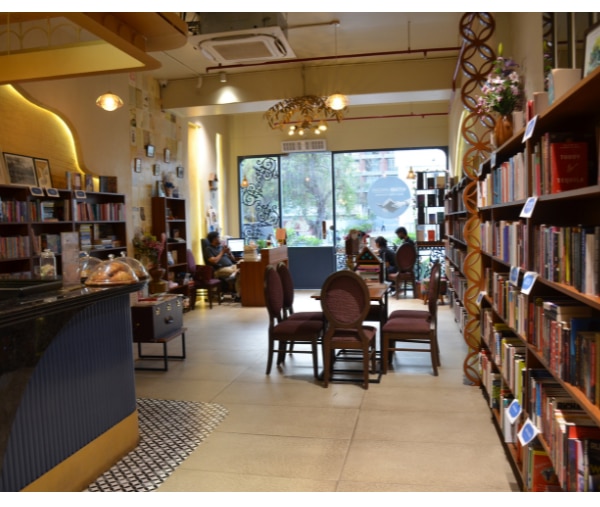
This cosy Ahmedabad bookstore is making feminist literature feel cool again
If your dream day involves books and big feminist energy, start here.

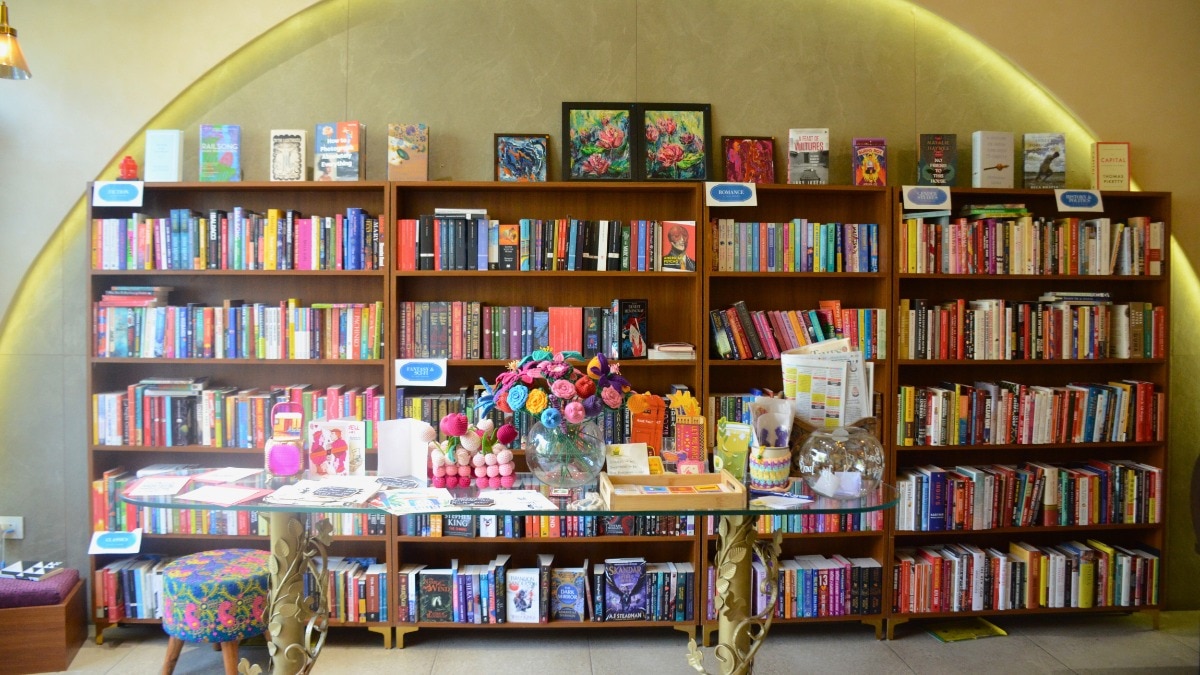
If your idea of a perfect day involves a good book, an iced coffee, and zero urgency, let me put you onto Kitabi Angan, a space that feels like a much-needed pause in the middle of Ahmedabad’s constant rush. Because let’s be honest, most of us are chasing a very specific mood. You walk into a bookstore, pick up something vaguely intellectual, order an iced coffee, and suddenly you’re that girl. Unbothered, well-read, accidentally profound. Kitabi Angan gets that energy exactly right, but it also gives you something more. It lets you stay there a little longer.
At first glance, it’s the kind of place your Instagram would love: soft lighting, calming corners, and shelves that make you want to cancel plans. But spend a little time here, and you’ll realise it’s not just about aesthetics. It’s about intention. It’s warm, a little dreamy, and refreshingly un-intimidating. It is not the kind of bookstore where you feel judged for not knowing your Dostoevsky from your Murakami, but one that quietly invites you to stay, browse, and settle in without overthinking it.
But the best part is that Kitabi Angan is actually doing something that makes it seem genuinely different. At present, this is the only bookstore in India hosting a feminist literature festival without making it feel like homework. There’s no pressure to be the smartest person in the room or to have all the right takes. You can show up, listen, disagree, learn something new, or just exist in the space and take it all in.
The space itself comes from that same instinct. The creative mind behind it all is Bansari Kamdar, founder and book curator, who shares that the place itself has been built to invite conversation rather than performance. Here, you don’t have to prove how much you know to feel like you belong.
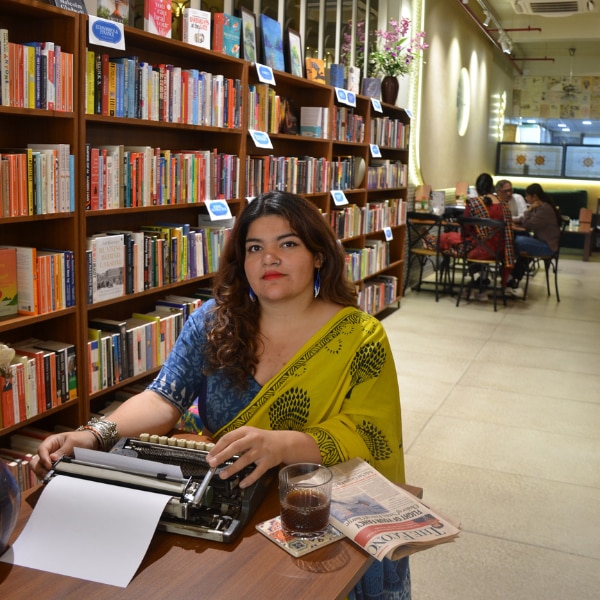
“When you take a feminist lit fest out of an auditorium or academia and into a space like this, the conversations become sharper, more direct, and sometimes uncomfortable, which is exactly the point,” Bansari Kamdar says. “I’m not interested in feminism that’s easy to consume.”
And that’s kind of the whole vibe here. It’s feminist, but not in a way that feels performative or overly serious. It’s curious, open, and actually fun. The conversations feel like the ones you want to be having anyway, just with better references and maybe a book in hand.
Kamdar speaks about the fest being built as a local space for voices that question dominant narratives and reflect lived realities. “I’m not interested in curating perfect feminist voices, but in building conversations that refuse to treat gender as an isolated experience, instead locating it within intersecting realities of caste, class, sexuality, language, and region,” she adds.
And clearly, people are showing up for exactly that. “At one point, we ran out of chairs and had to bring out rugs and pillows for people to sit on the floor. Definitely not something you would see in an auditorium or a conference floor.”
The programming leans into that too. There are writing clubs where terrible first drafts are the whole point, you have book clubs that feel like a group chat you want to be part of, and events that make talking to strangers feel less like a social nightmare. It’s thoughtful, without seeming like it's trying too hard, which is extremely rare in today's overly performative world.
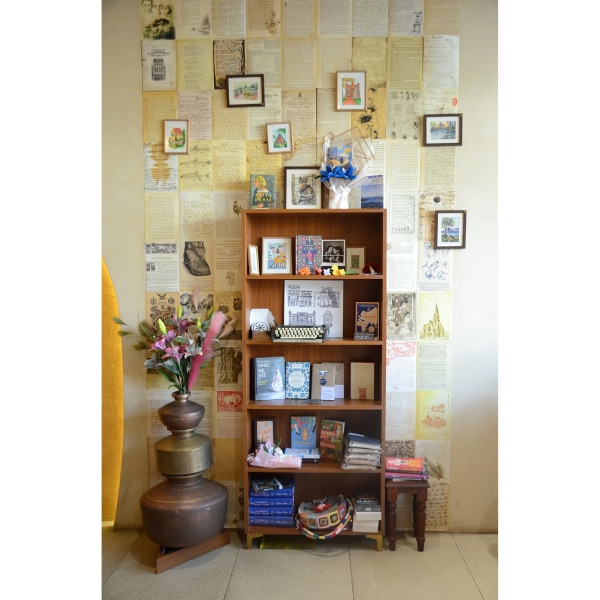
Even if you’re not there for an event, the space does its thing. You can sit for hours without feeling rushed, flip through books you didn’t come in for, or just people-watch while pretending you’re about to start a novel. It’s low-pressure in the best way.
Bansari Kamdar basically created the kind of space most of us wish existed in our city. And yes, while independent bookstores are having a global moment, opening one is still a risk.
“Yes, it was and still is a risk. But it wasn’t just a business proposition for me; this was also personal. I longed for spaces that encourage open dialogue and community in Ahmedabad. And, at some point, you have to stop waiting for someone else to build the space you need,” says Kamdar.
What’s interesting is how quickly people have shown up for it.“Not only have we doubled our shelves in the last three months, but we are also planning an expansion of the store by the end of summer,” Kamdar adds.
And in between the growth and the chaos, there are the small moments that make the whole thing feel special. “The work days are long but somewhere between the exhaustion and the chaos, someone lingers at the relatively unknown Gujarati translated work that I just added to the shelf, two regulars reading the same author decide to meet next Sunday for brunch, a student sits on the floor for nearly an hour, reading Feynman, before shyly asking if that was okay, and a poet writes an ode to the place in their notebook,” Kamdar says. “The room fills, briefly, with shared quiet, making it all worth it.”
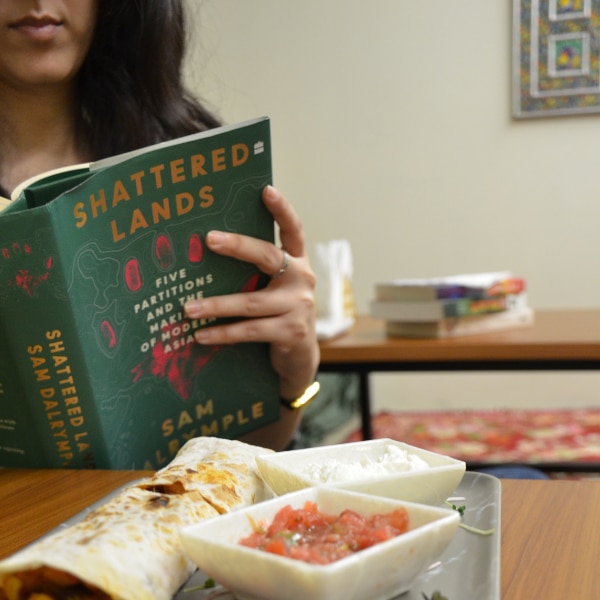
Which is really what Kitabi Angan gets right. It’s not trying to impress you or talk down to you. It just creates the space and lets you find your way into it. In a world where everything feels fast, loud, and a little too curated, that kind of space hits differently. And if it also happens to come with a feminist lit fest that actually makes you want to show up, even better.
All images: Kitabi Angan
Also read: The quiet work of books in the age of scrolling
Also read: Times when movies and shows were better than their books (yes, that happened!)
Comment
more from Life

Are we overthinking social media posts more than ever?
'Koffee With Karan' is ending—so, who will get Bollywood to spill the tea now?

'The Lizzie Borden Story': fact vs fiction–from her real-life sister Emma to burning a dress, what's true?

Gen Z is obsessed with wellness—so why are healthy habits still so hard to maintain?

Type 3 fun, sunrise views and benne dosa: a Gen Z cheat day checklist

The biggest bridal diet mistakes nutritionists wish women would stop making

The new hair trend is all about healthy, glossy, and low-maintenance hair

Why does my face itch after kissing my partner? It’s called ‘beard burn’—and it’s pretty common

Are you done with dating for good or is it just 'roster burnout'?

Having a bad hair day? Consider this your sign to upgrade your haircare shelf