

When did your hobby become a side hustle?
What began as a way to unwind now comes with algorithms, aesthetics, and the pressure to turn passion into proof.

There was a time when you could be bad at something, and it wouldn't matter. You could paint a lopsided bowl of fruit, run a mile in whatever time your lungs allowed, sing spectacularly off-key in the shower, and none of it needed to go anywhere. The doing was the point.
That version of leisure hasn't disappeared. But according to Arouba Kabir, an emotional and mental health professional and founder of Enso Wellness, it has been quietly absorbed into what she calls "the performance ecosystem", a world where even our downtime is expected to deliver results. Zoom out further, and anthropologist Yashi Mathur says the same pattern has been building for centuries. Leisure was never entirely neutral or just for fun; it's simply become far more visible.
"Instead of asking, 'Do I enjoy this?', we're asking, 'Am I improving? Can I post this?'" Kabir explains. "The rings and watches that track our every step have made it increasingly difficult to engage in an activity simply for the joy of doing it." Rest, in other words, has started demanding proof.
When a hobby becomes a second job
Likes, sponsorships, or a little external validation are not the enemy. Kabir is quick to point out that recognition can coexist with genuine enjoyment. The trouble begins when it stops being a bonus and becomes the reason we keep showing up.
She points to a well-documented psychological phenomenon: the overjustification effect, sometimes called motivation crowding-out. An activity that once ran on intrinsic pleasure, a run that cleared your head or a novel you couldn't put down, slowly gets rewired around an external scoreboard: a streak, a step count, a Goodreads tally. Over time, the enjoyment that sparked it begins to fade.
"The internal question shifts," Kabir says, "from 'What do I feel like doing?' to 'What will happen if I don't do this?'" In her clinical experience, what follows is often a quiet cocktail of anxiety, guilt, and resentment directed at the very thing that once felt freeing.
Decades ago, sociologist Pierre Bourdieu argued that our tastes, what we read, wear or spend our weekends doing, have always signalled class and identity as much as genuine preference. What's changed is the sheer visibility of it all. Even niche communities like Mahjong clubs and film photography have become recognisable, postable, and brandable identity kits.
Pickleball, pottery, Hyrox, and the new cost of belonging
According to Mathur, "In a culture where identity is expected to be curated rather than inherited, hobbies have become one of the most accessible ways to communicate who we are or who we hope to become." That's where Mathur gets more pointed. Contemporary hobby culture, she argues, has become a form of cultural capital, and not just because of what it costs.
"It's no longer enough to own a yoga mat or a camera," she says. "Increasingly, there are 'right' brands, 'right' communities, 'right' aesthetics, and 'right' ways of participating."
Look at how quickly Hyrox evolved from a niche fitness race into a lifestyle signifier, or how joining a run club can now come with its own dress code and post-run social circuit. These worlds don't just attract people; they quietly sort them by who already knows the rules.

"If every running reel features expensive watches, race medals, and destination marathons," Mathur says, "newcomers may feel they don't belong unless they can replicate that version of the hobby." The irony, she says, is hard to miss: "Hobbies that promise joy and accessibility can begin reproducing the same inequalities we often associate with work or education."
Both women arrive at the same uneasy conclusion: the hobby that slowly becomes another job. Mathur calls it one of the defining features of contemporary culture. "Almost everything now contains the possibility of becoming work." A running habit becomes a YouTube channel. A journaling practice becomes a coaching business. A Lego collection becomes an affiliate-linked unboxing series.
Mathur adds, "We increasingly see ourselves not just as individuals but as ongoing projects to develop, optimise, and present. The challenge for contemporary leisure may not be finding a hobby; it may be finding one that remains free from the pressure to become content, income or proof of self-improvement."
The fear of being seen mid-attempt
Social media has done something more insidious than simply adding pressure. It has eroded our tolerance for looking like beginners.
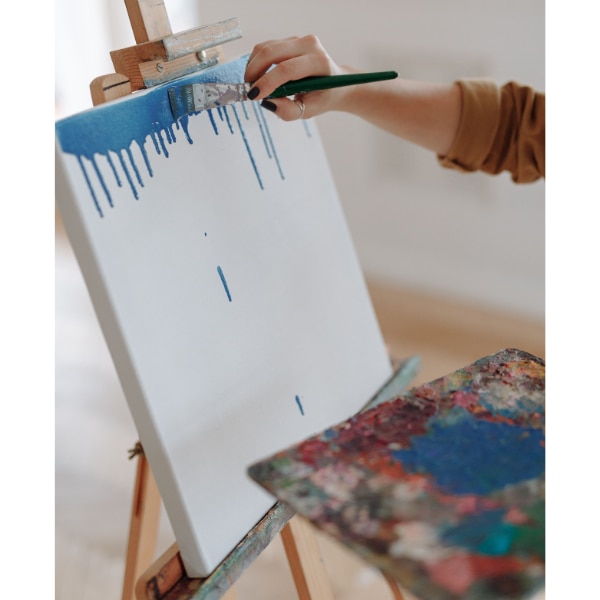
In her sessions, Kabir regularly sees people delaying a new hobby because they don't yet have the right equipment, the right vocabulary, or even the right aesthetic. "They are not just afraid of failing," she says. "They are also afraid of being seen while they are still learning."
Because what we mostly encounter online is someone's hundredth attempt, not their first, we end up comparing our own starting point to their polished highlight reel. The mismatch, unsurprisingly, breeds frustration and self-doubt.
For Kabir, that's a genuine loss because struggling through the beginner stage is precisely what teaches us to tolerate frustration, stay curious, and remain humble. Somewhere along the way, we've started confusing participation with presentation.
Learning to leave no trace
So what does leisure look like once it's stripped of metrics?
Kabir suggests a simple test: notice how you feel about the activity when nobody is watching. Restorative leisure doesn't make you feel guilty if you skip a day. You enjoy it even if no one ever knows you did it, and whether you improve or not has no bearing on your sense of self-worth. Her own turning point came when she stopped wearing her smartwatch and smart ring. "I was constantly thinking about how many steps I'd taken," she says. Now she moves because it matters to her, not because a device is keeping score.
Her prescription is refreshingly low-tech: create pockets of your life that remain deliberately unmeasured. Take a walk without a tracker. Do a treadmill session without saving the numbers. Paint something that never makes it to your Instagram grid.

Before picking up a new hobby, Kabir suggests asking yourself two questions: Would I still do this if I couldn't post about it? And would I still enjoy it if I never became exceptionally good at it? "The goal is not to reject ambition or technology," she says. "The goal is to become less transactional in the way we approach leisure." Read the book because you love reading it; not because the world is waiting for your review.
Lead image credit: Unsplash
Inside images: Pexels
Also read: All work, no play? Here's how having a hobby can stir things up for you
Also read: 9 fun hobbies to help you break your screen addiction and actually enjoy real life again
Comment
more from Life

Give your rom-com reads a refresh, and pick up these thriller reads instead

Does the ‘buy-nothing’ experiment actually help or backfire?

The big-boob tax is real: Why girls with bigger busts often pay more
The biggest hobby trends are all about making something

Why your screen-free hobby is probably someone else’s Instagram content

We hate AI in our dating lives, but we can’t stop using it

The ‘80s trend you should try based on your zodiac sign
Hinge vs Bumble: Which dating app is better for you?
How to get rid of milia, according to a dermatologist
Why are men so comfortable shaming Katrina Kaif's postpartum appearance?