
Wisdom flexing is the internet's latest status symbol, but is it just another performance?
It's about how intelligent, cultured, and self-aware you appear.

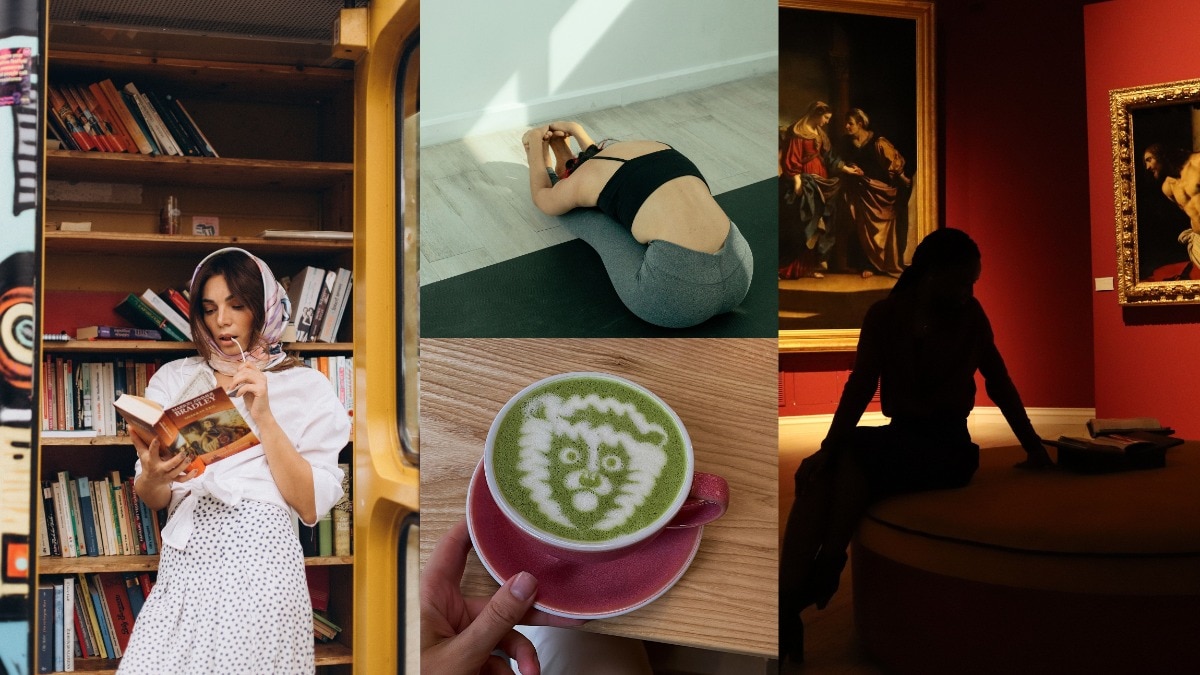
There was a time when social media revolved around designer handbags, luxury holidays, and the latest It-girl uniform. Then came Pilates princesses, quiet luxury, and the obsession with looking effortlessly expensive. Now, the flex has changed again. The latest status symbol isn't something you wear or drive; it's what you read, how you spend your Sunday afternoon, and whether you have a Substack.
Welcome to the era of wisdom flexing.
Scroll through Instagram today, and you'll notice the shift. Instead of endless mirror selfies and shopping hauls, your feed is filled with beautifully arranged bookshelves, coffee-stained paperbacks, heavily annotated philosophy books, museum visits, ceramic workshops, film photography, and carefully curated gallery photo dumps. Throw in a yoga mat, a hot matcha (iced somehow feels more frivolous), and a caption about protecting your peace, and you've got the blueprint for the internet's newest aesthetic.
Just as luxury logos once communicated wealth, books are increasingly becoming cultural accessories. A stack of philosophy texts casually placed on a bedside table, a perfectly colour-coordinated bookshelf, or an art exhibition tucked into a weekend photo dump means taste, intelligence, and cultural capital! Whether those books have actually been read or whether the exhibition genuinely resonated almost becomes secondary. The image itself does the talking.
The same applies to the rise of Substack. What began as a platform for writers and independent voices has evolved into something of a social badge. Having a newsletter today can feel like a declaration that you're deeper than the average Instagram user, as though long-form writing automatically places you outside the algorithm, even when it's still being promoted on the very same platforms. It's no longer just about having something to say; sometimes, it's about being seen as the kind of person who has something to say.
The irony is that every generation of social media eventually turns authenticity into an aesthetic. Once enough people begin embracing the same habits, whether it's reading, pottery, gallery hopping, or writing newsletters, they stop feeling entirely personal and start resembling another trend cycle. Individuality becomes surprisingly uniform.
That's not to say these interests aren't genuine. Plenty of people really are reading more, visiting museums, writing thoughtful essays, and prioritising slower living. The problem isn't the behaviour itself; it's the pressure to package every meaningful experience into content. Somewhere between self-expression and self-branding, the line becomes increasingly difficult to see.
Image credits: Pexels
Also read: The problem with being a performative sad girl
Also read: Why every corporate girl secretly wants to quit and move to a fairytale forest
more from Life

After Violet, these 'Bridgerton' characters deserve their own spin-offs

Breaking down the ending of ‘Verity’
Cosmo crew recommends: what to gift, eat, read, and stream this holiday season
The anti-AI aesthetic is making messy, unfiltered content cool again

Why Gen Z and millennials are making room for messy, unfiltered journalling

Has Gen Z stopped raging at nightclubs?
Is the internet making reading cool again?

Are you afraid of your 30s?

Nine movies and shows to add to your watchlist right now

Need a book recommendation? Three authors share their favourite books to read next