
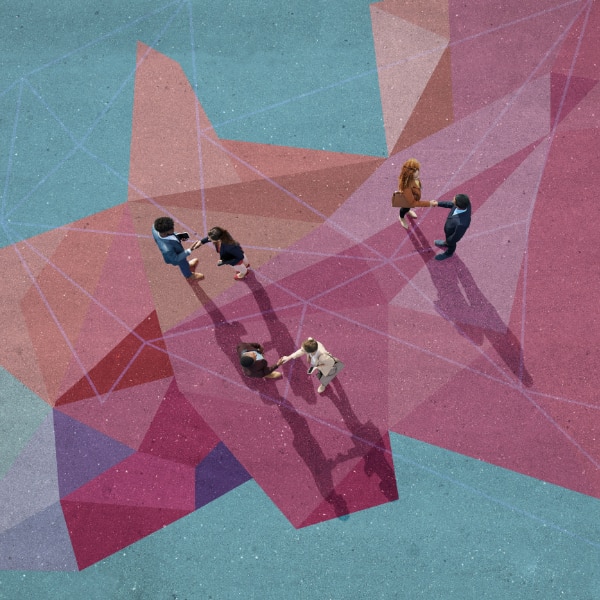
Do opposites really attract or is that just pop culture lying to us?
You’re a bleeding-heart liberal vegetarian, they’re a far-right carnivore: The sexual tension might exist… but can you make it work?

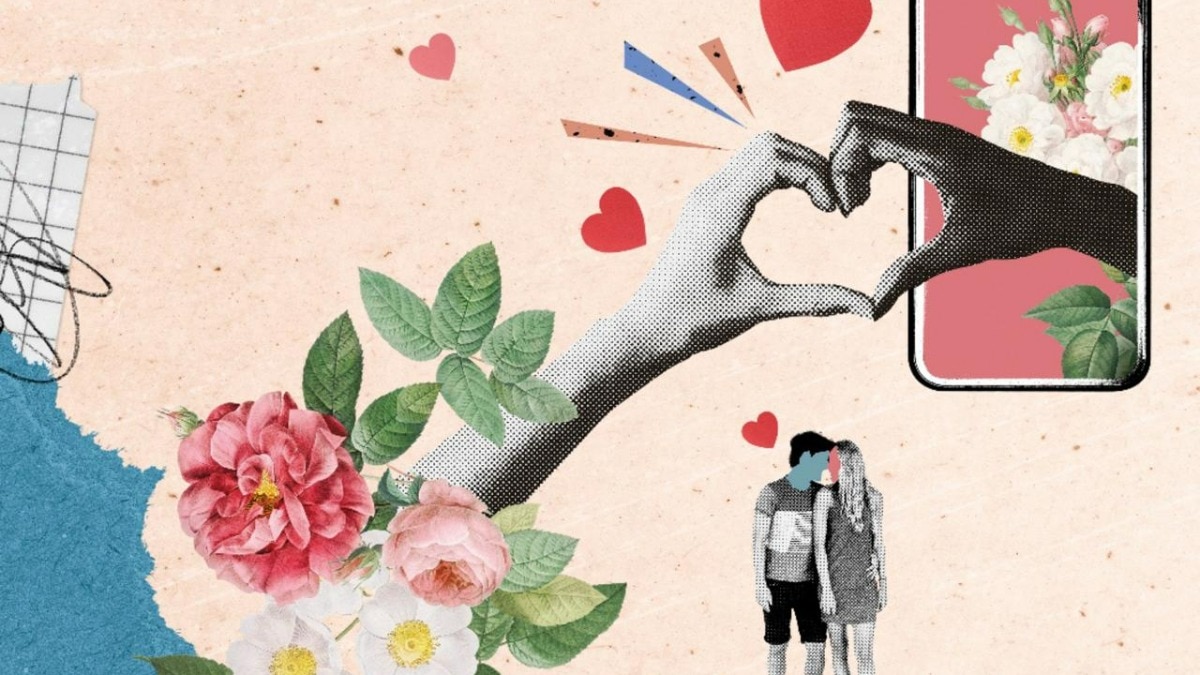
In the very first episode of the cult classic show, Gilmore Girls (2000–2007), it becomes clear that Luke and Lorelai are going to end up together. What made them so obviously right for one another? They were opposites, of course. Luke was a lone wolf that ran a diner in the town he grew up in, loved green vegetables and green tea, and grunted in response to most questions. Lorelai was a talkative, quirky single mother with a junk food addiction and coffee flowing through her veins that couldn’t turn left without making friends. Together, they had undeniable chemistry. She coaxed him out of his shell, he was her rock. They balanced each other.
Look at a timeline of pop culture, and you’ll find versions of this trope through time. Monica and Chandler from Friends (1994–2004), Rue and Jules from Euphoria (2019–), or even celebrities like George and Amal Clooney or Deepika Padukone and Ranveer Singh. Easy-going X neurotic, friendly X reserved, small town boy X big city girl. The kind of opposites would vary, but the messaging was the same—that a relationship works best if you find the ‘yin’ to your ‘yang’, when the other person ‘balances’ you out.
But today, the numbers paint a different picture. A 2024 survey by Forbes Health & Talker Research found that 70 per cent of women on dating apps are swiping right on profiles that reflect similar lifestyle choices (vegetarianism, fitness routines, or environmental consciousness), 80 per cent on profiles that reference shared cultural experiences (liking similar festivals or the same music genres, or having mutual friends); things that indicated cultural commonalities. Users on religion-based dating sites like Christian Mingle or Jdate went up in 2025, with the Christian dating app projected to reach a market valuation of $2.93 billion by 2033. As for political views, 77 per cent of women on Bumble prefer a partner who is ‘not political’ over someone who actively supports an opposing view, while 64 per cent believe it’s not at all possible to date someone with opposing political views.
Opposites… aren’t exactly hot right now
I thought a lot about why this idea changed… What is it that makes opposites such an unattractive thought right now? Is it the romanticisation of a pop culture narrative that doesn’t work in real life? Or has something shifted in what we are seeking?
Diya J*, 23, thinks opposites can still attract—but only short-term: “I’ve slept with someone who was radically different from me; we had a fling for a couple of weeks. But I was always careful not to catch feelings. He can’t cook to save his life, and listens to Joe Rogan’s podcast, for heaven’s sake. I’m not going to be with someone like that.”
Zainab P*, 34, wouldn’t date someone diametrically different, but her reasons aren’t the same. “I’ve been single and going on dates trying to find the right man for the last six years. I absolutely do not have the time to ‘figure things out’ with someone who doesn’t align with me on my core values,” she says. As a Muslim bisexual woman, hard-left political views are inseparable from her identity—as is being a teetotaller and meat-eater: “I don’t care if we don’t like the same music or whatever, but I wouldn’t be able to be with someone who couldn’t fit into that life, or was a conservative. A big drinker or a vegetarian would be hard to deal with too, but if I liked the person enough, I could work around those.”
It brings up an interesting inroad within the question itself—what kind of opposites are big enough to be deal-breakers? “I broke up a three-year relationship with a man I loved with all my heart because our jobs were incompatible,” says Kirti A., 29, adding: “I’m a baker in Delhi and he’s a DJ that lives between here and Bombay. Between our schedules, his travel, and my inability to, we saw no way out but to split up.”
Part of what’s also created a resistance to dating dissimilar people is the jadedness that comes with having been on dating apps for years, Simrit J., 34, believes. After nearly eight years of returning to the apps, and giving a variety of people a try, she no longer has the energy to entertain relationships, or even ‘talking stages’. “It’s been a near-decade of misses and failed relationships,” she sighs. “I don’t have the bandwidth to manage someone with different political leanings or a chaotic lifestyle or whatever. I just want someone that cares about the things I care about. I’m sure love can conquer all, but who has the time?” she asks.
Shifting contexts
It is also fair to acknowledge that the bones of the romantic relationship structure have changed with time. As Esther Perel mentions in her book Mating in Captivity (2006), heterosexual relationships and marriage have gone from being a gender-propelled archetypal structure to a partnership of equals that is premised on love for urban millennials and Gen Z. What this means is that less women are choosing to be in relationships for the sake of it, or are pursuing marriage the way they used to, and that makes them extra selective about the partners they choose.
Karishma C* agrees with that idea, and adds another log to the fire; the defence that, in a world mired in chaos, a relationship ought to be a safe space. “You wake up in the morning to despair, bloodshed, heartbreak, war. Your friends, family, and partner should be the spaces you turn to for comfort.” To her, the ‘safety’ of that space is reduced by someone that doesn’t align with you in important ways.
It’s tough to draw a hard line under the word opposites, but seems to essentially boil down to context. Opposites, in small ways, can be negligible; like food preferences. Opposites in big ways can be hurdles; like a difference in opinion about children, politics, relationship, or sustainable income. Some opposites can also be negotiable, like lifestyle choices and socio-economic strata. But the key is deciphering when ‘opposites’ turn into ‘opposition’.
Differences vs Deal-breakers
One thing you might wonder is how to distinguish the big opposites from the little ones. Here are questions to ask.
Do these differences feel exhausting?
Feeling exhausted by your partner’s opposing views and habits comes from battling them daily, to the point that it becomes a full-time job, and that’s not a sustainable state of being. Whether these differences can (and will) be worked on is for you to decide... If you can love that person exactly as they are today, then you will be okay. If your love is premised on them changing significantly, it’s time to reassess.
Will these differences interfere with the person you are trying to become?
Some dissimilarities can be healthy; your partner eating healthy could help you eat better, too. But some can be a hindrance, like if your partner is nocturnal and a smoker, while you’re an asthmatic early riser. If each of you has unchangeable conditions or is set in your ways, love might not be able to conquer all.
Do these differences fundamentally conflict with your values?
Does your partner’s worldview differ so much from your own that you have to be dishonest or fight about it? Do they feel similarly about the things that are most important to you? If you are steadfastly pro-choice, anti-racist, and an advocate for queer rights, it’s okay to want a partner who believes in the same kind of world—even if it is to a different degree than you.
Do you see this being a problem 10 years down the line?
When you look into the crystal ball of your relationship, do you see this problem posing a threat to it? For instance, if you don’t want children and your partner does, do you see either of you changing your mind without resenting the other?
Author and editor Saumyaa Vohra’s ‘Match Point’ explores the ever-evolving dynamics of young love. Vohra is the author of the novel One Night Only, published by Pan Macmillan India
Images: Shutterstock and Getty Images
*Names have been changed for anonymity.
This article first appeared in Cosmopolitan India's November-December 2025 print edition.
Also read: Meet throning, the dating trend that's turning relationships into status symbols
Also read: Are financially independent women making insecure men uncomfortable?
Comment
more from Relationships

The great pillow talk recession is here
The gradual death of the Instagram hard launch
What your boyfriend’s algorithm is doing to your relationship

Think sex toys are bad for your sex life? Think again

Why are all vibrators suddenly fruit-shaped?

Why your screen-free hobby is probably someone else’s Instagram content
Move over, leopard Bambi nails are the sweetest animal-print trend of fall
The wildest looks from the 2026 Emmys red carpet

Wait, is the side part cool again? Gen Z celebs say yes

Matte meets dewy in a fun move where your makeup doesn’t need to pick sides