Do you have 'ferritin face'? Dark circles, thin hair, and other signs: What to know about TikTok health trend
Can you really judge iron levels based on looks alone?
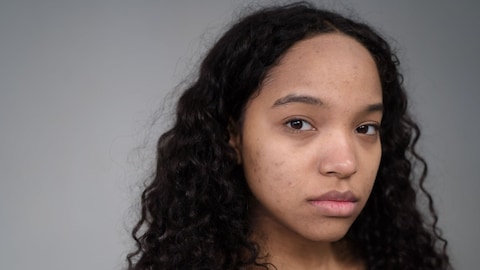
If you've been on TikTok recently, you may have been confronted with a new term: ferritin face. For those who are unaware, ferritin face supposedly entails washed out skin, dark circles, dry lips and weak nails – and even thinning hair. But what even is "ferritin"?
Well, ferritin is a protein that helps you store iron. So, what we're talking about when we discuss ferritin face is actually low iron, or anaemia. (It's all beginning to make sense now, right?).
But since when can you judge iron levels based on looks alone? And what do experts have to say about the trend? In order to find out more, we spoke to Dr. Natalia Bratu an aesthetic medical doctor, GP and founder of Refine Clinic.
What is ferritin face?
While you've probably heard plenty about so-called ferritin face you might be wondering what exactly it looks like (...and if you have it).
However, Bratu is keen to emphasise that this is not a diagnostic criteria. "It’s a TikTok term, not a medical diagnosis. Users describe dull skin, dark under-eye circles, pale lips and a permanently tired look, and blame low ferritin, the protein that stores iron," she explains.
In fact, while iron deficiency is associated with pallor, it's not the only cause. "Iron-deficiency anaemia can make skin paler than usual. But a tired-looking face has many possible causes, so no one can read your iron levels from a mirror," she says. "I do welcome anything that gets people thinking about their health, but the answer lies in a blood test, not a selfie."
Can you actually judge iron levels based on how you look?
TikTok is always throwing new ideas and trends at us (fibre! protein! dubious dating advice!) and for every great fact you uncover, there is plenty of misinformation out there. So, is it really possible to judge your iron levels just by looking at you?
Bratu is sceptical, noting that the only way to properly gauge your iron levels is via a blood test administered by a doctor. "Paler skin can occur with iron-deficiency anaemia, but it’s non-specific, and many people with low iron have no obvious symptoms," she adds. "I look at skin all day, and it offers clues, never conclusions. Only a blood test, interpreted by a doctor alongside your history, can confirm whether iron is the problem."
What is ferritin?
Changing tack, it's worth also considering what ferritin is. How come most of us haven't heard of this protein before?
Well, as it turns out, ferritin actually plays second fiddle to iron, which is why we talk about it less. "Ferritin is the protein that stores iron, mostly in the liver, spleen and bone marrow, releasing it when your body needs it. A small amount circulates in the blood, and that reflects your reserves," Bratu says.
What are normal ferritin levels?
Now, how do we even judge what our ferritin levels should be? What are the guidelines (if any)?According to Bratu, healthy levels will vary from person to person: and you should be aware of higher-than-average levels as well as deficiencies.
However, there are ballpark figures to be aware of. "As a guide, the World Health Organization treats ferritin below 15 µg/L as deficient in healthy adults, or below 70 µg/L if there’s inflammation, because inflammation raises ferritin," she explains. "UK guidance generally regards below 30 µg/L as low stores. High levels matter too; above 150 µg/L in menstruating women or 200 µg/L in men may signal iron overload, though inflammation and liver disease can also raise ferritin."
How do you boost ferritin?
Okay, okay, so now we're all freaking out about ferritin. However, Bratu recommends extreme caution and actively advises against changing your diet or taking supplements unless you have a doctor's confirmation that you have low iron levels.
"Start by finding out why [your iron levels are] low, because the reason matters. Food helps; red meat, fish, eggs, beans, lentils and dark green leafy vegetables, ideally with vitamin C to improve absorption. Tea, coffee and dairy can reduce absorption, so keep them away from iron-rich meals," she says.
If diet isn't cutting it, a doctor might be able to prescribe supplements. "Once deficiency is confirmed, your GP may prescribe iron tablets, as diet alone may not be enough," she says. "I’d never suggest buying supplements on the strength of a TikTok video, because more iron isn’t automatically better."
What should someone do if they are worried about their ferritin levels?
Okay so now you've read through this article (and maybe looked at a 'ferritin face' video or two) and may be wondering what to do about your iron levels.
Well, don't do anything too rash: and remember to visit your GP before you make any changes. "Speak to your GP rather than self-treating. Mention your symptoms, diet, any heavy periods or blood loss, and the medicines you take," says Bratu.
From there, your doctor will do tests. "A simple blood test, usually a full blood count and ferritin, sometimes with an inflammation marker, will show what’s going on," she adds.
At this point, there may be further investigation: just don't take matters into your own hands. "If iron is low, your doctor will look for the cause, such as heavy periods, pregnancy or bleeding in the gut, and advise treatment. Repeat tests then check it’s working. Please avoid starting supplements first, as the cause needs identifying," she concludes.
So, there you have it: don't get all your health advice from TikTok...
This article is not intended to be a substitute for professional medical advice or diagnosis. Always seek the advice of your physician or other qualified health provider with any questions you may have regarding a medical condition.
Credit: Cosmopolitan