How snack tourism is turning sightseeing into bite-sized adventures
From Parisian butter to Tokyo-only Kit Kats, travellers are planning entire itineraries around iconic snacks.
Jan 13, 2026
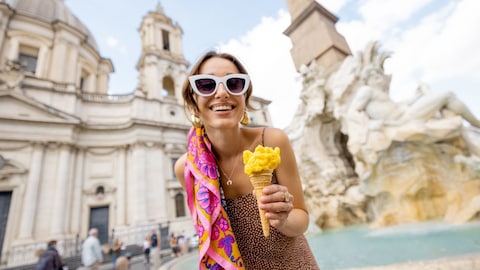
Once upon a time, travel itineraries were built around monuments, museums, and must-see landmarks. Now? They’re built around butter, bread, sugar, spice, and whatever comes wrapped in foil, paper, or a paper napkin handed over a counter. Welcome to snack tourism, maybe one of the most fun travel trends to emerge—where the highlight of your trip isn’t just the Eiffel Tower, but also the first flaky bite of a croissantyou take in a tucked-away shop nearby, jet-lagged but euphoric.
Snack tourism is about understanding a city through its cravings. It’s the pleasure of eating something iconic exactly where it belongs: hot, fresh, and deeply local. It’s not fine dining, it’s not tasting menus, and it’s not about reservations. It’s about the foods people eat without thinking twice, the flavours they miss when they’re away, and the small edible rituals that quietly define a place. These everyday bites are increasingly shaping how we choose where to go next. And in this way, snacks don’t just complement the trip; they become the trip.
Chasing flavours, not just checklists
New vacation spots tempt us in different ways. Some, like Mumbai, pull you in with unapologetically spicy roadside snacks, while others, like Bangkok, win you over with desserts that feel almost ritualistic. Take mango sticky rice: soft coconut rice topped with ripe mango and glossy coconut cream. Snack tourists often find themselves drifting through night markets, following their noses before their eyes, where the balance of sweet, salty, and creamy just works.
Paris, meanwhile, draws snack tourists for the beurre: French butter studded with tiny sea salt crystals that crunch gently as you bite in. Spread on a crusty baguette, melted over carrots, or folded into pastry dough, butter here feels quietly special. We’re not racing through checklists or squeezing in five landmarks before sunset anymore. We’re travelling for flavour instead: flaky, buttery, sugar-dusted, sauce-dripping bites you can only find there, and that end up tasting exactly like the place itself.
Limited-edition emotional collectables
Now there are snacks, and then there are creative snacks. Take Japan, for instance. You’ve got the full gamut within a single brand of chocolate: Kit Kat. Green tea, sakura, sake, yuzu, sweet potato, there are hundreds of region-specific flavours, many of which you can only buy in certain cities or stations. Snack tourism here becomes a kind of scavenger hunt. Supermarkets, convenience stores, and train kiosks all offer something new. Eating a Kit Kat flavoured like local produce suddenly feels like cultural immersion; playful, yet precise.
Then there’s the emotional aspect. New York has bagels, Paris has croissants and macarons, Spain has tapas, Switzerland, fondue, Prague and Budapest, their trdelníks (sweet chimney cakes filled with chocolate, cream, and berries), and Italy has pizza and gelato. Whether it’s your first visit or a return to familiar favourites, food forms an undeniably strong connection with experience and memory.
Why snack tourism works (and why we love it)
Snack tourism strips travel of performance. There’s no checklist, no pressure to “see everything”. You can step into a corner grocery shop, and suddenly you’re present. You’re tasting. You’re observing how locals truly eat. Snacks are accessible; they don’t require knowledge of wine pairings or dress codes. You just need curiosity and an appetite. And in a world constantly asking us to optimise experiences, snack tourism gives us permission to slow down and enjoy something small but meaningful.
Snack tourism is also powered by scarcity. Be it seasonal sweets in Thailand, festival-only snacks in India, or holiday-specific flavours in Europe, these foods exist briefly, intensely, and then disappear. They reward timing, because you can’t buy them later online. This has turned snacks into cultural collectables.
All the authentic feels
There’s a reason snack tourism feels more intimate than luxury dining. Snacks are eaten by locals on lunch breaks, after school, and between errands. They don’t require explanations or dress codes. You learn more about a place by watching how people eat on the street than by sitting through a tasting menu. A paper cone of fries in Europe, a bagel grabbed on the go in the US, a skewer eaten in an open-air market in Asia—these moments reveal how people live, not how places perform for tourists. Snack tourism taps into that desire for authenticity without the pressure to “do culture correctly”.
It also changes how we explore places. Instead of structured routes, travellers wander from one bite to the next. A bakery leads to a café, which leads to a street stall, which leads to a market. Cities unfold organically when snacks guide the journey. This kind of travel is slower but richer. You sit more, walk more, and watch more. You’re not rushing to tick things off; you’re following appetite, which is surprisingly intuitive.
So the next time you plan a trip, skip the exhaustive itinerary. Ask instead: what do people crave here at 4 pm, 10 pm, or right before heading home? In the answer lies the joy of planning a trip around a croissant, a candy bar, a bowl of noodles, or a street-side snack eaten mid-stroll, phone already out. This is travel powered by appetite, curiosity, and vibes.
Lead image: Getty Images
Also read: Vanishing acts or forever energy? Here’s how you can enter the new year with a happy heart
Also read: The most flattering blush placement for every face shape
Read more!