Why 2026’s creative class is turning to analogue bags to fight screen fatigue
Because touching grass starts with what you carry.
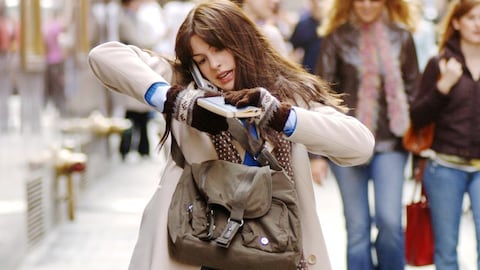
I do not know a single person who can sit through a full red light without checking their phone, and I say that as someone who once unlocked mine to check the time and resurfaced seven minutes later, doom-scrolling through brain-rot reels on Instagram. Somewhere in 2025, while the year kept spiralling and every app was literally filled up with AI slop, a lot of us even started calling 2026 the new 2016, all thanks to burnout. The feed no longer feels like a space you end up visiting to decompress; it feels like a place that extracts something from you, whether that is attention, money, or just a reaction, and after years of living inside that loop, people have started to notice the toll. Trends come and go before they mean anything, everything looks heavily curated, and the sense that you are always being nudged toward the next thing to buy or become is hard to ignore.
What are analogue bags?
Analogue bags are curated bags people carry that are built around tools that do not feed into social timelines or pull you back into algorithms. It could be a paperback instead of a Kindle, a digital or film camera, newspapers, a journal, an iPod loaded with stored music instead of algorithmic suggestions, and even a simple flip phone, which cannot open apps designed to keep you scrolling. These are basically substitutes for behaviours that most of us no longer can control, as they give your hands and your attention alternatives that do not default to the feed.
The idea grew out of online circles where photographers, writers, designers, and other creatives were already sharing what they carried each day and why. Film communities talked about items they would carry to help them focus and process. Writers posted photos of paperbacks and marked-up journals as a way to explain how they avoided opening social apps during commutes. By late 2025, niche accounts began tagging their posts with variations of “analogue bag” while linking it to digital fatigue and attention control. From there, the concept spread through newsletters, podcasts, and feature stories that were already covering burnout from infinite scroll. The idea formed through repetition, shared frustration, and people publicly documenting small changes in how they structure their days.
When I began asking people to empty their bags, I expected a list of objects. What I got instead were coping mechanisms, creative anchors, and small systems built to hold attention in place. The items repeat across cities and industries, but the reasons behind them felt more personal.
Rohan Sharma, a content creator currently based in Mumbai and originally from Los Angeles, carries three analogue essentials: a small planner, a journal, and a book. “I use the journal the most,” Rohan told me. He started journaling four months ago after noticing how deeply constant screen time was affecting him. “My journal is something I love to carry around, because it closes the loops that doom-scrolling open in my head.”
His phone still dominates his day. “My day typically looks like 7 hours of screen time,” he said. He moves between Instagram, TikTok, YouTube, CapCut, Edits, and analytics tools. “I am checking stats probably 50 times a day.” That habit, he admits, drains him. “Being on screens all day has dramatically changed my attention span. I can’t sit still with one idea or one edit unless I have manually blocked those apps. If there is no friction in place, I feel a magnetic force between my thumb and my distracting apps.” The notebook acts as that friction. “Carrying a notebook has definitely shifted my energy,” Rohan said. “I become a lot more clear-minded when I journal, and get a lot more stressed when I am on my phone.”
For Shiv Khandelwal, a content creator and creative director, the bag looks different. On a shoot day, you will likely find an old handicam and an iPod. The handicam brings texture and imperfection back into work that often feels over-polished. The iPod serves a different purpose. “If you open Spotify or Apple Music on your phone, there are thousands of things, thousands of distractions,” Shiv told me. “Earlier, you could think of that one song or that one artist and your mind is in one place.”
He also carries a physical notebook for sketches and lighting diagrams. Instead of tapping notes into an iPad, he prefers drawing camera positions and set layouts by hand. The act of illustrating helps him think through framing and space before the shoot even begins.
DJ Adi Chaudhri’s setup is less aesthetic and more practical. He still carries wired headphones and a pen. In his bag right now: earplugs, loose cash, unused beverage coupons, a pen from a recent flight he took, and a small notebook filled with music ideas. “Having something tactile just allows you to participate in your own life a little bit more,” Adi told me. He sees limitation as clarity. “If I have all the stimulus and information of the world at my fingertips… then it’s all informing my own decisions,” he said. Writing ideas down by hand keeps instinct intact. There are no push alerts on paper. You decide when to open it.
Across all of them, the contents still differ. A journal. A handicam. A film camera. Wired headphones. A light meter was passed down from a parent.
Why the analogue bag resonates now
For Rohan Sharma, this turn feels personal. “I think this analogue turn is providing an increased simplicity to people’s lives,” he told me. After years of being online by default, he believes many of us are trying to feel like people again, not output machines. “After being chronically online and being controlled by their devices, I am certain that people enjoy how liberated and clear-minded they feel when they unplug.” I agree with him. The appeal is not vintage for the sake of it. It is a relief. But as he puts it, “It then becomes a matter of how well you can harness your mind and tolerate boredom, which decides if you actually do set limitations.” The bag is only useful if you are willing to use it.
Shiv Khandelwal frames it in terms of the pressure to maintain constant output. “When we are constantly posting, we do end up falling under the trap of too many trends,” he said. “You are supposed to post like someone else, you are supposed to not miss out on a trend cycle.” I see that same pressure when every feed starts to look identical within weeks. Analogue tools interrupt that sameness. Shiv prefers drawing his lighting plans and camera positions by hand. “Working with such tools is a blessing,” he said. The lack of endless correction no longer stresses him. “You get what you get… the magic of it is in letting it be how it is.” That mindset forces intention before the camera turns on. It also reintroduces risk, which I think is what makes the work feel alive again.
DJ Adi Chaudhri takes it further into privacy. “There’s something freeing about not having a digital archive of everything,” he said. “If it’s gone, it’s gone.”
What to pack in your analogue bag
If you’re going to do this, don’t start with Pinterest. Start with your worst habit. Think about the exact moment your hand reaches for your phone. Is it at traffic lights or in lifts? During awkward pauses in conversation. On your commute. That is the gap you’re packing for.
If you scroll the second, there’s silence, carry something you can actually read in small pockets of time. Not a 600-page classic you’ll never open, but a book you’re genuinely interested in. If your brain feels crowded after long scroll sessions, carry a small notebook, just to empty your head somewhere that isn’t a trauma dump post on Instagram.
If streaming apps turn into endless skipping, load an iPod with albums you love and leave it at that. If you overshoot everything on your phone camera and post it within minutes, try a film camera or even a basic digital camera that forces you to wait before you see the result. The waiting is the point.
Keep it light. Three items are enough. There is no need of carrying a typewriter with you. The bag should feel like an alternative, not you hopping on another trend and dipping your toes back into overconsumption. And be honest with yourself. You’re probably still carrying your smartphone. Everyone is. This isn’t about pretending you live offline. It’s about creating friction in the exact places where you feel out of control.
Lead Image: IMDb
Also read: Boring feeds are taking over Instagram and it’s actually kind of liberating
Also read: Stroll, don’t scroll: 5 fun things to do during lunch that don’t involve your phone