Genius hack or pathway to loneliness? The dawn of dating’s spreadsheet era
Frustrated by endless first dates and burned out by apps, many singles are building ‘dating productivity systems’ to streamline their love lives — but is this just steering us further away from the exciting messiness of romance?
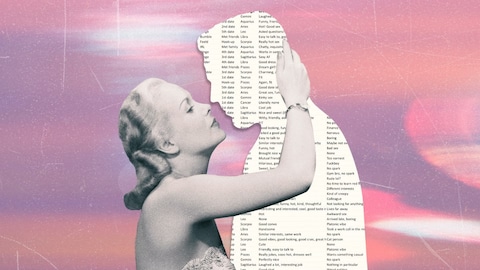
Molly’s entire dating life was set out on a spreadsheet. It was 2024 and Molly, at 29, had been dating for over a decade. “I made a Google Sheets document on which I would write down all the dates I was going on,” she says. “I’d categorise them by date, name, how we met, the ‘goal’ we got to [first, fifth, tenth date, meeting housemates, friends, family, etc], the activities we did, any problems there were, star sign, and what they looked like.”
After a few months of tracking each of her dates and noting down why they didn’t work, Molly began to notice patterns emerging. “I found that the reason I didn’t want to see someone again on multiple first dates was that I didn’t think they were funny,” she recalls. With that in mind, Molly would actively scroll through her Hinge matches and meticulously consider whether they were making her laugh, or potentially had the ability to do so. She’d ask herself, ‘Is this a funny conversation? Am I entertained by them?’
What Molly was doing was ‘optimising’ her love life. “I wanted to take a step back and treat it like work, setting myself objectives and dating differently,” she says. This, she hoped, would enable her to track exactly where she was going wrong, with both the people she was choosing to date and her own behaviour.
It’s easy to see why this might be so appealing to a generation of singles who are burned out by swiping, but is going finance bro mode on your dating life really the solution? Or will it simply exacerbate the problems that are already plaguing singles today?
All of this feeds into the broader culture towards self-optimisation that’s infiltrating the way we think about every aspect of our lives. Take the ‘5 to 9 before my 9 to 5’ trend — which sees people sharing their pre-work routines (fitting in everything from a workout to a deep clean of their kitchen before work) — that shows our obsession with making our lives as productive as possible. There’s also the rise of hobby-tracking apps that encourage us to systemise even the fun parts of our lives. Letterboxd, where you track and rate films you’ve watched, says its community grew by 50% in 2024, while the reading app GoodReads has over 150 million members.
Adding up the numbers game
It’s only natural that people are applying these tools to dating, particularly as 78% of people say they’re burned out by dating apps, according to a 2025 Forbes report. Optimising your dating life by tracking it in spreadsheets, and setting yourself clear goals, could manage app-overwhelm. Making your romantic life as efficient as possible might also help you get out of the depths of Hinge hell.
But turning people into numbers in a spreadsheet isn’t exactly a romcom-esque love story. For 25-year-old Ashara, optimisation wasn’t what she envisioned when she daydreamed about her love life. “I started dating when I was 23 and I took to dating apps,” she says. “I didn’t think it would be too difficult to find someone I wanted to be with.”
But Ashara quickly became overwhelmed by the sheer number of people on the apps and the information available about them. As someone who prides themselves on organisation, a spreadsheet seemed like the obvious answer. “It included demographical information such as ethnicity, age, height, and home town,” Ashara says, adding that she’d also track “nicknames, red flags, green flags, siblings, birth order, memorable qualities, how the relationship ended, and a kiss rating”.
Soon, Ashara took her system a step further, turning the information into a colour-coded graph and, later, a slide deck. This was partly to reflect on her own decisions and where she was going wrong, but also so she could compare the people she was dating, which she admits was partly why she chose to commit to her current boyfriend. “I looked at all the data and saw just how much better he was than all of the other guys,” she says.
Professional swipers
According to Luke Brunning, co-director of the University of Leeds’ Centre for Love, Sex, and Relationships, it makes sense that young people are turning to these methods. “People are looking for control and they’re looking to exercise agency,” he says, adding that there might be a gendered aspect to this trend, too. “It’s more likely that women are having lots of low-quality interactions online. Perhaps they’re more able to match with people, yet less able to have confidence that those people are good for them.”
According to dating app Bumble’s 2025 dating report, women are also changing their priorities, with 59% saying that increasing concerns about the future are leading them to place more value on stability, looking for a partner who is emotionally consistent, reliable, and has clear goals when it comes to their life.
California-based Sampson Ezieme spotted a gap in the market for date-tracking tools back in January 2025, as he noticed a sense of collective fatigue around dating among his peers. That’s what led him to launch Spread, an app designed to help you systemise your dating life. The app uses a logging system, where you can curate a roster of the people you’re dating. “Every person can be categorised with red, beige, and green flags,” says Ezieme. The app then automatically ranks each person. “That way, you can easily compare connections side by side, identify who you should probably focus on, and who you might want to avoid. It takes the guesswork out of dating by giving you clarity at a glance.”
Comparing your love life to your professional life might feel icky, but Brunning says the very concept of dating apps has encouraged this. “Despite their best intentions, [dating apps] have created lots of work for us to do,” he says. Decision-making, maintaining connections, and arranging dates requires a lot of effort. “We’ve also seen a blurring of the professional and the personal. Some people talk about dating bios as being like CVs.”
For 21-year-old Vera Vlasova, who shared a now-viral Instagram video about how she met her partner using a dating spreadsheet, it felt natural to approach dating in the same way she approaches work. “I’m a pretty goal-orientated person,” she says. “I’ve used productivity tools since I was in school.” Although Vera used tracking tools to outline what she wanted in a partner, she started to feel uncomfortable actively rating the people she was dating, as one of her friends was. “She would rate their looks or rate their personality and I just thought it felt wrong. I tried it, but I didn’t enjoy it.”
Artwork by Ruta Zemaityte//Getty Images
Is your dream man… a robot?
This raises the question: what do we lose in the process of optimising our dating lives? It does seem to encourage the objectification of potential partners, which is a pretty bad foot to get started on with someone. It also dehumanises the people we’re connecting with — already a side effect of swiping culture — pushing us to see them as stats on a spreadsheet, as opposed to complex individuals. “At some point, you have to start actually relating to people as human beings,’ says Brunning, “and [that includes] all the complexity, messiness, and ways in which they likely fall short of your ideals.”
For Molly, tracking her dating life was more a process of personal reflection than pitting her Hinge matches against each other. “It helped me feel it wasn’t all me,” she says, explaining that before doing so, she constantly dealt with feelings of rejection. “It took me away from that feeling of ‘No one wants me, no one fancies me — this is all a me problem’.” Ultimately, after eight months, Molly met her now-boyfriend, who she lives with and describes as “her person”. “When I looked at my spreadsheet, I realised a lot of people had the same profession or all of them had been laddish, funny, and charismatic but they’d been slightly fuckboy-ish,” she says. “The process pushed me to try to make different choices.”
A course in Excel probably isn’t necessary to get to that point for most people — and if you feel it is, perhaps take a step back and ask yourself, ‘Why?’ There’s no denying that meticulously tracking your dates might add an element of protection, avoid hurt and frustration, and make you feel you have some semblance of control over your love life. But it will also change the way you perceive potential partners, which could significantly reduce your chances of experiencing joy, romance, and fun in the process of dating. And those things can be just as important as finding someone you believe you could have a long-term relationship with.
There are a lot of tools and information out there right now that suggest automating your existence will make your life better, and Brunning says this trend is simply a reflection of that. “It’s a symptom of a society in which things are so heavily quantified and subject to scrutiny, in which different aspects of our personalities have been professionalised and we feel the need to try to optimise them in all of these different ways,” he says.
But an efficient life isn’t the same as a happy one. And let me tell you, those next-gen AI robots could only dream of the butterflies you get when you’re waiting to see if someone you fancy will text you back. And even if they fail all the criteria on your spreadsheet, they might make you smile, laugh, or even orgasm — all wonderfully human, unquantifiable experiences.
Credit: Cosmopolitan