The anti-AI aesthetic is making messy, unfiltered content cool again
Gen Z’s latest obsession is the anti-AI aesthetic. If you haven’t caught the bug yet, give it time. It grows in like a wisdom tooth.
Oct 10, 2026
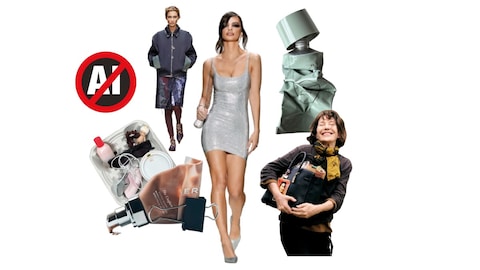
If you want to know what everyone’s into these days, what causes they are fighting for, insecurities they are harbouring, things they are calling “chic”, or how spectacularly wrong they are about being “whimsical”, Instagram is the place to be. I stalk everyone there. You don’t have to be my friend for me to notice that you unfollowed Lena Dunham. Call me nosy; I like to think of myself as a social anthropologist.
But lately my feed is so full of images I can’t tell are real or AI that the daily stalk is no longer fun (falling for Dua Lipa’s AI-generated wedding pictures was my last straw). I’ve lost the right to mock those who fall for WhatsApp forwards. Glass houses... Except somewhere under all this AI slop, a counter-trend seems to be taking shape: the anti-AI aesthetic. Anyone can look flawless online now, living their most algorithm-approved life, all thanks to artificial intelligence. So what’s actually rare is proof that you didn’t use it—evidence that you don’t mind being imperfect, which is to say, evidence that you are human.
The anti-AI aesthetic, then, is anything that looks like a human was actively involved in its making, not just in typing out a prompt. Take the Instagram photo dump, which emerged in 2020 and has since become one of the most common formats of posting online that shows a life lived. A half-eaten cinnamon roll, wired earphones tangled up with your favourite lipstick, the book you are reading on your way to work, a night out with friends, a what’s-in- my-bag, a picture of your stuff piled in the sink, a selfie. The whole point of a “dump” is that it is supposed to be intimate, unedited, unplanned, and curated, but just enough to make it look like it wasn’t. It has to have no sign of AI, of course. Photo dumps on Instagram now are much like salt to a meal; unremarkable when present, devastating without. But I digress.
Keep it real
Earlier this year, The Business of Fashion reported how luxury beauty brands and influencers have jumped the “cluttercore” bandwagon and “products strewn across the sink, half-empty or in cluttered piles, have replaced picture-perfect shelfies.” Brands like Merit Beauty, Dieux Skin, and Glossier have leaned into the trend and taken to posting product shots that look used, beat-up, and lived-in. Even Apple put out a behind-the-scenes video of the making of their MacBook Neo without using AI, and they made sure everyone knew.
Fashion has caught on too. While Khaite’s S/S 2027 show broke away from the clean girl aesthetic and slick-back hair, Prada’s A/W 2026 show had models walking down the runway with unkempt hair and smudged makeup. And who can forget the smoky eyes and that controversial ‘heroin chic’ aesthetic of the 90s at Demna’s first Gucci show for fall 2026. While at Junya Watanabe, streaming black eye makeup was proof that a night was had. TikTok and later Instagram’s fascination with American filmmaker Sofia Coppola’s workspace also shows the generation’s preference for a chaotic (and therefore, anti-AI) aesthetic.
And brands understand that trust runs on authenticity, and authenticity is one thing AI can’t fake. It might be coming for our jobs (hurry, please), but it still can’t be vulnerable on command. And while perfectionism isn’t always indicative of AI, it sure raises the question. As for my feed, I’ve gotten good at spotting and skipping every AI post coming my way, and gone right back to my stalking. Old habits, and all that.
This article originally appeared in Cosmopolitan India's September-October 2026 print issue.
Lead image: Getty Images
Also read: The new rules of wearing a shirt, according to fashion insiders
Also read: Why we can’t stop collecting scrunchies, even when we already have too many
Read more!