Why giving men flowers is still a radical gesture
Men have worn floral garlands, lapel flowers and crowns for centuries. But modern gifting turned the bouquet into a feminine gesture, and the floral industry is now trying to change the script.
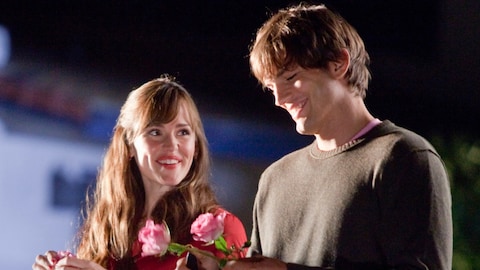
We need to talk about men and flowers. Specifically, why we’ve somehow decided that a bouquet is a perfectly acceptable gift for your mum, your best friend, or your girlfriend, but hand one to a man, and suddenly everyone gets a little awkward. A man can receive a watch, a bottle of whisky, or an aggressively practical wallet without anyone blinking. Flowers? Now that’s apparently complicated.
Except, it really shouldn’t be. Forty-one per cent of men say they’d like to receive flowers from a woman, while 22 per cent buy flowers for themselves at least once a month. Nearly half of respondents no longer believe flowers are a women-only category, according to a 2021 Motivaction survey commissioned by Bloemenbureau Holland, which surveyed people across the Netherlands, Germany, France, and the UK.
So, the appetite is clearly there, sitting just beneath the surface of a gifting ritual that hasn’t quite caught up.
Because there’s a particular kind of hesitation that still happens in the seconds before someone buys flowers for a man. You pick up a bouquet, consider it for a second, and then, almost instinctively, reach for the whisky gift set instead. It’s not really about taste. It’s something older, and far more culturally loaded. It’s the lingering idea that flowers are too soft, too sentimental, and somehow, don’t “belong” to him.
Brands are beginning to challenge that assumption. Interflora UK has run campaigns like Blooms With Balls and Petals at the Pub, while UrbanStems built a Father’s Day push around the idea. Interflora India launched a Flowers for Him collection, too. The message, unmissable across all of them: masculinity and flowers were never actually incompatible. Someone just told us they were.
Nabin Jana, a florist at a Ferns N Petals (FNP) franchise in Delhi, says he has noticed the change firsthand. “We are definitely seeing more orders for men. It’s not something that feels unusual anymore. People are increasingly comfortable sending flowers to fathers, partners, friends, and colleagues. The demand is there, and we’re seeing customers consider flowers for men as they would for anyone else.”
Flowers were never just for her
Here’s the part that tends to surprise people: flowers were never really a “women’s thing” to begin with. Roman generals returned from war crowned in laurel. Indian bridegrooms are still garlanded in flowers as a mark of auspiciousness. Victorian gentlemen wore boutonnières the way modern men wear watches as quiet signals of taste and status.
The gendering of flowers is a surprisingly recent invention, and it has a traceable origin: the twentieth century, when advertising discovered that segmenting products by gender was extraordinarily profitable. Sociologist R W Connell’s concept of hegemonic masculinity, the cultural ideal built on toughness, restraint, and control, and defined largely by what it excludes, helps explain how flowers got filed under “soft” and, therefore, under “hers”.
Consumer researchers Yuko Minowa, Russell Belk, and Takeshi Matsui have made a similar case: gift rituals don’t just reflect gender roles; they actively manufacture them, nudging women towards expressive gifts and men towards the functional and status-driven.
Dr Saradhi Gonela, marketing expert and associate professor at Woxsen University’s School of Business, explains, “Gifting, in general, has never been restricted by gender, but popular culture over the last century has portrayed flower-gifting in a particular way, predominantly as something men give women, and often within romantic relationships. That has shaped consumer attitudes. What we are witnessing today is a challenge to that notion. If affordability is not a barrier, imaginative marketing can successfully reposition a product. Flowers, too, can be repositioned as a gender-neutral product, although it may take some time.”
So, what are we actually afraid of?
If the discomfort isn’t really about the flowers, what is it about?
Psychologist Ronald Levant’s research on what he terms normative male alexithymia points to boys being socialised early to suppress emotional expression, leaving many men, as adults, without the fluency to comfortably receive tenderness, let alone ask for it.
Delhi-based Tanya Malik, who studied gender studies as part of her literature degree, explains, “Objects become gendered when certain qualities are first associated with masculinity or femininity. Strength, toughness, and utility with men; beauty, softness, care, and ornamentation with women, and those associations are repeatedly attached to products.”
And that’s why changing the meaning of a product can be culturally significant. When brands sell “flowers for men”, they’re not simply opening up a new consumer segment. They’re challenging a gender code that tells men what kinds of beauty, tenderness, and emotional expression are supposedly acceptable.
Why flowers for men still need explaining
In India, the shift is subtler. Flower retailers have begun creating dedicated categories for men and, in some cases, spelling out what supposedly makes a bouquet appropriate for a male recipient.
IGP, for instance, recommends blue orchids as a “classy” choice and advises shoppers to avoid “overly delicate or feminine” arrangements in favour of bold colours and sturdier blooms. Interflora India similarly foregrounds orchids, chrysanthemums, and other “bold, striking” flowers in its offerings for men. Yet the picture is hardly uniform: FlowerAura’s own men’s collection includes pink, red, white, and yellow roses.
What’s changing, then, may be less the flower itself than the language used to make giving it to a man feel acceptable: bold, classy, exotic, sophisticated.
Is this a positive shift? Gonela frames it through the lens of early social conditioning, the same instinct that teaches toddlers that pink is for girls and blue is for boys. For most adult consumers, he notes, working within that colour logic is simply easier than challenging it outright. Some will push back sooner; most will wait until the norm itself has shifted.
Gonela is candid that gendered marketing isn’t necessarily a failure of nerve, so much as a normal phase of a product’s life cycle—the noisy, promotional stage every category goes through before demand exists on its own terms. His benchmark for real success is disarmingly simple: the moment flower-gifting to men stops being a conversation at all, and starts being as unremarkable as buying your father a watch.
What we teach men to receive
Gift objects are never neutral. They teach us who is allowed to receive tenderness, and in what form. Developmental psychologists have long argued that repeated social rituals actively shape emotional behaviour over time. A boy who grows up receiving flowers alongside trophies and gadgets learns, implicitly, that softness and masculinity were never actually at odds.
Consumer psychologist Patrick McGrath has argued that gift-giving functions less as pure sentiment and more as a performance of social identity, which means every time the “acceptable” gift list expands, the identity it permits expands with it.
Gonela sees this playing out in real time in urban India, where shifting domestic roles from men cooking and gardening to doing school pickups are already loosening the grip of rigid gender scripts. Flowers between spouses, or from children to parents, are increasingly normal, he notes. Between male friends or colleagues, we’re not there yet, but he’s confident popular culture will close that gap sooner than expected.
Lead image: IMDb
Also read: How to protect your florals from heat and other summer woes
Also read: 10 Easiest House Plants to Have in your Indoor Garden