Why society loves to turn a woman’s choices into embarrassment for the men around her
From Malaika’s music video to JLo’s Udaipur performance, the internet cannot stop turning women’s choices into male-centred narratives.
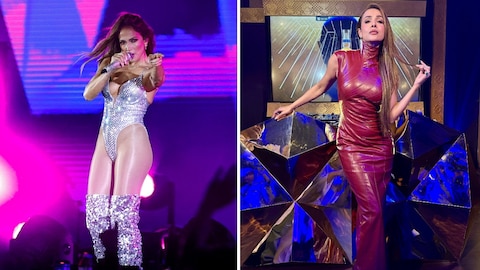
“Ladies’ man” has taken on an ironic new meaning in the digital age, where some of the internet’s most accomplished and visible women are being pulled down by some deeply underwhelming male opinions. We grew up hearing that this is a man’s world, but modern reality tells a different story. It is almost 2026, and women are shaping industries, breaking headlines, and bringing men down to earth. And yet, a troubling online pattern refuses to fade. Instead of discussing a woman’s work, choices, and presence as her own, public discourse continues to frame them through the men in her life. What should be a straightforward conversation about autonomy becomes a distorted reflection of family honour and male validation.
The clearest examples of this pattern emerge every time a woman steps into the spotlight on her own terms. When Malaika Arora appeared in the music video 'Chillgum' by Yo Yo Honey Singh, released in November, online reactions quickly turned vicious. Instead of evaluating the performance for its choreography or screen presence, comments spiralled into moral policing. Words like vulgar, cringe, awkward, and cheap dominated the discourse. But a particularly disturbing layer was the age-shaming, with many arguing that a woman over 50 with an adult son had no right to perform in such a setting. Strangers online claimed they “felt bad for Arhaan,” as if a grown woman’s professional choices were somehow a moral burden on her adult child. Meanwhile, nobody said they “felt bad for” Honey Singh’s girlfriend, mother, or sister for the years he spent writing hyper-sexual lyrics. His choices were treated as individual expression; hers became a referendum on her motherhood.
Jennifer Lopez has been dealing with a different version of the same script. The singer, known globally for her bold fashion and unapologetic self-expression, was in Udaipur performing at a wedding. Her outfit of choice was typical of her style when it comes to her live performances. But instead of acknowledging that she was a headline act at a multi-million-dollar celebration, the internet was mocked online for her clothes, turning her wardrobe into a morality debate. Commenters insisted a woman “in her 50s” shouldn’t be dressing like this. Some even went so far as to talk about her split from ex-husband Ben Affleck, alleging that her choice of clothing must be why he left her, reducing a global performer’s professional costume to a supposed cause of a man’s personal decisions. Once again, her individuality was diluted, reduced to a footnote in a male-centred storyline. But why should anyone get to decide what a woman can or cannot wear at any age—and why is her autonomy still treated as public property?
What is striking is the contrast in how men are treated under similar scrutiny. Men behave badly, put out questionable content, or act out publicly, and the internet often contextualises it as individual behaviour. Their wives, daughters, and families are rarely dragged into the conversation with the same intensity. But when a woman makes a bold career move, wears a revealing outfit, or simply enjoys being visible, the men attached to her name are immediately invoked. Her actions are framed as a reflection of her upbringing, her marriage, her motherhood, or her morality, as though her body and choices are shared property.
This persistent framing exposes a deeper patriarchal reflex that refuses to see women as complete individuals. Instead, they are viewed as extensions of the men in their lives, bearers of collective honour rather than personal agency. It is not just about trolling. It is about how easily society slips into the comfort of controlling women by attaching their choices to male figures, turning autonomy into something conditional and permission-based.
It is not only unfair, but it is also intellectually dishonest to reduce a woman’s identity to her relationships with men. A woman does not stop being an individual because she is someone’s daughter, partner, or parent. As long as the internet continues to measure her freedom through the men in her life, true equality will remain a performance rather than a practice.
Lead Image credit: Getty Images
Also read: How the girls of Hawkins became the real heroes of 'Stranger Things'
Also read: How to reclaim the last month of 2025 without spiralling into social burnout