Men who take part in caregiving are less masculine than men who don’t, 21 per cent agree
Gen Z men shared their views on traditional gender roles and it deserves a clapback
Some of them think wives should obey their husbands, and yes, we’re addressing it.
Mar 9, 2026
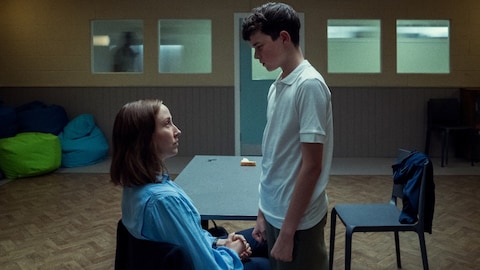
As a feminist woman, every time I think there’s nothing that surprises me anymore, I’m always proved wrong. It turns out that Gen Z men have some strong opinions that can only be described as a failure of our society in teaching young men to be better. And perhaps more tellingly, a reminder that patriarchy doesn’t simply disappear with time but just learns how to adapt and disguise itself in more modern language.
To give you some context, these responses come from a global survey conducted by Ipsos in collaboration with the Global Institute for Women’s Leadership at King’s College London. The study looked at attitudes towards gender roles among men aged 16 and above across 29 countries, including Great Britain, the United States, Brazil, Australia, and India. And while some of the findings reflect the kind of contradictions you’d expect in a generation figuring things out, others feel alarmingly familiar.
We’re talking about young men who believe a wife should always obey her husband, or that women shouldn’t appear “too independent”. Concurrently, many of them also say they find women with successful careers more attractive. So, apparently, independence is appealing as long as it doesn’t go too far.
The result is a set of opinions that feel less like bold new perspectives and more like outdated ideas in slightly modern packaging. Which is exactly why some of these takes deserve a proper clapback. And here’s what we think:
A wife should always obey her husband, 31 per cent agree
A woman should not appear too independent or self-sufficient, 24 per cent agree
Independence is simply what adulthood looks like: paying your bills, making your choices, living your life. If someone else’s self-sufficiency is threatening to you, then the problem probably isn’t her independence but your insecurity.
A real woman should never initiate sex, 21 per cent agree
Ah, the classic rulebook that says women should have desire, just never actually show it. The idea that a “real woman” should sit around waiting instead of initiating is straight out of a very outdated playbook. Treating female desire like a secret only reinforces the same tired double standards we’ve been trying to move past for decades.
Men are being expected to do too much to support equality, 57 per cent agree
What this usually translates to is men being asked to share responsibilities that were historically uneven at home, at work, and in relationships. Equality isn’t some exhausting new assignment; it’s just people finally doing their fair share. Calling that “too much” feels a bit like discovering teamwork for the first time and immediately asking for a break.
We have gone so far in promoting women’s equality that we are discriminating against men, 59 per cent agree
Women who have a successful career are more attractive to men, 41 per cent agree
This one is interesting because it clashes with several of the other responses. Moreover, while some men clearly admire successful, ambitious women, the majority still don’t agree. It says a lot about how comfortable people actually are with women who are thriving on their own terms.
Young men should try to be physically tough, even if not naturally big, 43 per cent agree
The obsession with toughness has been shaping ideas of masculinity for generations. But forcing men into a narrow definition of strength often comes at the cost of emotional openness and mental well-being. Real resilience has far more to do with character than with looking physically intimidating.
Men should not say “I love you” to their friends, 30 per cent agree
The idea that nurturing somehow diminishes masculinity is one of the more baffling stereotypes still hanging around. Caring for children, family members, or loved ones requires patience, responsibility, and emotional presence. If anything, those qualities should probably expand the definition of masculinity, not shrink it.
For many women, reading responses like these feels more frustrating than shocking. We are constantly told that the younger generations are more progressive, yet opinions like these prove that some outdated and deeply regressive ideas are still hanging around. And the frustrating part is not that a few people think this way, but that so many still agree with them. Clearly, the conversation and reformative action still have a long way to go.
Lead image: Netflix
Also read: Is it high time we stop confusing feminism for hating men?
Also read: Are financially independent women making insecure men uncomfortable?
Read more!