
Can you care about lipstick and social justice at the same time?
As India's youth-led protests dominate timelines, the internet is debating the role of creators in the online world.

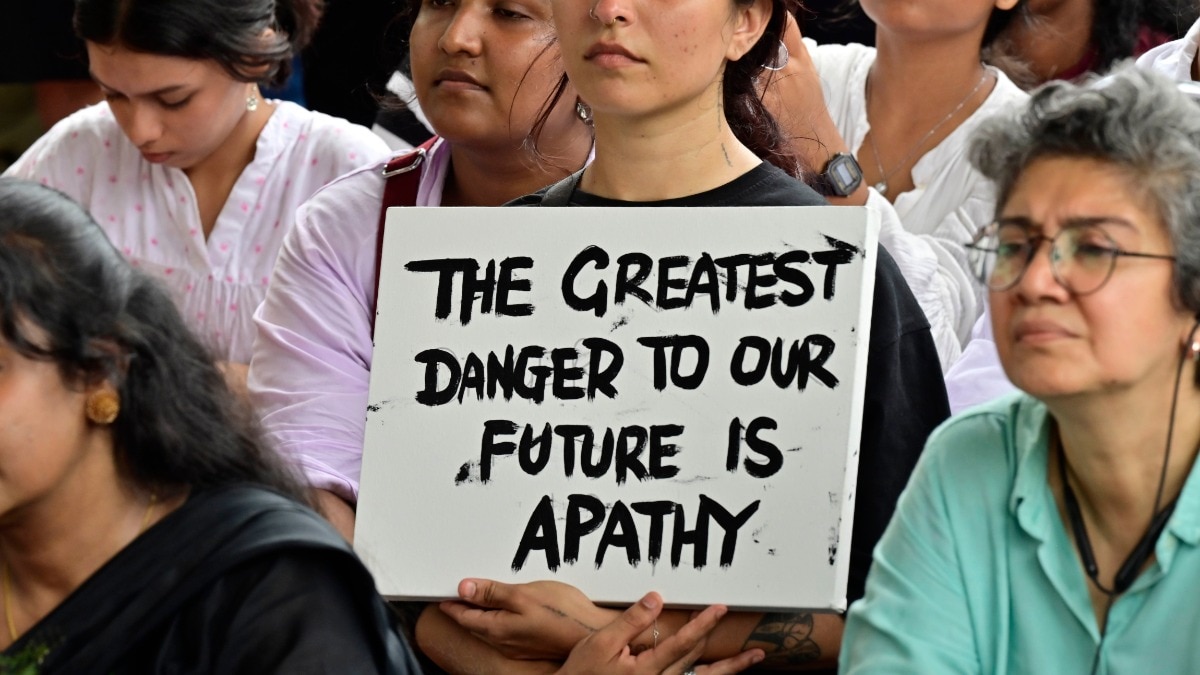
Open Instagram right now, and you'll find two very different kinds of posts living side by side. On one side, you have a beauty creator discussing the latest lip stain that can survive an iced coffee. And on the other are live updates from student protests in New Delhi and across India, where thousands are demanding accountability over exam paper leaks, education reforms, and police action. The movement, driven largely by students and young professionals, has become one of the biggest youth conversations India has seen in recent years.
Somewhere between those two posts, a new internet debate has emerged. Can you post a skincare routine one day and speak about a protest the next without being labelled performative? If you are a fashion magazine, beauty creator, or lifestyle influencer, are you expected to drop everything and only talk about what's happening in the news?
These are questions coming from followers as well as those within the industry, with many arguing that lifestyle platforms have a responsibility to use their reach during moments like these. At the same time, reducing creators to political commentators overnight could ignore the main reason audiences followed them in the first place. There isn't a universal rulebook, but perhaps some conscience may come in handy here.
The problem isn't lipstick. It's pretending the world doesn't exist.
The conversation often gets framed as an either-or. Either you care about your favourite blush, or you care about what is happening across the country. Either you are politically engaged, or you are superficial. But people don't really become one-dimensional during moments of crisis. They continue to go to work, meet friends, watch films, wear lipstick, and follow fashion while also grappling with difficult headlines. Public awareness does not require giving up personal interests. But it definitely requires recognising when the moment calls for empathy, attention and, where necessary, action.
Fashion and beauty have never existed in isolation from culture anyway. They have reflected changing ideas around identity, gender, class, and protest for decades. A magazine covering beauty isn't automatically disconnected from reality. The real question is whether it chooses to acknowledge the moment when that reality becomes impossible to ignore.
That doesn't mean every lipstick review needs to become a political essay. But it does mean knowing that audiences are paying attention to what brands, creators, and publications choose to amplify and what they choose to ignore.
Speaking up isn't the same as performing
The fear of being called performative has become so strong that it sometimes stops people from saying anything at all. And yes, audiences have become better at spotting empty gestures. A black square, a copied infographic, or a vague statement posted for optics rarely lands the way it once did.
Being authentic does not require becoming an overnight political expert. It can look like acknowledging what's happening, sharing verified information, making space for affected voices, or simply deciding that today isn't the day for another "get ready with me" video.
Caring about lipstick doesn't make you less capable of caring about justice. Posting about a protest doesn't suddenly erase your love for fashion. You can still love beauty, fashion, and all the little rituals that make up everyday life. But there are moments that ask for something different, something more. And in these moments, reading the room matters the most.
When an issue is shaping the lives of millions of people, using your platform to acknowledge it or amplify credible information does not erase your niche. It simply shows that you understand what deserves the loudest voice right now.
Lead image: Getty Images
Also read: Do your friends really need to be friends with each other?
Also read: Wisdom flexing is the internet's latest status symbol, but is it just another performance?
more from Life

Why advent calendar unboxing videos are my favourite kind of holiday content
Unique gifts for every personality: Meet them where they are
#SaneGirlEra: Six research-backed apps to help you cope with anxiety

How to make the lingerie-as-outerwear trend work for your wardrobe

Are you and your partner having mercy sex? This is how sex expectations can damage relationships

Welcome to emotionships—where you have feelings but no relationship status

Dear universe, when am I going to get a boyfriend?
Inside the sexual fantasy forums where women share their deepest desires

Are you too independent to be loved?

We know what a healthy relationship looks like, so why do we keep making excuses for the unhealthy ones?