
How India’s smaller cities are quietly reinventing the bar scene
At Dore in Udaipur, a more thoughtful bar scene is taking shape, one built on rooted flavours, stronger storytelling, and nights that feel far more worth staying out for.

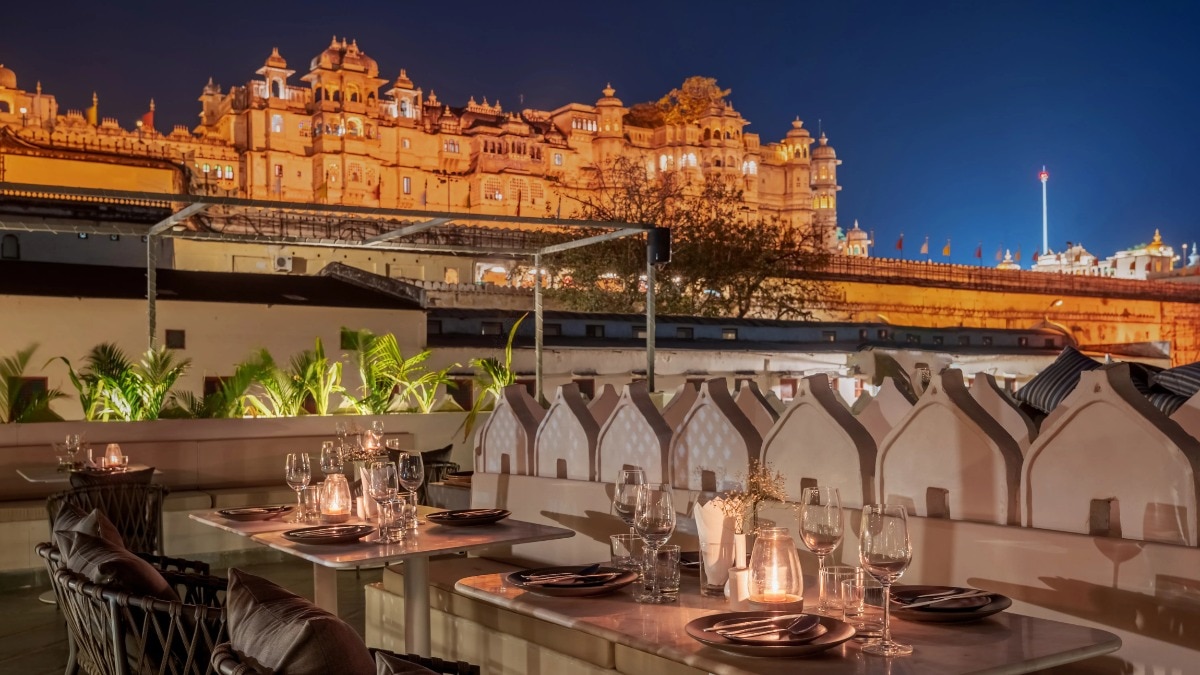
There was a time when going out in smaller Indian cities meant one thing: predictable nights that blurred into each other. Dim lounges, safe cocktails, and the same familiar idea of what nightlife was supposed to look like. But that version of going out is slowly fading. Because now, smaller cities in India are not just participating in the nightlife conversation; they are changing the tone of it entirely.
Take Udaipur, for example. Beyond the postcard views, the city has something far more interesting unfolding after dark. Dore is part of that shift, rethinking what a night out can look like when it is built around atmosphere, food, and a stronger sense of place rather than just loud music and familiar formulas.
The vibe? Imagine stepping onto a rooftop where everything feels slightly softer, slower, more intentional. Like the night actually has an interesting plot. At first glance, it has all the makings of a destination rooftop: open skies, soft lighting, and the kind of view that does half the work for you. But what makes it memorable is that it does not stop there. The experience feels considered from the start, designed for people who are not just looking for a drink, but a night with a point of view.
And globally, the blueprint is already shifting too. Some of the most exciting food and drink destinations are no longer coming out of the obvious big cities. They are unfolding in smaller places with stronger identities, where hospitality feels more connected to place than performance.
In Sabina Sabe, one of Oaxaca’s most talked-about cocktail bars, local ingredients, regional spirits, and a deep sense of context shape the entire experience. The drinks lean heavily on agave, native produce, and Oaxacan flavour, making the bar feel impossible to separate from where it is. It is the kind of place people actively travel for, not despite its location, but because of it.
A similar idea defines Bekeb in San Miguel de Allende, where indulgence is treated less like spectacle and more like storytelling. The food, cocktails, and design all draw from local references, proving that luxury lands better when it feels rooted in where you are rather than imported from somewhere else.
Back at Dore, food is not treated like a supporting act to the drinks. It is central to the experience. The menu feels curated rather than expected, with familiar flavours elevated through more thoughtful choices. These are dishes built for sharing, but memorable enough to hold their own.
The cocktails follow the same logic. Straying away from the usual crowd-pleasers, the bar draws from Rajasthan itself, pulling in rose, local botanicals, spice, and earthier notes that echo the region’s landscape. The result feels familiar, but still manages to keep you guessing.
That kind of hyperlocal storytelling has already reshaped cocktail culture elsewhere. In COA, in Hong Kong, agave spirits are framed through deep regional context and ingredient-led storytelling rather than novelty alone. It is a reminder that the best bars are no longer built around excess, but around perspective.
The same shift is happening in design too. For years, “good nightlife” came packaged in a familiar format: louder rooms, mood-board interiors, and a version of cool that looked more or less the same everywhere. But globally, that is changing.
In Copenhagen, some of the most influential bars have moved in the opposite direction, favouring stripped-back spaces, quieter confidence, and a stronger connection to locality. The idea of luxury has become less about spectacle and more about restraint.
That same mood defines some of the world’s most interesting smaller-city bars. Smoke & Bitters, set in the surf town of Hiriketiya, has earned global recognition for cocktails built around tropical local produce and a distinctly coastal point of view. It works not because it feels removed from where it is, but because it leans fully into it. The open-air setting, destination-worthy food, and strong sense of place make it proof that world-class bar culture no longer belongs exclusively to big cities.
And that is exactly what places like Dore are getting right. They are not trying to imitate Mumbai or Delhi. They are not chasing the same playlists, the same polished sameness, or the same tired idea of what a “cool” bar should be.
Instead, they are asking a far more interesting question: what actually feels real here?
The answer is places that feel personal. Slightly intimate. Beautiful, but never trying too hard. Nights that feel less about escapism and more about experience. Less about copying what works elsewhere, and more about creating something rooted, specific, and worth remembering.
The future of nightlife in India is not just playing out in the big cities anymore. It is quietly taking shape in the smaller ones, and doing it with far more personality.
All images: The brand
Also read: Step inside The Second House, India's first AI restaurant in Goa
Also read: This is how chef Sarfaraz Ahmed is redefining Indian summer dining
more from Life

Are we overthinking social media posts more than ever?

'Koffee With Karan' is ending—so, who will get Bollywood to spill the tea now?

'The Lizzie Borden Story': fact vs fiction–from her real-life sister Emma to burning a dress, what's true?

Gen Z is obsessed with wellness—so why are healthy habits still so hard to maintain?

Type 3 fun, sunrise views and benne dosa: a Gen Z cheat day checklist

The biggest bridal diet mistakes nutritionists wish women would stop making

Gen Z is making "bad hair days" fashionable again

What is a Veedee vibrator and a Chattanooga? Explaining the 19th century sex toys in ‘Monster’

Too busy for love? Not Ahsaas

The new hair trend is all about healthy, glossy, and low-maintenance hair