
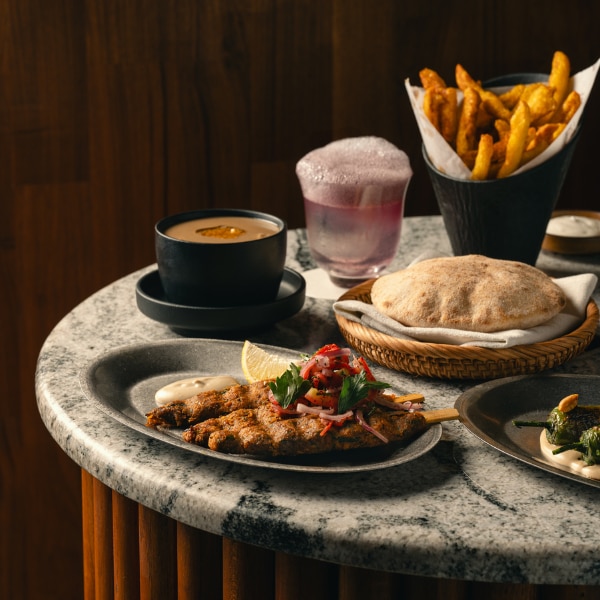
How mezze found a second home at the Indian table
What has travelled from the Levant isn't just a spread of small plates, but a philosophy of lingering and togetherness that feels remarkably at home in India.

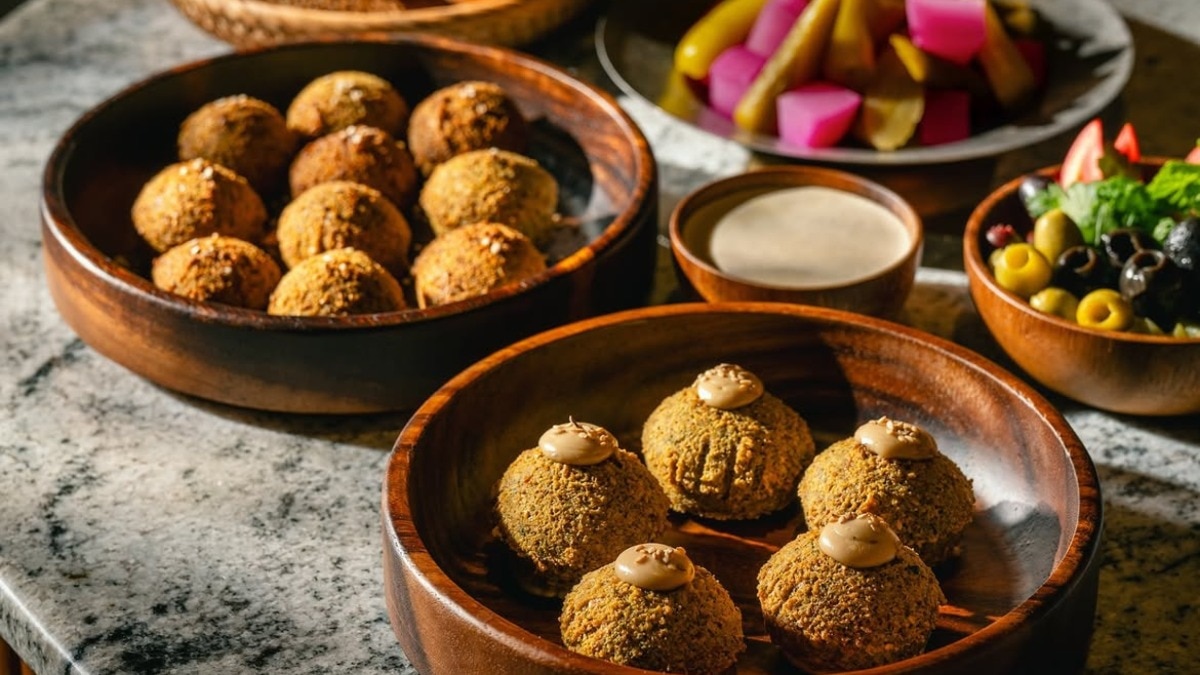
There comes a moment, just before the first bite, when the table no longer belongs to just one person. A warm basket of pita is passed around. Someone tears off a piece and reaches for the creamy labneh, while another spoons smoky baba ghanoush onto their plate. A bowl of muhammara slowly makes its way across the table, followed by olives, grilled vegetables, crisp falafel, and charred kebabs, all while the gathering engages in lighthearted banter, a little chit-chat, and hearty chortles. Nobody pauses to ask, "Whose dish is this?" because, for the next hour or two, the meal is no longer about individual orders. It belongs to everyone.
In an age where dining is often reduced to hurried luncheons and algorithm-approved food trends, the growing popularity of hot and cold mezze feels almost radical to what we know about dining. It asks diners to slow down, pass plates around, taste a little of everything, and, perhaps most importantly, linger, savour and relish.
At first glance, India's love affair with mezze might seem like a novelty in the country's growing appetite for global cuisines. Middle Eastern ingredients such as za'atar, tahini, and labneh have steadily moved from being niche pantry staples to familiar names on restaurant menus, while hummus has become as commonplace as guacamole in many urban cafés. But to explain mezze's rise through the lens of globalisation alone would be to miss the more interesting story.
Because what has found a home in India isn't simply a collection of dishes. It's a way of eating.
Unlike conventional Western dining, where courses arrive in a neat sequence, mezze unfolds gradually. Small plates appear one after another, encouraging conversation between bites, spontaneous recommendations across the table, and the comforting chaos of everyone reaching for the same bowl. The meal has no obvious beginning or end; it expands as conversations do. Ironically, that's precisely why it doesn't feel foreign.
Long before the word "mezze" entered India's culinary vocabulary, Indian meals had already embraced the idea of abundance at the centre of the table. From elaborate thalis and Gujarati farsan spreads to family-style Sunday lunches where everyone shares curries, breads, rice, and accompaniments, communal dining has always been woven into the country's food culture. The language may be different, but the instinct is remarkably familiar.
"What has been most interesting to observe is that mezze hasn't had to teach Indian diners how to share food—we've always had that culture," says Ridhi Choudhary, CEO of Mann & Salwa, the hospitality group that brings to us Sahtain, a North African and Levantine cuisine restaurant. "What has changed is the level of curiosity and openness towards global cuisines. Today's diners are far more willing to explore unfamiliar ingredients, discover regional food stories, and build a meal around shared experiences rather than individual courses. In many ways, mezze sits at the intersection of these two shifts: India's longstanding culture of communal dining and a growing appetite for authentic global flavours."
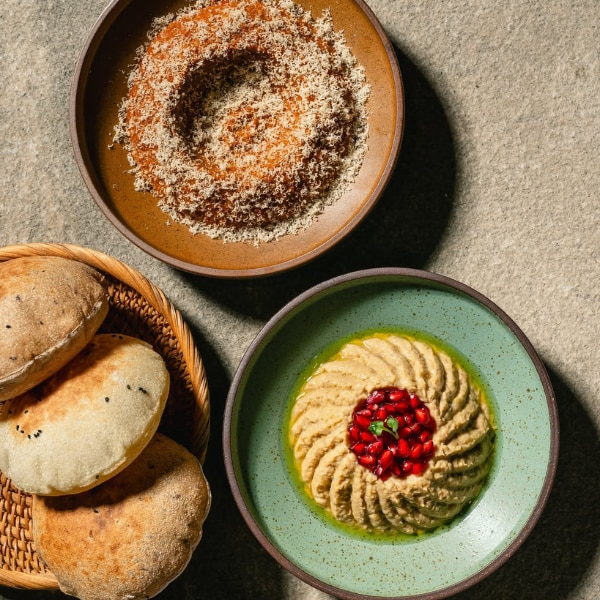
That shift in curiosity has perhaps been the defining characteristic of India's evolving restaurant culture over the last decade. Exposure to global travel, food-led television, digital creators, and increasingly adventurous restaurant concepts has transformed the modern Indian diner from someone seeking familiarity into someone actively looking for authenticity. Diners who once stopped at hummus now confidently ask for muhammara. They recognise labneh, seek out za'atar, and understand that Middle Eastern cuisine extends far beyond a single dip served with pita. For restaurants, this growing curiosity has reshaped not only menus but the dining experience itself.
This philosophy becomes evident in the way guests interact with the menu as well. Rather than selecting individual mains, diners increasingly build an entire meal around multiple shared plates. Ordering happens in stages, conversations influence what arrives next, and the table gradually fills with dishes chosen collectively rather than individually.
"We've seen diners become increasingly comfortable building an entire meal around mezze rather than treating it as a starter course," Choudhary explains. "Guests are more willing to order multiple dishes for the table, experiment with flavours, and embrace the idea of discovering food collectively rather than individually."
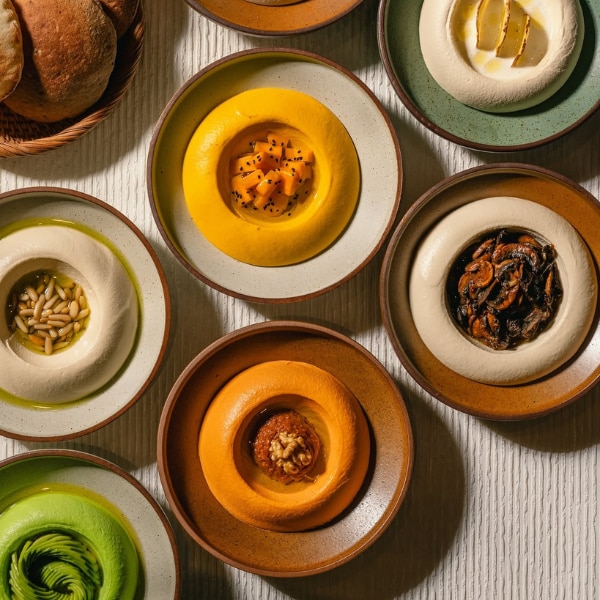
In many ways, this reflects a broader shift in how luxury dining is being redefined. The markers of a memorable meal lie in the freedom to stay a little longer, order another plate, continue a conversation, and allow the evening to unfold without hurry. Shared plates naturally encourage that slower rhythm.
It is perhaps this quality—the permission to linger—that makes mezze feel so relevant today. At a time when much of modern life is governed by speed and efficiency, the table has quietly become one of the few remaining spaces where time can still stretch.
The popularity of mezze, then, is not merely evidence of India's growing affection for Middle Eastern cuisine. It is also a reflection of changing expectations around what dining out should feel like. Diners today seek meals that invite participation rather than performance, generosity rather than precision, and discovery over predictability. Perhaps that is why mezze has settled so comfortably into the Indian dining landscape. Not because it introduced us to sharing, but because it reminded us how naturally we already do.
In the end, what India embraced (and continues to embrace) wasn't simply hummus or labneh or muhammara. It was the idea that some of the best meals are the ones where no one really remembers who ordered what. They simply remember the experience that unfolded around the table.
Lead image: The Bbichelin meets 35,000 feet to Japanese kaiseki: The world’s most luxurious dining experiences in the sky
Also read: From Botox cupcakes to collagen wontons, food is getting a wellness makeover
Comment
more from Life

Are you afraid of your 30s?

Nine movies and shows to add to your watchlist right now

Need a book recommendation? Three authors share their favourite books to read next

Cosmopolitan India turns 30: revisiting our most iconic anniversary covers

Get knotty at Sevilla: The Claridges’ romantic restaurant made for date nights and proposals

“People are shaking and screaming to ‘release’ trauma–so, after years of talking therapy, I tried it too”

Cosmo Quiz with Moses Koul: The singer-actor opens up about his icks, controversial opinions, and more

Cosmo Quiz with Prish: The 'Traitors' star on hot takes, makeup icks, and dilly-dallying through life

Is your style seeking you?

Jasleen Royal on breaking into Bollywood, taking risks, and finding her way