
Meet the Bharatanatyam dancer redefining what street dance looks like
After her recent set took over the internet, we spoke to dancer and movement artist Harini Nilakantan on navigating digital noise, dodging trolls, and why dance is her ultimate love-love relationship.

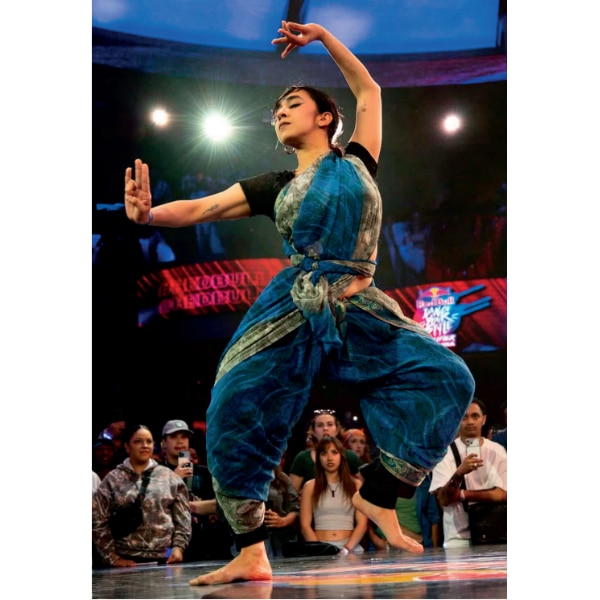
The bass at the Red Bull Dance Your Style event isn’t just heard; it’s felt in the bones. It is a space of high-octane freestyle, where ‘ciphers’—an electric circle of dancers—take on the battlefield. And, when 27-year-old Chicago-based Harini Nilakantan stepped into this spotlight, the air palpably shifted, with a familiar pulse of street dance offset by the unmistakable geometric precision of a theermanam (the final, rhythmic concluding phrase of a dance sequence).
The video went “nuclear” shortly after the West Qualifier in Las Vegas on March 21, 2026. Seeing a dancer navigate the polyrhythms of house music through Bharatanatyam wasn’t just a “fusion” moment; it was a reimagination of how traditional art is consumed on modern platforms. Across a series of four to five videos from the competition, the footage gathered over 30 million views (at the time of going to press) across social media.
Nilakantan wasn’t wearing standard streetwear; she competed in a Tamil dance practice sari, a visual choice that became the primary catalyst for the video’s virality. For Nilakantan, the moment was years in the making. She had previously participated in the 2025 Red Bull season, taking the Chicago City Qualifier title in June before reaching the Top 16 at the Midwest Regional in Kansas City. After being invited back for the 2026 West Qualifier, she was flown out just 24 hours before the battle.
Paradox of virality
While Nilakantan’s journey to the global stage gained momentum in Chennai, her movement was moulded by a life lived between Indianapolis and Chicago. She holds a Master’s in Museum and Exhibition Studies, but her technical foundation is lifelong. She began training in Bharatanatyam at a young age and spent nearly two decades evolving within the form.
The decision to wear the sari in Vegas was a last-minute call. “I usually wear Patiala pants and a blouse—something Indo-western,” she explains. “I’d packed the sari thinking I’d drape it like pants with a T-shirt, but I didn’t want to risk tripping if the folds were loose.”
Ultimately, she chose the kacche style sari (inspired by a Maharashtrian drape) to showcase a decolonial silhouette—a nod to the practical, historical drape working women in India wore when farming, cooking, and even during combat. By bringing this silhouette into a modern freestyle battle, she bridged the gap between ancient utility and contemporary street culture.
Apart from the visual grammar of it all, Nilakantan is aware that the economy of the “scroll,” virality is fickle; however, the visibility brought by her viral video has been a “unique cocktail” of reactions. While the love is palpable, the underbelly of digital fame has exposed her to casteist comments and threats.
“In 2020, everybody was online, and the hate was much worse,” she recalls. It has forced her to evolve from a “dancy baby” as a kid into a discerning woman who treats social media with a healthy dose of caution.
Today, she is more private, reserved, and deeply protective of her energy. “Social media is a journal of sorts, but I’ve learned to be a lot more discerning,” she admits, adding: “I want to make sure there’s a part of me that is entirely for myself, my family, and my friends.” Her advice to the next generation of Gen Z dancers? Don’t chase the numbers. “If you’re nervous, it means you care. Put your work out there, but be honest with your movement. There is a deep history behind every move.”
Respecting roots
Beyond the ciphers and the smartphone screens, dance serves a more primal purpose for Nilakantan—it tethers her to reality. When asked about mental health, her response is visceral. “Dance is everything: It’s the air I breathe, it’s the water I drink...it’s my purpose, my best friend, my worst enemy.” In a world that demands constant fragmentation, movement is where she finds herself whole. Her philosophy is built on the idea that one must know the rules to break them. She encourages young artists to understand the origins of their craft and pay respect to pioneers before discarding the parts of tradition that no longer serve an “era of progress.”
For Nilakantan, the goal isn’t just to replicate a viral moment. It’s to remain a “malleable” vessel, bridging the gap between communities. Whether in a high-stakes competition or a quiet studio, she remains a mosaic of cultures: “You are already special if you take that first step and record yourself.”
This article originally appeared in Cosmopolitan India's May-June 2026 print issue.
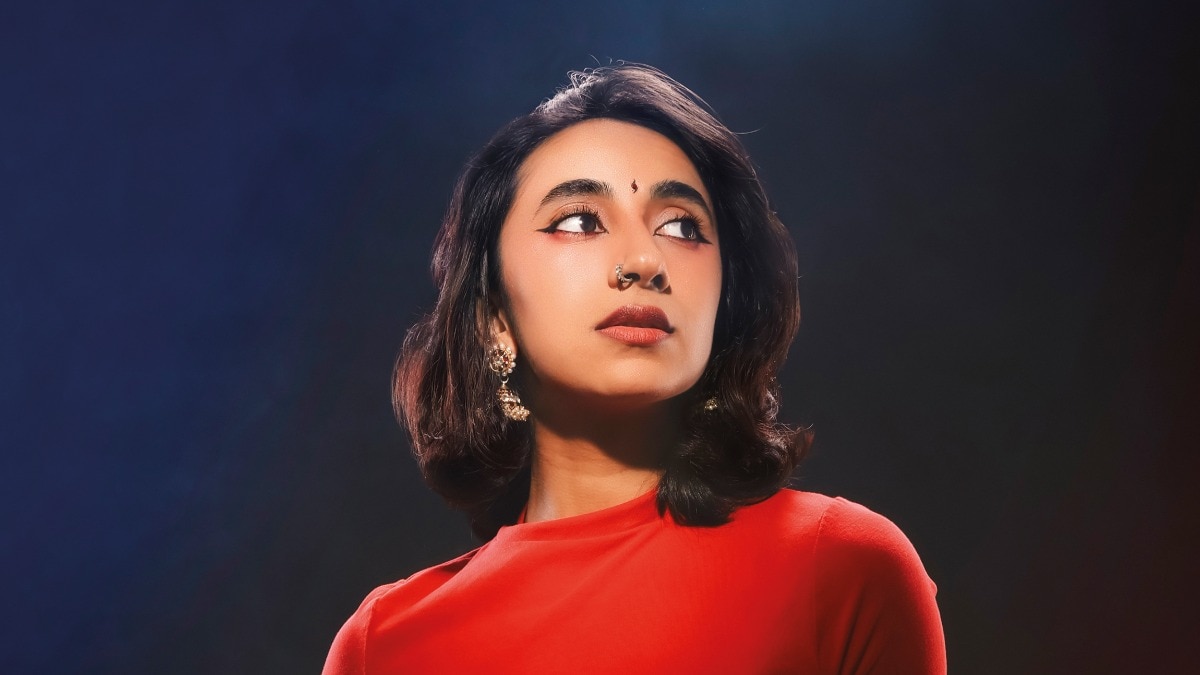
Lead image: Harini Nilakantan
Also read: What scuba diving alongside giant sperm whales really feels like
Also read: How cultural conditioning still shapes the timeline women are expected to follow
Comment
more from Life

Why your screen-free hobby is probably someone else’s Instagram content

Did Instagram make you eat here?

One of the main 'Bridgerton' cast members is stepping away from the show

The AI ’80s trend is fun, but maybe stop handing over your face to every viral trend

Gen Z is choosing 'soft hermitting' over another night out

How to get rid of milia, according to a dermatologist

Why are men so comfortable shaming Katrina Kaif's postpartum appearance?

The great pillow talk recession is here

Move over, leopard Bambi nails are the sweetest animal-print trend of fall

The gradual death of the Instagram hard launch