
The rise of ‘I want it all’ culture and why Gen Z means it differently
In a world of constant overstimulation, Gen Z is editing wardrobes down and turning merch into a conscious choice rooted in taste, belonging, and self-definition.

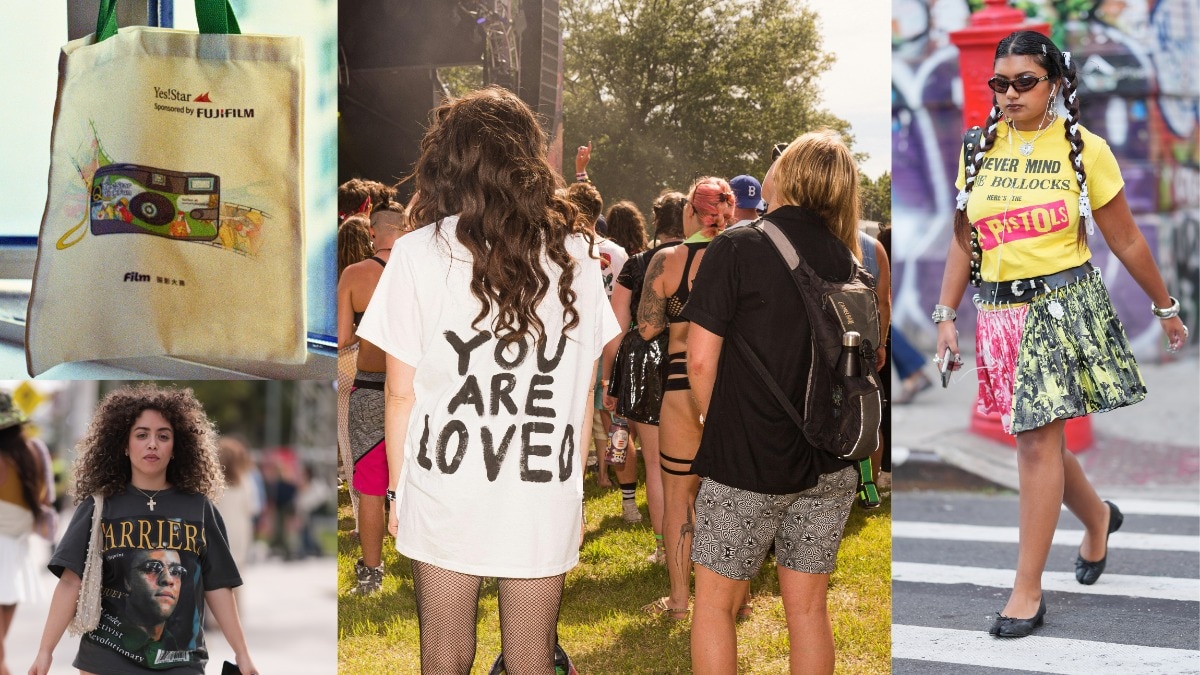
In a pre-pandemic world, when skinny jeans reigned unquestioned and brand loyalty was largely passive, branded merch existed on the fringes of desirability. It was produced because it had to be, not because anyone truly wanted it.
A free oversized T-shirt you slept in. A forgettable tote accepted out of politeness. Yes, even that pen you picked up from your bank. Merch lived quietly at the bottom of wardrobes, far removed from personal style or self-expression. But in 2026, merch has had the ultimate glow-up. It is no longer peripheral but deliberate.
Yes, we are living in the era of “I want it all” culture, but not in the way the phrase once implied. For Gen Z, wanting it all does not mean wanting everything. It means wanting specific things, all chosen carefully, worn repeatedly, and imbued with meaning.
Today it’s a hoodie from the music festival you attended. A cap from your favourite cafe. A tote bag bearing the name of your favourite artist (read: Taylor Swift). These aren’t impulse buys or clutter-fodder. They are considered choices. Proof of presence. Wearable markers of identity that say: this mattered enough to earn a place in my life.
In an age defined by overstimulation: constant content, relentless choice, and infinite scroll, Gen Z has become deeply aware of what they allow into their physical space. Wardrobes are smaller, edits are sharper, and every addition has to justify its presence. If there is only room for one hoodie, it needs to mean something. And if that hoodie happens to have your favourite band on it? It’s a conscious act of self-definition.
This is where brands have had to evolve. Slapping a logo onto a generic silhouette isn’t enough anymore. Today’s merch drops are designed to have the same impact as limited-edition fashion capsules. Scarcity isn’t accidental; it’s strategic. Taste is the entry ticket. When Lollapalooza India partnered with H&M, the resulting merch didn’t read as disposable memorabilia. These pieces should feel wearable beyond the event and slip naturally into everyday wardrobes. For Gen Z, this selectivity is the biggest part of personal identity. The merch you carry signals where you spend your time, the communities you gravitate towards, and the cultural moments you participate in (as a proud owner of the Mumbai Blondie’s Miss Matcha cap, I can affirm). It reflects a sense of belonging. In a tightly edited wardrobe, a piece like this is never incidental.
Beauty brands are tapping into this mindset with surprising precision. The Ordinary’s water bottle, Inde Wild’s jeans, and Rhode’s waist chains. Even playful collaborations operate within this logic. Diet Coke x Crocs worked not because it encouraged overconsumption, but because it offered a singular, joy-driven choice. One item. One statement. Camp, nostalgic, and emotionally resonant. Perhaps no one understands this better than Taylor Swift. Her Eras Tour merch functions less as fan gear and more as an emotional archive. Each piece represents a chapter, a memory, a shared cultural moment. Owning one item is enough because that one item carries weight. And this is where brands often miscalculate, because no one enjoys merch that’s designed purely to sell. Forced logos, hollow storytelling, and excessive drops dilute its meaning.
At its best, merch represents a new kind of responsible consumption. Fewer pieces. Stronger attachment. Deeper meaning. And in a world that’s always overstimulating, choosing less but choosing well is a radical act.
So yes, Gen Z wants it all. But “all” now means something different. It means the right hoodie, the right cap, the right tote. The pieces that reflect who they are, where they’ve been, and what they care about. And in today’s cultural economy, that level of intention is the ultimate luxury.
Lead image: Getty Images and Pexels
Also read: The most flattering blush placement for every face shape
Also read: Stroll, don’t scroll: 5 fun things to do during lunch that don’t involve your phone
more from Life

Driving from Mumbai to Lonavala? Add this scenic café to your itinerary

Dear Hollywood, take notes from 'Harry Potter' and 'Crazy Rich Asians'—our books need series

If you loved ‘Verity’, you have to watch these 10 films

After Violet, these 'Bridgerton' characters deserve their own spin-offs

Breaking down the ending of ‘Verity’
Cosmo crew recommends: what to gift, eat, read, and stream this holiday season
The anti-AI aesthetic is making messy, unfiltered content cool again

Why Gen Z and millennials are making room for messy, unfiltered journalling

Barbie doll stilettos are bringing the drama back to our shoe wardrobes

Want your relationship to last? Eliminate this habit first