What is fashion micro-dosing? The cart-addict trend explained
Your overflowing digital basket isn't a shopping problem. It's a styling practice — and those who get it are already doing it.
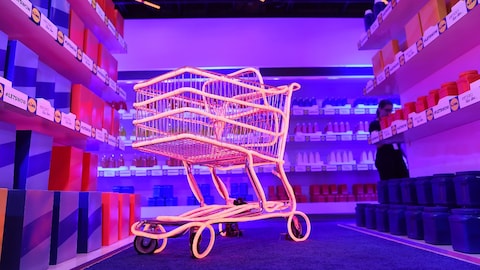
The modern shopping experience has shed its purely functional veneer. It is no longer a search for a necessary coat or the hunt for a specific pair of boots; it has mutated into a persistent, low-stakes digital hobby. We are living in the age of the Cart-Addict, where the virtual basket serves as a private gallery of aspirations. For many, browsing has become a way to "micro-dose" fashion, absorbing the aesthetic charge of a trend without the immediate commitment of a checkout. Nowhere is this more apparent than in the "comment for link" culture currently colonising our feeds, where influencer content is engineered not to sell a product, but to sell the persona of someone who would wear it. The "Add to Bag" button is no longer a prelude to ownership; it is a psychological waiting room where style meets fantasy, and the desire itself is the destination.
The new window shopping: A digital saturday
There was a time when retail therapy had a physical address. A Saturday with nowhere to be, a changing room with flattering lighting, things tried on that could never be afforded, and an exit with nothing but a very good mood. The store got nothing. The shopper got everything. Nobody called it a problem.
That instinct hasn't disappeared; it's just been rewired and dramatically accelerated.
Today, the same satisfaction arrives through a scroll. Not a purchase, but a sequence: discover, save, add to cart, close tab. What this really means is that fashion and beauty, interiors, and every other aesthetic category the algorithm feeds us are no longer something we acquire in one decisive moment. It's something we consume continuously, in small, controlled bursts. A top saved on Instagram. A lipstick screenshot. A blush palette added to a cart you'll never revisit. A perfume review watched at 2 am that leaves you somehow satisfied, despite owning nothing new.
"I think the way I see it is the closest we're gonna get to window shopping digitally," says content creator Tarini Manchanda. For her, the cart is less about buying and more about the experience of engaging with fashion as a living, breathing world. "I would go on Net-a-Porter and just scroll online and send my friends a bunch of pictures… I would just add it to the cart, but I never really actually make the purchase. I'm guilty of being a cart ghoster—and well, I'm not guilty, I'm loud and proud about it. It's just a fun experience."
The platform has changed. The pleasure hasn't. Only now does it arrive faster — and cycle through to the next thing just as quickly. This is micro-dosing in its purest form: the buzz of the new, delivered in a hit small enough to keep you reaching for the next one.
The identity archive: curating our "Alt-selves"
If micro-dosing fashion were only about convenience, it would be a minor footnote in the story of how we shop. But the reason it has taken hold so completely is that it taps into something far more psychologically complex: the need to try on selves, not just clothes.
Every item added to a cart is a mood-marker for a fantasy life, the version of us that masters archival maximalism, hosts sophisticated dinners in sheer silk, commits to a skincare shelf that looks like a French pharmacy, or finally leans into a clean, tailored uniform. We aren't just micro-dosing garments or beauty products. We are micro-dosing entire lifestyles, consuming the feeling of a person we might become without the friction of actually becoming her.
"I absolutely have cart graveyards," confesses model and content creator Akshara Shivakumar. "I think sometimes adding to cart feels like claiming a version of the life I imagine for myself… It's like window shopping for identities — low risk, high dopamine." This psychological claiming allows us to experiment with a new aesthetic direction without the commitment, the cost, or the very real possibility that the trench coat doesn't fit quite right in real life.
And the feed is designed to keep this loop running. For PR Consultant Rhea Virmani, the habit is fuelled by the infinite scroll of it all. "It starts innocently, one scroll… Next thing I know, I've added 7 things… then 18… I think it's the thrill of it—it feels like I'm holding onto the possibility… But really, I'm just hoarding moments of excitement. Instagram didn't just make me shop, it made me almost shop."
Almost shop. That phrase says everything. In the digital age, desire doesn't need to be fulfilled to feel real. It just needs to be experienced, and the platforms delivering it have become very, very good at making sure it never stops.
Slow fashion 2.0: The cart as an editorial filter
In a landscape of hyper-speed trend cycles, the cart has unexpectedly become a site of restraint. By "micro-dosing" the visual rush of a piece, we often satisfy the craving enough to bypass the actual spend. The "Save for Later" tab acts as a cooling-off period, allowing the fever of an impulsive urge to settle into a considered, editorial choice.
“I am a very visual person… letting things linger in my cart slows that race down,” explains Prakriti Panda, Producer at Warner Bros. Discovery. For her, the cart is a trial by fire for genuine personal style. “It gives me time to picture myself actually wearing them, living in them. If something still feels right after that pause, then it’s worth it. If not, it was never really mine to begin with.” This shift from "owning" to "visualising" turns the cart into a filter, separating fleeting social media noise from an authentic personal narrative.
The worth factor: Luxury as a mental milestone
Beneath the scrolling, the saving, and the ghosting lies one more layer, perhaps the most honest one. Because for many of us, what sits in our carts isn't just aesthetic aspiration. It's a private ledger of ambition. A way to track where we are, and quietly negotiate where we think we deserve to be.
The luxury anchor item, that one inexplicable, slightly unhinged addition sitting alongside the practical, is a fixture of the modern cart. Not because we plan to buy it, but because having it there does something for us. It marks a line on the horizon. It says: eventually.
Dr Honey Rajput captures this sentiment, noting how we often balance the practical with the aspirational. “Waiting for the right moment… plus one inexplicable item I consider ‘luxury’ because it defines my worth,” they say. “It’s mostly psychological. Bigger paycheck means bigger things to spend my money on to somehow ‘feel content’ with where I am.”
Our carts have become the most honest mirrors of the modern psyche, full of the selves we're trying on, the trends we're testing, the lives we're quietly rehearsing. In the end, being a Cart-Addict isn't about the stuff. It's about that sacred, screen-lit space where we are allowed to want everything, without the burden of having to house any of it.
Image: Getty Images
Also read: How Gen Z is rewriting the rules of the watch game
Also read: Gen Z is bringing made-to-measure fashion back and making it cooler than ever