Not every shower thought needs to become a side hustle, and Morgan from ‘Nobody Wants This’ proves it
Morgan’s viral “Make Them” philosophy in season 3 has us thinking about our obsession with turning every passing thought into a business idea.
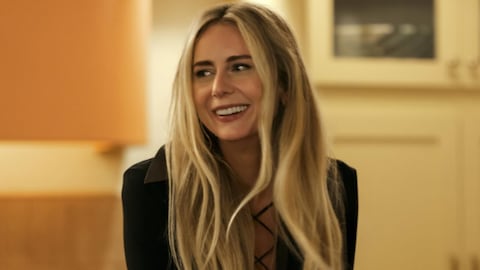
There was a time when you could have a random thought in the shower, tell your friends about it, and get on with your day. Now, that thought could become a brand new Instagram page, a podcast, a newsletter, or even a personal brand.
Your friends think you give great dating advice? Start a podcast. Your colleagues love your restaurant recommendations? Start a foodie account on Instagram. Have a theory about why your last situationship failed? Congratulations, you might have the beginnings of a book.
Somewhere along the way, we started treating every passing thought as a potential income stream, and now every hobby needs a business plan. Morgan from Nobody Wants This is living through this exact phenomenon.
In Season 3, Morgan’s “Make Them” philosophy, a piece of casual life advice that unexpectedly catches on, gives her a taste of what it feels like to have an idea people genuinely want to hear. As her sister Joanne’s romantic life moves forward, Morgan begins figuring out what she wants her own next chapter to look like. When her advice goes viral, a potential career begins to take shape, with Ashley stepping in as her manager to help her secure a book deal. However, publisher Eleanor is far less impressed by Morgan’s casual approach to the idea, making one thing clear: turning a viral hit into something substantial takes more than just a catchy philosophy.
Can going viral be a viable career objective?
Morgan's storyline is funny because the leap from random advice she just blurted out to becoming an author feels so familiar. One minute, she has a catchy philosophy that people relate to. The next, there is a whole professional future to imagine around it. The possibility is exciting, of course. Who wouldn't want to turn something they said offhand into an opportunity? But Morgan's journey also captures the way internet culture makes success look deceptively simple. A post takes off, an audience forms, and suddenly everyone is talking about monetisation, brand partnerships, and what comes next.
The creator economy has made it easier for people to build careers around their interests, and that is genuinely great. But it has also made us look at almost everything through the lens of its potential. A hobby becomes a side hustle, a strong opinion becomes a content niche, and a funny observation becomes something you could package, pitch, and sell. Morgan's potential book deal is an exaggerated version of a very real feeling: if people like this one thing about me, shouldn't I do more with it?
The catch is that popularity and expertise are not interchangeable. Having a catchy idea is one thing; developing it into something that can hold people's attention beyond a viral moment is another. Morgan's meeting with Eleanor brings that reality into the picture. An audience might get you noticed, but the next step still requires work, and the audience cannot really help you with that.
Honestly, Morgan wanting more for herself is not the problem. After calling off her engagement and watching Joanne, who she thought would be single with her forever, settle into a new phase of life, she is looking for something that feels like her own. Her professional ambitions make sense, and there is nothing wrong with exploring where an unexpected opportunity might lead. The question is whether every promising idea needs to become a whole new identity.
You can be the friend everyone turns to for relationship advice without becoming a dating guru. You can enjoy baking without having to open a home bakery. You can have a brilliant idea for a book and still decide that writing one is not for you.
Lead image: IMDb
Also read: Did life really feel better before 2020, or are we just nostalgic?
Also read: Are we overthinking social media posts more than ever?