What does it mean to be queer after 'Heated Rivalry' ended?
On desire, digital intimacy, and why this show lingered long after the screen went dark.
Dec 28, 2025
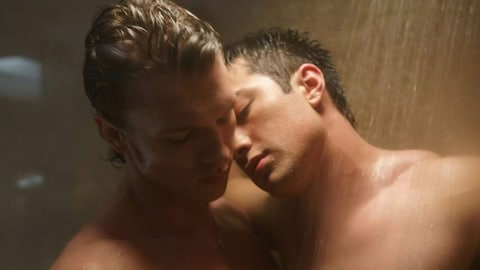
I watched the final episode of Heated Rivalry earlier today, closed my laptop, and instinctively opened Instagram. The season had ended, but the show hadn’t. It was already there—cropped into memes, slowed down into thirst edits, turned into screenshots that carried more weight than entire scenes. Comment sections were spiralling. People weren’t discussing plot so much as processing what the show had stirred up in them.
That’s when I realised this wasn’t about closure. It was about the aftertaste.
Heated Rivalry didn’t just build an audience; it built a feeling that refused to dissipate. By the time the finale aired today, the show had already slipped beyond television and into the psychology of the internet—into the way desire gets joked about, disguised, confessed, and occasionally confronted online.
At the centre of it all are Shane Hollander and Ilya Rozanov, played by Connor Storrie and Hudson Williams. Their chemistry is the engine of the show, but what makes it combustible is not spectacle—it’s restraint. Shane is tightly wound, guarded, and constantly negotiating what he’s allowed to want. Ilya, by contrast, is open, provocative, and almost defiantly honest about desire. Their rivalry isn’t just professional; it’s ideological. Watching them together feels intimate because it mirrors a familiar queer tension: the push and pull between self-protection and self-recognition.
Storrie once described Shane as “someone who’s still learning how to breathe inside his own desire,” and that line has stayed with me. Because that’s exactly what the character does—he holds his breath. Williams, speaking about Ilya, said, “He doesn’t apologise for wanting, even when it makes things harder.” Put together, those two energies create friction that feels less scripted than lived-in.
The internet responded immediately.
Instagram, in particular, became the show’s secondary nervous system. Clips were pulled out of context and looped into obsession. A look held too long became a meme. A silence turned into a punchline. Thirst comments flooded in, often playful, often hyper-aware. “This shouldn’t be doing this to me,” people joked, before immediately doubling down. But beneath the humour was something more revealing: desire being articulated without shame.
Women thirsted openly. Queer viewers claimed pleasure without apology. Men were objectified—enthusiastically—and instead of backlash, there was collective glee. The gaze shifted, and something loosened. It felt subversive not because desire was new, but because it was being expressed without self-correction.
Then there’s the quieter counterpoint: Scott and Kip.
Played by François Arnaud and Robbie Graham-Kuntz, their relationship unfolds with far less volatility but just as much emotional weight. Where Shane and Ilya combust, Scott and Kip hesitate. Their story is built on pauses, on gentleness, on learning how to move at the pace of someone else’s fear. Arnaud once said Scott is “a man who’s terrified of being seen too clearly,” while Graham-Kuntz described Kip as “someone who stays, even when staying is the hardest choice.”
Online, their scenes sparked a different response. Less overt thirst, more tenderness. Comment sections are filled with words like “soft”, “safe”, and “seen”. Viewers spoke about comfort, about recognising themselves in a version of queerness that wasn’t driven by rivalry or spectacle but by care. In a show often defined by intensity, Scott and Kip grounded the emotional register.
Together, the two relationships expanded what Heated Rivalry allowed queerness to look like. Loud and restrained. Volatile and gentle. Unresolved, and deeply human.
Psychologically, that’s where the show’s impact becomes most interesting. Heated Rivalry doesn’t treat queerness as a solved identity. It treats it as a process—recursive, inconvenient, sometimes contradictory. Characters don’t rush to label themselves. They circle their feelings. Resist them. Occasionally, weaponise them. Watching that play out felt unsettling in the best way. It mirrored how desire actually works: messy, nonlinear, and resistant to neat conclusions.
The internet understood this instinctively. Instead of demanding answers, it extended the ambiguity. Memes became a way to keep the feeling alive. Reels replayed moments not to analyse them, but to sit inside them longer. People weren’t asking, “What does this mean?” They were asking, “Why does this feel familiar?”
Thirst, here, wasn’t trivial—it was communicative. It became a language for talking about attraction, curiosity, and identity without immediately locking any of it down. Half-jokes about sexuality carried real weight. Casual comments became micro-confessions. Desire was allowed to exist without needing a thesis statement.
By the time the finale aired today, what people seemed to be mourning wasn’t the end of a storyline, but the end of a shared atmosphere. Heated Rivalry had created a temporary commons—one where it felt permissible to want loudly, to question quietly, and to sit in the grey areas without being asked to tidy them up.
And maybe that’s why the finale didn’t feel like closure at all. Heated Rivalry has already been renewed for a second season, even as Season 1 officially ended today. The announcement landed less like a surprise and more like an acknowledgement: that this story, and the conversations it unlocked, were never meant to be contained within a single arc. Adapted from Rachel Reid’s beloved books and shaped for the screen by director Jacob Tierney, the series understands longing as something ongoing—something that stretches, recedes, and returns.
So what does it mean to be queer after Heated Rivalry has ended?
Maybe it means accepting that some stories aren’t meant to resolve us. They’re meant to stay with us. To complicate us slightly. To remind us that desire doesn’t always arrive with language—and that sometimes, that unfinished feeling is exactly the point.
All images: HBO Max
Also read: 'Bridgerton' season 4 trailer: Benedict and Sophie are ready to serve a Cinderella-esque romance
Also read: Emily in Paris season 5 is back—and we’re still hate-watching every minute of it
Read more!