Is the “no contact rule” the only way to get over a breakup?
Here’s why experts recommend fully cutting off communication if you’re trying to get over an ex.
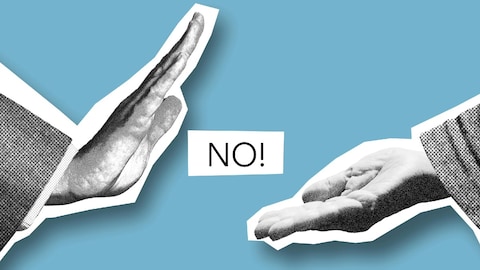
If the secret to a lasting relationship is good communication, then the secret to a lasting breakup is no communication. Hence the “no contact rule,” a post-breakup recovery strategy many experts agree is one of the most effective ways to move on from an ex.
As the name suggests, the “no contact rule” involves cutting off all contact with an ex with for a period of time after a breakup, or even permanently. This means no communication—no phone calls, texts, DMs, or “accidentally” just happening to bump into them at their favorite coffee shop. Many proponents of the no contact rule also recommend blocking or muting your ex on all social media and resisting the urge to cyberstalk or ask a mutual friend for updates.
While going cold turkey may sound extreme, it’s one of the best—and, some would argue, only—ways to heal from a breakup, one designed to prevent you from getting sucked back into emotionally risky territory via drunk “I miss you” texts that turn into “Maybe we should we get back together.”
So if you’re ready to move on for good, here’s your expert guide to the no contact rule: what it is, why it works, and what happens if you break it.
What Is the No Contact Rule?
“The no contact rule is where you don’t call, text, or communicate with an ex in any way after the breakup. It includes not talking to their friends or family about them or the breakup itself,” says relationship expert and breakup coach Lee Wilson.
It’s worth noting that instituting a no contact rule doesn’t have to be a life-long commitment. There’s no set timeline. You can start with a month—or even just a few weeks if a month feels too daunting—and take it one day at a time. “Do it for as long as it takes,” says Wilson.
Why Does the No Contact Rule Work?
“It helps both parties get closure,” says clinical psychologist Lauren Cook, PhD. Breakups—more often than not—are messy, and the relationship with your ex may be complicated, especially if there are still feelings involved. According to Cook, those lingering feelings can “really muddle a breakup.” One person might feel nostalgic for the other, forgetting why they broke up in the first place. A no contact boundary can help ensure you don’t fall down a slippery slope—like getting back into a relationship that isn’t right for you or ending up in a dreaded situationship limbo.
A firm no contact rule can help you resist the urge to reach out to your ex out of boredom or loneliness. It also forces you to realize that you really can survive (and eventually thrive) without this person in your life, even if it’s hard at first. All of which can ultimately help you get over a breakup a lot faster than if you let it simmer and eventually spill into tricky “we’re friends!” territory. Remember, breakups happen for a reason—but it’s all too easy to convince yourself you might as well get back together if you’re still in regular contact with your ex.
The no contact rule forces you to sit with and actually process the end of a relationship, instead of trying to distract and soothe yourself by reaching out to your ex for post-breakup dopamine hits that will likely only cause more pain and confusion down the line.
What Happens If I Break My No Contact Rule?
Even if you’ve seemingly cut off all avenues of potential contact and established firm boundaries, it can still be all too easy (and all too tempting) to break your own no contact rule.
While it’s not ideal, Cook confirms it’s neither uncommon nor the end of the world if you have a relapse. “Be kind to yourself. Just because you may have slipped up one or two or a few times doesn’t mean you can’t reinitiate no contact.” Remember, you can always start over.
Real-Life No-Contact Rule Success Stories
If you’re considering giving no contact a shot, here’s what six real women had to say about their experience with the no contact rule and why it might be your best bet for moving on.
- “This one hundred percent helped me. I couldn’t go back to someone just because it was comfortable or because things got hard. Had I not cut things off completely, I would have gone back to him—or at least kept talking to him.” —Sela, 24
- “I do it every time. Delete their numbers and unfollow them—no temptations! Suck out all the poison.” —Katie, 28
- “It definitely hurt more, but it allowed both of us to heal and grow without being tempted to fall back into things.” —Kate, 21
- “I completely cut him out of my life because I knew I couldn’t handle having only a fraction of him.” —Cassandra, 26
- “I did it and it helped. By no longer letting him in, I was able to discover myself again.” —Alex, 27
- “I chose to do the No Contact rule for six months because it would’ve been hard to stay in contact knowing that we wanted different things. It hurt because it’s hard to quit anything cold turkey, but it was a good choice because it showed me that I could be on my own and be happy without being in contact with him or having him be a part of my daily life.” —Kaley, 25
Image: Pexels