A Beginner’s Guide to Doing Breathing Exercises in Yoga
Master the art of mindful breathing with a little help from Samiksha Shetty, celebrity yoga expert
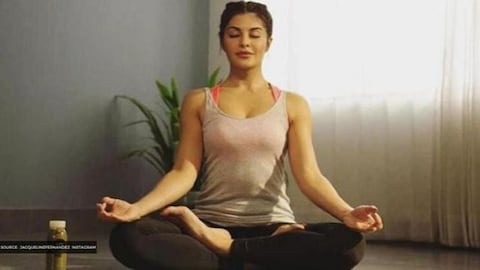
If you are new to yoga, your instructor must have asked you to work on your breathing techniques alongside your posture. And if you have started yoga on your own and are following expert videos for a good sesh, then you must know by now that pranayama has numerous benefits. Samiksha Shetty, celebrity fitness instructor explains, “Prana- means life force or breath sustaining the body; Ayama- translates as “to extend or draw out.” Together two mean breath extension or control.
Pranayama, the practice of using the breath to soothe the fluctuations of “chitta” or the active thinking mind, brings your focus onto one of the most important functions of our body: breathing. The awareness of which rarely captures our attention and is mostly taken for granted as an automatic function. Traditionally, the practice of pranayama—releasing and channelling the body’s stored internal pranic energy, has been seen as the core of hatha yoga practice. Pranayama is meant to nurture a high level of physical health and mental clarity.”
Samiksha recommends basic pranayama techniques that you should keep in mind while doing yoga or just add them to your day-to-day life.
The natural breath
Simply breathing and noticing the natural breath is necessary. “The breath is the only voluntary and involuntary body function that reveals your unconscious emotional, mental and physical patterns. We can only heal and transform these patterns once we choose to recognise them,” says Samiksha.
She recommends the following:
Breathe in, and notice thoughts as they arise.
Breathe out, and notice thoughts as they dissipate.
Give yourself permission to detach from your thoughts during this time of nature flow of breath and meditation.
In this stillness and quietness, simply observe the quality of your natural breath. You will probably notice that your breath is uneven and sometimes erratic. The breath is sometimes quick and sometimes slow, sometimes smooth, sometimes harsh; sometimes it even stops for a moment or two and then begins again.
Try and notice which parts of the body/lungs receive the breath more easily than others.
Try to bring your awareness to the similarities or dissimilarities of every inhalation and exhalation without any manipulation and without any judgement .
Belly breathing
Sit in any comfortable meditative posture with your eyes closed. Bring your focus onto your navel. Keep your entire body still.
Inhale- Feel the diaphragm move downwards while expanding the abdominal muscles outwards.
Exhale- Feel the dominant abdomen contract as you pull in the belly. (Nothing but your belly moves)
“If it is difficult to perform this breathing technique while sitting up straight, then try performing this breathing technique while lying down in shavasana,” suggests Samiksha.
Thoracic breathing/ Chest breathing
Sit in any comfortable meditative posture .
Inhale- Expand the chest region, the rib cage widens. Abdomen remains still.
Exhale -Feel the chest region relax and the rib cage contract. (other parts of the body remain still)
“Pay attention on the expansion of the rib cage and the lungs. Avoid forceful breathing,” says Samiksha.
Clavicular breathing
Sit in any comfortable meditative posture.
Inhale- Draw in the breath into the upper lungs, the upper rib cage and the collarbones as the naturally lift upwards with the inhalation of the breath. “Avoid raising the shoulders and ensure rest of the torso remains motionless,” says Samiksha.
Exhale- Relax the collarbones (clavicle), lungs and rib cage.
Full yogic breathing
“Full yogic breath is a deeply balancing pranayama also known as a three part breath because it works with three different sections of the torso and naturally engages all three lobes of the lungs,” says Samiksha. Full yogic breath relieves stress, refreshes the mind and activates the centre of the nervous system and it also corrects unhealthy breathing patterns.
This is performed by combining abdominal, thoracic and clavicular breathing.
These are some beginner pranayama techniques to add to your daily routine so as to build awareness around your breathing patterns.