‘Just eat the burger’: How skinny jabs are quietly reshaping our friendships
Weight loss drugs are the thing of the moment. But what happens when they shrink our friendships and dating lives along with our appetites?
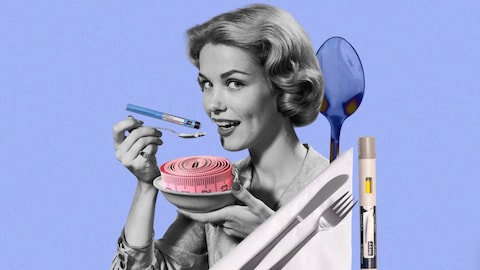
The dinner table was full, but Grace* couldn’t stomach a thing.
It was supposed to be a celebration. Her best friend had taken her to their favourite Lebanese restaurant to toast a recent promotion. The spread was generous and colourful, but none of that made a difference. “I’m obsessed with pita and hummus,” says 20-year-old Grace. “But I couldn’t touch the bread. The meal was on my friend; she ordered a whole spread of food, and I just refused to eat it.”
Grace wasn’t trying to be rude. But after a few months on Mounjaro, a weight loss jab she’d started taking when diet and exercise alone weren’t helping, her appetite had all but vanished.“I didn’t realise the impact it would have on me and my social life,” she says. “But it definitely did.”
There are few scientific breakthroughs in the last decade that have captured the attention of the public the way that weight loss drugs have. They’re one of the most talked-about medical advances in recent memory. And not just in GP surgeries, but on podcasts, red carpets, and in group chats across the country.
Ozempic may be the best known brand, but Mounjaro is currently the most prescribed GLP-1 drug (the medical name for them) in the UK. Both were originally developed to treat type 2 diabetes, but are now widely known for their role in weight loss, with appetite suppression being one of their key effects.
“[They mimic] gut hormones that regulate appetite and blood sugar,” explains Dr. Earim Chaudry, chief medical officer at Voy, a medical distributor of Mounjaro. So users feel full more quickly, eat less, and lose weight. While Ozempic targets one hormone (GLP-1), Mounjaro targets two (GLP-1 and GIP), which some studies suggest could make it more effective for weight loss. Both are injectable, usually taken weekly, and should be prescribed under medical supervision.
In a country where nearly two million people are now on GLP-1s, some reports even suggest there are more people taking weight loss jabs than following vegetarian diets in the UK, reflecting just how widespread and normalised their use has become. But just because something is common, doesn’t mean it’s uncomplicated.
A shrinking appetite and social life
For many, the appeal of GLP-1s is obvious: they offer a way for people who have spent years battling with their bodies to manage their weight, having previously felt stuck between unsustainable diets and self-blame.
“I’m a dancer,” Grace explains. “I need my body to be a certain way to be successful.” After years of trying to manage her weight through exercise, and with a history of disordered eating, she turned to Mounjaro. And in some ways, it worked. “At my peak of weight loss, I was dancing all the time because I felt so comfortable in my body and I wanted everyone to see it.”
But comfort in her body came at the expense of comfort in other areas. Especially food, and the social rituals tied to it. “Food is central to many social gatherings, so when your appetite changes, those experiences can feel different too,” says Chaudry. “It can take time to adjust, and navigating food-focused settings isn’t always easy.”
Penny*, 27, knows this feeling well. “I got really nauseous initially,” she says of her time on weight loss injections. “To be honest, I think I felt low-level sick the whole time I was on it.”
Others describe food aversion, feeling cold, brain fog, digestive issues, and, on a more psychological level, a numbing of the joy that often comes with eating. “Because [the drugs] also act on the brain’s reward circuits — your dopamine ‘hits’ — some people notice pleasure pathways are dampened,” Chaudry explains.
And when that happens, it’s not just food that loses its flavour, it’s the connections built around it. Birthdays, brunches, date nights, Sunday roasts; suddenly they all start to feel... off.
Grace wasn’t just dealing with her own discomfort; her friends started noticing, too. “I’m usually the life of the party,” she says, “but it was pretty obvious that I was on [GLP-1 drugs], because I wasn’t hungry at all.” Comments started coming at her thick and fast. “‘You never finish your plate anymore’; ‘Why are you trying to be skinny? Just eat the burger.’”
And it’s not just friendships that feel the strain. For many, the impact on dating is just as real. “When you start dating someone, you go out for dinner all the time, and then [it’s like], I’m not hungry,” says Miranda*, 28, who used Ozempic in 2023, and has turned to Mounjaro more recently. “You have to force yourself to eat.” She recalls how the medication dulled her desire for food so much, that even ordering at restaurants felt like a performance. “GLP-1 drugs can make you so repulsed by food.”
Eating when you’re not hungry is uncomfortable enough. But what can be worse is dealing with the stigma of taking the medication in the first place. “When people don’t know you’re on it, people slate it a lot,” says Penny. “They think it’s a bad thing to do.”
Miranda has taken the honesty route, but knows plenty of people who haven’t felt able to do that. “I have been super open with it from the get-go, but I’ve got friends who take it and don’t tell anyone. It makes it awkward, because they won’t say anything, and then there’s assumptions.”
She remembers being at a party when someone overheard her mention Ozempic. “[The girl was saying], ‘That’s ridiculous. Why would anyone take it? It’s not that hard, just eat less and exercise more’,” recalls Miranda. “I was like, ‘You have no idea. At all’.”
It’s a bizarre cultural moment we’re in: a society obsessed with thinness, yet oddly squeamish and judgmental about how that thinness is achieved. A society that shames people for being above a certain weight, yet criticises them for trying not to be. “Societal stigma remains, both around weight and the use of medication to manage it,” Chaudry says. “Open and supportive conversations are more important than ever.”
Miranda has her own theory. “I think it’s just a lack of education around it,” she says. And she might be right. Because when millions of people in the UK and globally are using these medications, the chances are, someone you know is on them: a colleague, sibling, friend, or partner.
“It’s really important to understand that these injections are prescription medication that must be accessed through proper medical guidance,” says fitness and wellness coach Kelly Marks. “They are not for everyone, and using them without medical oversight can be unsafe.”
A change in motion
GLP-1 drugs have been hailed as a miracle. And in many ways, they are. For people living with obesity, chronic illness, or long-standing struggles with weight, they can offer new hope.
“I’ve seen huge positives when they are used responsibly,” says Marks. “Men and women who had struggled for years suddenly feeling empowered to train consistently, fuel their bodies better, and step into routines that support their confidence and self-love.”
Miranda agrees. “My mental health directly correlates with my weight,” she says. “Honestly, mood wise it made my mood so much better. I’m feeling more confident.”
And Grace, now on holiday in food-obsessed Los Angeles, finally feels something returning. Not just her appetite, but her agency. “I’m excited to try things,” she says. “It’s the first time in my life that I’m open to eating anything in moderation, which is really refreshing. Because I like the way my body is looking, I know how much fuel it takes to actually maintain it. And it’s a lot more than I thought it would be.”
GLP-1 drugs may be changing the way we eat, but they’re also changing the way we live. For better or worse, they’re reshaping our relationships with food, bodies, and each other. And while they may help people feel physically more like themselves, the social adjustment can take longer to settle into.
“Used with proper guidance, these jabs can be a bridge into healthier living,” says Marks. “But it’s the deeper self-worth rituals that sustain the transformation long after the initial results. That’s where you’ll always find true happiness and empowerment.”
Because in the end, it’s not just about losing weight. It’s about finding your way back to feeling yourself.
*Names have been changed