
From Labubus to Hello Kitty—ten tiny things adults are still holding on to for comfort in 2026
As the year resets, a class of tiny objects—figurines, plush charms, blind-box toys—refuses to disappear, quietly mapping how adults now seek comfort and meaning.

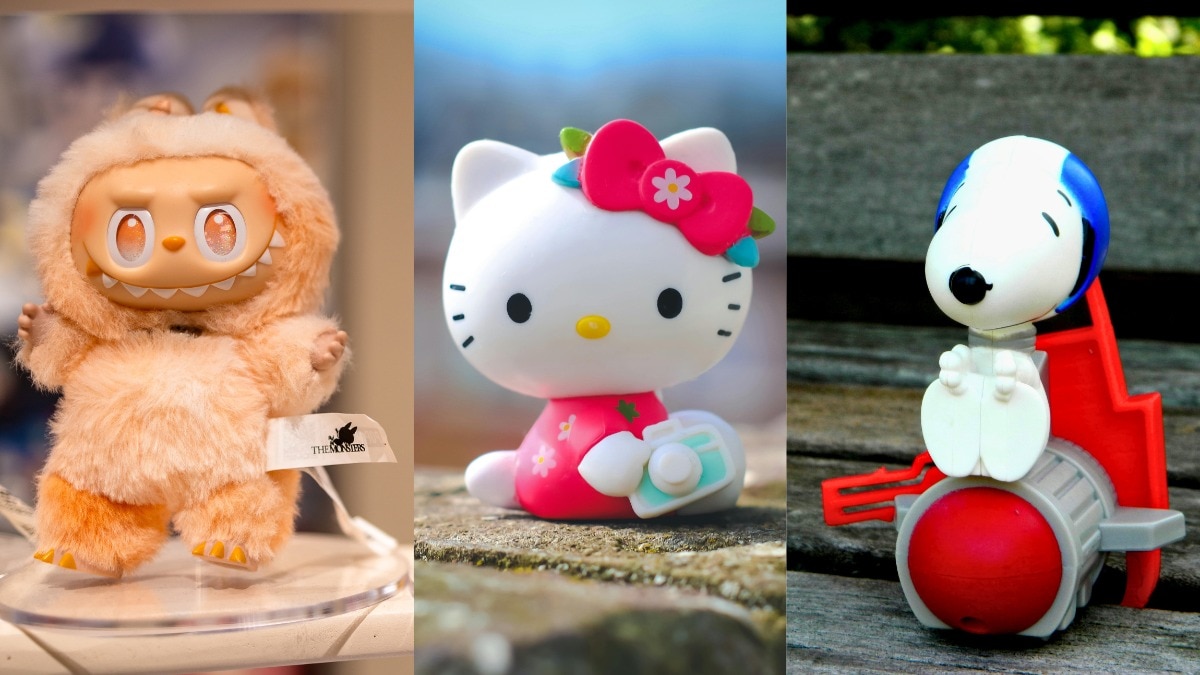
In January, when resolutions are still fragile and the excess of the holidays has been quietly boxed away, certain objects remain in view. They sit on desks, dangle from handbags and glow faintly on bookshelves. Often inexpensive and intentionally impractical, trinkets—small figurines, plush charms and blind-box collectibles—have followed adults into the new year, outlasting the trend cycles that usually abandon us by now. Their persistence suggests more than whimsy. Below, eight tiny objects people are still keeping close, and what they seem to offer at the start of the year.
Sonny Angel: the soft entry point
Once a niche Japanese novelty, Sonny Angel dolls have become a global barometer of how adult nostalgia, internet culture and collectibility now intersect. Created over two decades ago by Japanese toymaker Toru Soeya, the palm-sized figurines—cherubic, unclothed and topped with whimsical headgear—were designed with a simple promise: to offer “healing” and a small moment of joy. Social media has amplified that intent into a full-blown phenomenon. Today, Sonny Angels appear clipped to phones, peeking from desks, dangling from handbags and circulating endlessly on Instagram feeds, where blind-box suspense and scarcity fuel obsession.
What distinguishes the Sonny Angel boom is not just popularity, but economics. Limited-edition releases and discontinued series have transformed the dolls from casual keepsakes into high-value collectibles, with resale prices climbing into the hundreds—and sometimes thousands—of dollars. Series such as Space Adventure, Circus and Gifts of Love command premium prices less for their materials than for what they represent: rarity, emotional comfort and the thrill of ownership in a tightly controlled market. Even functional offshoots like Sonny Angel Hippers—designed to perch playfully on everyday objects—underscore how deeply these figurines are woven into daily life.
Labubus: the emotional status symbol
Labubu began as the brainchild of Hong Kong illustrator Kasing Lung—a mischievous, toothy-eyed character from his The Monsters universe, cute, a little strange and instantly memorable. When Pop Mart turned it into blind-box figurines and plush charms, Labubu leapt from storybook page to must-have accessory, trading narrative for thrill: surprise, scarcity and collectibility wrapped in a pocket-sized, highly Instagrammable form.
The craze went global in 2024 when BLACKPINK’s Lisa was photographed with a Labubu charm, igniting a frenzy of unboxing videos, sold-out drops and celebrity endorsements. Its “ugly-cute” aesthetic—simultaneously playful and edgy—hit the sweet spot for Gen Z and collectors alike: a tiny, tactile rebellion and a quietly subversive badge of taste that signals you’re in the know.
Smiskis: the quiet companion
Smiskis glow in the dark and hide in corners—on bookshelves, in bathrooms, behind computer monitors. Their charm is deliberately understated. Each figure depicts an ordinary human activity: stretching, studying or working late.
Their popularity surged during the pandemic, when domestic spaces became entire worlds. Social media transformed Smiskis into avatars for introversion, anxiety and gentle absurdity. People began arranging them in bathrooms, kitchens and workstations—tiny mirrors of human behaviour during lockdown. While the blind-box format added anticipation, the emotional payoff came from recognition rather than rarity.
Today, Smiskis resonate because they validate stillness. They don’t celebrate self-improvement or aesthetic perfection. Instead, they capture the comedy of existing quietly, imperfectly and off-centre. In an era saturated with self-branding, Smiskis offer permission to recede—and to find comfort there.
Jellycat plush toys
Plush croissants, smiling cherries and soft baguettes might seem unserious, but Jellycat’s Amuseables line has endured because it reframes comfort as design. These are not childhood relics; they’re objects of visual humour and tactile reassurance.
Founded in London in 1999, Jellycat took a deliberately eccentric approach to plush design, combining unexpected textures with deadpan expressions. While it initially catered to children, the brand quickly found an adult audience drawn to its ironic softness and subtle, almost British restraint.
The adult adoption of Jellycat accelerated through lifestyle media and fashion circles, where plush toys began appearing on beds, sofas and even in handbags. Unlike nostalgia-driven revivals, Jellycat’s appeal felt contemporary—intentional, tasteful and oddly sophisticated. In a culture increasingly attuned to emotional literacy, softness has become a form of self-awareness rather than regression. Jellycat signals comfort without apology and play without irony.
Miffy: the design purist’s favourite
First drawn in 1955 by Dutch artist Dick Bruna, Miffy’s appeal lies in restraint. Clean lines, neutral expressions and an almost total absence of irony make her feel timeless. In a moment saturated with maximalism, Miffy endures as a symbol of clarity, childhood without sentimentality and taste that resists noise.
Her adult following grew quietly through design circles, museums and bookstores rather than mass hype. On social media, Miffy has become shorthand for visual calm—a counterpoint to overstimulation. She doesn’t demand attention or nostalgia; she offers balance. For adults seeking gentler forms of expression, Miffy represents simplicity that feels grounding, not childish.
Hello Kitty: the constant
Hello Kitty has survived decades of cultural churn because she adapts without changing. Introduced by Sanrio in 1974 and designed by Yuko Shimizu, she was intentionally created as a blank canvas—no mouth, minimal expression, and an openness meant to absorb emotion rather than project it.
From the beginning, Hello Kitty wasn’t just a children’s character but a lifestyle icon, appearing on everything from stationery to fashion. Her modern resurgence is tied to fashion’s ongoing flirtation with irony and softness. Luxury collaborations and Y2K aesthetics have reframed her as both nostalgic and knowing—sweet, but not naive; playful, but quietly defiant.
Crybaby: permission to feel bad
With exaggerated tears and puffy cheeks, Crybaby figures give form to a feeling many try to outgrow. Created by Thai artist Mod-Nisa Srikhumdee, they resonate in January because they resist the pressure for relentless positivity. Crybabies don’t offer solutions; they simply sit with the emotion—and often, that’s enough.
Emerging from the art-toy crossover space in East Asia, Crybaby figures foreground sadness rather than entertainment. Their rise coincided with a broader cultural shift toward public vulnerability, where crying became a marker of honesty rather than weakness. Online, they circulate as shorthand for burnout, heartbreak and emotional fatigue—an antidote to forced optimism.
Snoopy: the old soul
Snoopy first appeared in 1950 as part of Peanuts, created by Charles M Schulz. Conceived as an emotional counterpoint to Charlie Brown’s unease, Snoopy evolved into a cultural chameleon—war pilot, writer, dreamer—absorbing adult anxieties while retaining childlike whimsy.
His current revival has little to do with nostalgia alone. Fashion collaborations and limited-edition collectibles have reframed Snoopy as an emblem of emotional intelligence rather than innocence. Online, he circulates less as a cartoon and more as a mood: reflective, melancholic and quietly defiant. What makes Snoopy endure is his permission to feel deeply without spectacle—expressive, but never performative.
Lead image: Getty Images and Pexels
Also read: Looking for an emotional support pet? Why not try a plushie instead
Also read: The coolest microtrends you’ll wanna soft-launch this season
more from Life

Why your screen-free hobby is probably someone else’s Instagram content

Did Instagram make you eat here?

One of the main 'Bridgerton' cast members is stepping away from the show

The AI ’80s trend is fun, but maybe stop handing over your face to every viral trend
Gen Z is choosing 'soft hermitting' over another night out

The great pillow talk recession is here
Move over, leopard Bambi nails are the sweetest animal-print trend of fall

The gradual death of the Instagram hard launch
The wildest looks from the 2026 Emmys red carpet

Wait, is the side part cool again? Gen Z celebs say yes