
Why writers are side-eyeing ChatGPT (even as they keep using it)
From academic purist to secret ChatGPT user, a writer learns the hard way about the perils of outsourcing their own voice.

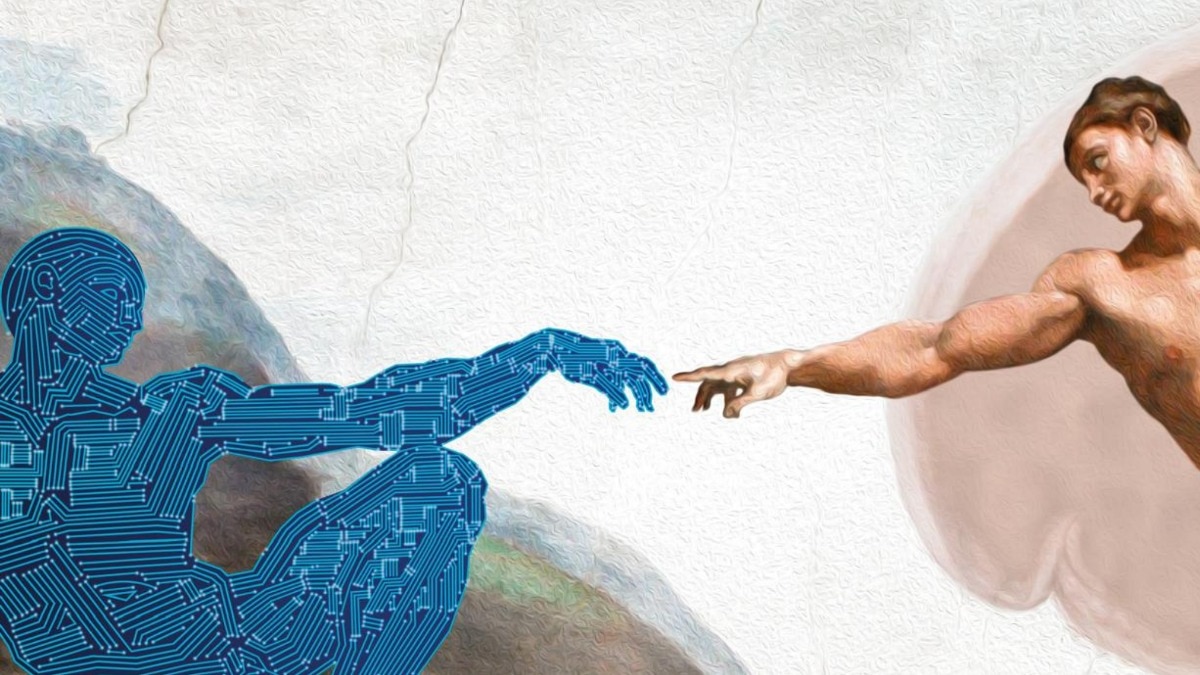
Three years ago, I was seated with my friends—easily irritated, mostly daydreaming, yet surprisingly social nerds—pouring over a list of study guides in the never-updated University of Delhi library catalogue. The task was simple: To find a critic who could make sense of English literary scholar Maurice Bowra’s dense promulgations on the Romantic imagination. Salvation appeared in the footnotes of a Routledge guide, and a digital copy was soon circulated on WhatsApp via JSTOR (that ever-reliable friend we owe our CGPAs to).
But, a few days later, I found myself in an odd pickle. From being at the epicentre of that previous search for meaning, I was now lingering on the outer rings of a circle gathered around a classmate, relaying tales of one ChatGPT. The act of heroism in point? Its ability to (within mere seconds) simplify Bowra’s labyrinthine thoughts with (supposedly) great lucidity. Looking back, that was perhaps the moment this strange beast waltzed into my life.
Very soon, peers whose academic rigour I had long admired and aspired towards began churning out essays that leaned heavily on the findings of this digital seductress. Once upon a time, those who had spent hours straining their eyes in a bid to comprehend thirty pages worth of words, now found ways of engineering specific prompts to get artificial intelligence to summarise their contents into parsed bullet points. The result was an odd mix of success and fierce backlash.
The module, however, had an obvious flaw, and one that those blinded by its aura failed to grasp early on. While essays churned on globally renowned names like John Locke and Margaret Cavendish turned increasingly hard to fault at a surface level, the artifice of its generated intelligence soon cracked. A professor pointed out that Indian novelist Sunil Gangopadhyay’s Arjun (1987) never had a character named Dushyant—a claim an evidently ChatGPT-ed essay had made. Another found that it misquoted Colombian writer Gabriel García Márquez’s Chronicle of a Death Foretold (1981).
Three years on, you dear reader, will be more than aware of these rookie errors that users worldwide are coming up with manuals to bypass. But back in the day, these obvious issues further alienated me from the temptation of giving into its use. The interface, with its pale white backdrop and inviting chatbox, posed to me as an Eden-like space with a luscious central apple of no turning back. A voice in my brain (that of my middle-class Bengali mother) kept insisting, “As someone who locked his textbooks away during online exams, how will you reconcile with the creative adultery of leaning on AI?”
Paradise lost
Far away from her glaring, disapproving looks, in the city of London during my postgraduate studies last year, I held out against every last temptation of using ChatGPT for my academic pursuits—even when my closest friends blew their weekly savings on upgrading to its premiere versions. And like every one of God’s almost-best soldiers, my walls too fell.
As I dived headlong into my professional life as a freelance journalist, a close friend rang me to relay a remark from a senior editor (whose attention I was desperately vying for): My pitches read too long, a chore to go through in their tightly packed schedules. Exhausted, and scared to fail on the path that I had set out upon, I finally decided to sip the Kool-Aid. I threw ChatGPT a challenge. Take my pitch and reduce it by a hundred words without altering the text’s original tone of voice.
What began as a one-off experiment soon avalanche into a midnight obsession. A personal essay written in a lofty voice was within minutes transformed into a shortened Reddit piece. A trend report peppered with figures was at once made to sing itself back to life with the insertion of lyrical reflections in between. I was hooked.
Tasks like cutting down words from my own writings, coming up with SEO-friendly headlines, helping stick to the word count—jobs that I would spend hours slogging over—suddenly required less effort. It was, I argued, not an act of outright dishonesty.
After all, these “rare instances” of help were limited to deeply surface level aspects of my work. For a brief few weeks, I went to bed in the comfort of the thought that this was our little secret.
But blindness of your own choosing can only take you so far. Pandora’s box, once opened, has no purpose being shut. Eve’s apple, once bitten, reveals a rot to the core. And one day, my reckoning too came, in the form of a footnote under an editorial email passing on a not-so-timely story pitch I had made. It said: “You might want to be mindful next time of erasing the words ‘Does this look good or would you like me to cut down more words from this text, to make it tighter’, so that your use of AI tools is a little more discreet.” An oversight on my part. A lifelong lesson in the importance of the human touch, and self-reliant critical thinking.
This article first appeared in Cosmopolitan India's November-December 2025 print edition.
Lead image: Shutterstuck
Also read: How to survive party season without burning out your body
Also read: Eight cities, eight stories—check out where India’s matcha lovers get their fix
more from Life

Me, myself and I: How to tell if you’re the group’s conversation hog

Not every shower thought needs to become a side hustle, and Morgan from ‘Nobody Wants This’ proves it

'Our obsession with true crime isn’t just morbid curiosity—it's all part of our desire to regain control'

Why advent calendar unboxing videos are my favourite kind of holiday content
Unique gifts for every personality: Meet them where they are

#SaneGirlEra: Six research-backed apps to help you cope with anxiety
“Why choosing a man-repellent haircut was the most liberating thing I did”

How to make the lingerie-as-outerwear trend work for your wardrobe

Are you and your partner having mercy sex? This is how sex expectations can damage relationships

Welcome to emotionships—where you have feelings but no relationship status